Choosing a depression treatment involves more than comparing treatment names. Your diagnosis, previous medication trials, current symptoms, medical history, goals, and safety needs all matter. BrainsWay Deep TMS™ may be considered for some adults with major depressive disorder, particularly when medication has not provided enough improvement or side effects have been difficult to manage. Tms for depression uses magnetic stimulation rather than anesthesia or medication infusions. A trained provider evaluates whether it fits your care plan and explains what to expect. Here, you will learn how TMS works, how long treatment takes, what side effects may occur, and how progress is monitored.
Ready to Find Relief?
We’re Here to Help.
Our team offers personalized, evidence-based care for depression, anxiety, OCD, PTSD, and more — including Deep TMS™, SPRAVATO®, and IV ketamine. Reach out today and we’ll help you find the right path forward.
Key Takeaways
- BrainsWay Deep TMS™ offers a noninvasive approach to depression treatment: Magnetic pulses target brain circuits related to mood while you remain awake and alert during outpatient sessions.
- A thorough evaluation determines whether TMS is appropriate: Your provider reviews your diagnoses, symptoms, medication history, medical records, implants, seizure risk, and treatment goals.
- Preparation and consistency support the treatment process: Plan for frequent appointments over several weeks, track changes in mood and daily functioning, and continue medication or therapy only as directed by your care team.
What Is BrainsWay Deep TMS™ for Depression, and How Does It Work?
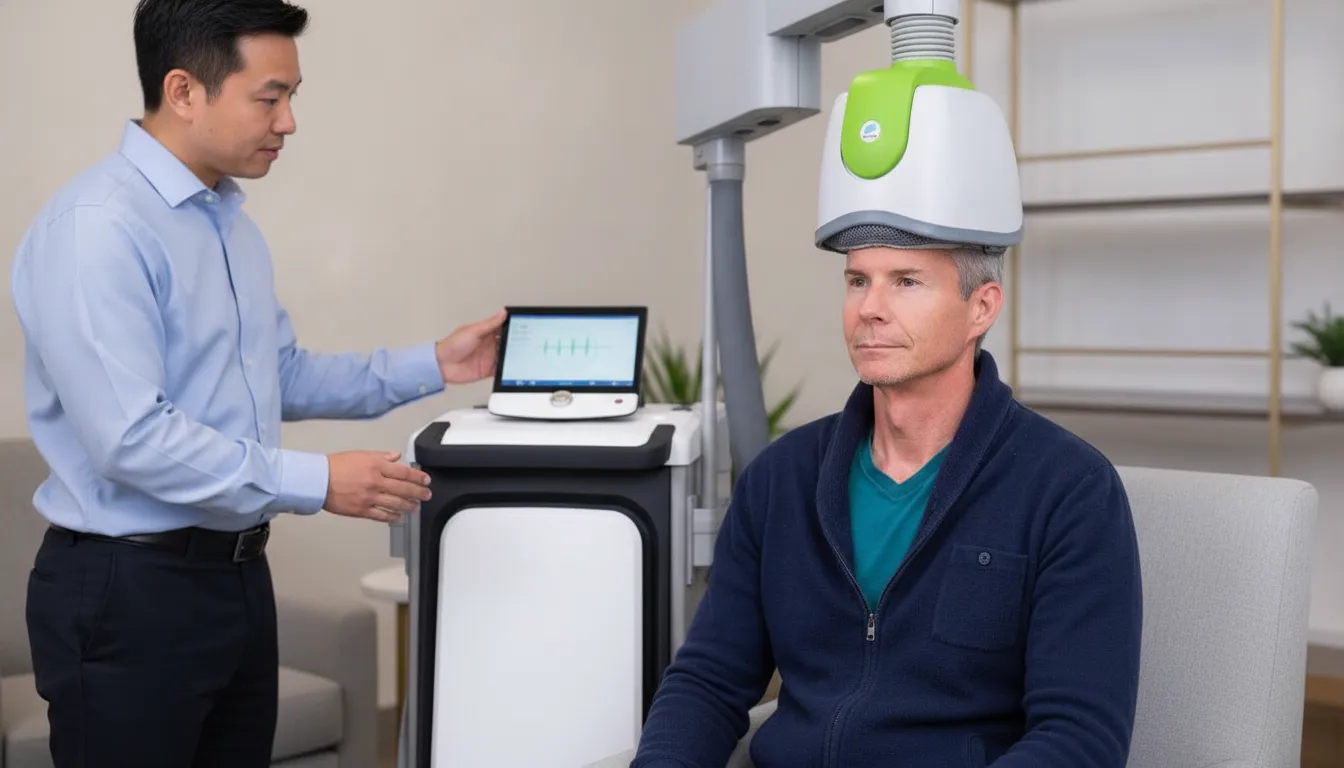
BrainsWay Deep TMS™ is a noninvasive treatment that uses magnetic pulses to stimulate brain areas involved in mood regulation. During treatment, a clinician positions a specialized device against your scalp near the forehead. The device delivers repeated pulses to targeted regions and the brain circuits connected with depression symptoms.
Deep TMS™ does not involve surgery, injections, or medication passing through your bloodstream. Unlike electroconvulsive therapy (ECT), it does not require anesthesia or intentionally produce a seizure. You remain awake and alert during treatment, and many people return to their regular activities afterward.
TMS may influence communication between brain regions involved in mood, motivation, attention, and emotional regulation. Researchers are still studying the full mechanism behind symptom changes, so your provider should explain what the treatment may involve and whether it fits your diagnosis, medical history, symptoms, and goals. Relief Mental Health offers BrainsWay Deep TMS™ as part of its treatment services.
How TMS targets mood-related brain circuits
TMS uses magnetic fields to stimulate nerve cells in a specific area of the brain. The magnetic pulses pass through the scalp and skull to reach the targeted tissue. The treatment does not send an electrical current through your entire body.
For depression, clinicians generally focus on brain circuits involved in mood regulation. Repeated sessions may influence activity and communication within these circuits over time. This approach differs from antidepressant medication, which affects chemical signaling throughout the body.
TMS may be considered when depression symptoms continue despite medication, when medication side effects are difficult to manage, or when a patient wants to discuss a nonmedication treatment. It is not appropriate for everyone, and a psychiatric evaluation is needed before treatment begins. The Mayo Clinic’s overview of TMS explains how magnetic stimulation targets brain areas involved in depression.
How the prefrontal cortex affects depression symptoms
The prefrontal cortex sits behind the forehead and supports attention, decision-making, motivation, and emotional regulation. TMS for depression often targets the dorsolateral prefrontal cortex, an area connected with larger brain networks involved in mood.
Depression may affect how these networks communicate. Symptoms can include low mood, reduced interest in activities, difficulty concentrating, changes in sleep or appetite, and persistent feelings of guilt or worthlessness. TMS aims to stimulate a targeted area and influence the broader network connected to it.
TMS does not erase symptoms or change your personality. Instead, repeated stimulation may support changes in brain activity related to mood regulation. Your treatment team will discuss how TMS may fit your specific diagnosis and care plan. The National Institute of Mental Health’s information about depression provides additional background on symptoms and available treatments.
What noninvasive treatment means
Noninvasive means that TMS does not involve surgery, injections, or cutting the skin. You sit in a treatment chair while the device rests against your scalp. The clinical team positions it carefully and adjusts the settings according to your treatment plan.
You stay awake throughout each session. TMS does not require general anesthesia or sedation, so you typically do not need someone to drive you home. Many patients return to work, school, errands, or other daily activities afterward, although your response may vary.
You may hear clicking and feel tapping near the treatment area. Some people notice scalp discomfort, facial muscle movement, or a mild headache, especially during early sessions. Tell your treatment team if anything feels uncomfortable. They can assess your symptoms and adjust the device position or settings when appropriate.
How TMS differs from antidepressants and ECT
Antidepressants work through chemical signaling in the body and may be prescribed alone or alongside therapy. They help many people, but some patients continue to experience depression symptoms after trying medication. Others may have side effects that make continued use difficult. Your prescribing clinician can help you weigh the benefits and risks of any medication change.
TMS uses magnetic stimulation rather than medication. It takes place in an outpatient setting, and you remain conscious during each session. It is also different from ECT. ECT takes place under anesthesia and intentionally produces a controlled seizure, while TMS does not require anesthesia or a seizure.
Each treatment has a different role. ECT may be recommended when depression is severe or requires a rapid response. TMS may be considered after a psychiatric evaluation, particularly when medication has not provided enough relief or has caused difficult side effects. Your provider can review Relief Mental Health’s treatment options and coordinate care with your psychiatrist, therapist, or other healthcare professionals.
Who May Qualify for TMS for Depression?
BrainsWay Deep TMS™ may be an option for adults with a diagnosis of major depressive disorder (MDD), particularly when medication or therapy has not provided enough improvement. Eligibility depends on more than a single factor. A provider reviews your symptoms, treatment history, medical history, current medications, and treatment goals before making a recommendation.
The evaluation also helps identify safety concerns and determine whether outpatient TMS fits your needs. Relief Mental Health’s TMS treatment team can explain the evaluation process, answer your questions, and discuss whether this treatment may be appropriate for your diagnosis.
How a psychiatric evaluation identifies major depressive disorder
A psychiatric evaluation usually begins with a detailed conversation about your symptoms. Your provider may ask about mood, sleep, energy, concentration, appetite, motivation, and daily functioning. They may also discuss how long your symptoms have been present and how they affect work, school, relationships, and self-care.
Your medical history, family history, medication history, and previous treatment experiences also matter. The goal is to confirm your diagnosis and identify whether another diagnosis, medication, or medical concern may be contributing to your symptoms. As Clearwave Mental Health explains, a psychiatric evaluation helps determine whether TMS may be a suitable treatment option.
How previous medication trials relate to treatment-resistant depression
Many people considered for TMS have tried one or more antidepressants without enough improvement. Your provider may review the medications you have taken, the dosage, how long you took each one, and whether side effects affected your ability to continue treatment.
TMS is often considered when a person with MDD has not responded adequately to multiple medication trials. Providers may refer to this as treatment-resistant depression. The VA Montana Health Care overview of TMS explains that previous medication response is an important part of the evaluation. A medication that did not work for you does not mean every treatment will have the same result.
How symptom severity, goals, and readiness affect eligibility
Your provider may ask you to complete a depression questionnaire before treatment. These tools help measure symptom severity and establish a baseline for tracking changes. They do not replace a conversation with your psychiatric provider, but they offer a consistent way to assess progress throughout treatment.
Your goals matter, too. You may want to improve sleep, concentration, motivation, daily functioning, or your ability to participate in therapy. TMS also requires regular appointments and communication with your treatment team. Harvard Health’s explanation of TMS research describes response as a substantial symptom reduction, often measured as 50% or more in research settings. Your provider can explain how progress will be evaluated in your care.
How age, medications, pregnancy, and medical history affect eligibility
TMS is generally FDA cleared for adults with MDD. Age alone does not determine eligibility. The treatment team also considers your diagnosis, treatment history, developmental stage, and ability to attend regular sessions. Some clinics may evaluate adolescents in specific circumstances, based on clinical judgment and applicable approvals.
Your provider will review current medications, including prescriptions, over-the-counter products, and supplements. Tell the team if you are pregnant, planning to become pregnant, or breastfeeding. Pregnancy may affect the treatment discussion, even though it does not automatically determine eligibility. Share your complete medical history, including past surgeries, neurological diagnoses, head injuries, and medication reactions. The FDA’s information about TMS provides additional background on its medical use.
How seizure history, bipolar symptoms, and safety factors affect eligibility
A history of seizures does not always rule out TMS, but it requires careful review. Your provider may ask about seizures, head injuries, neurological symptoms, alcohol or substance use, sleep, and medications that can affect seizure risk. The team uses this information to decide whether added precautions or another treatment approach may be more appropriate.
Bipolar symptoms also require specific attention. TMS for depression may not be appropriate if you have current symptoms of mania or hypomania that have not been evaluated and addressed in your treatment plan. Tell your provider about periods of unusually high energy, reduced need for sleep, impulsive behavior, racing thoughts, or significant mood changes. The VA’s TMS guidance identifies seizure history and bipolar symptoms as factors that may require additional safety assessment.
How metal implants and medical devices affect eligibility
Because TMS uses magnetic pulses, certain metal implants and medical devices may create safety concerns. Non-removable metal in or near the head, including some surgical clips, may prevent treatment. Other implanted devices may also require review, such as cochlear implants, deep brain stimulation devices, implanted pumps, or certain neurostimulators.
Do not assume an implant is safe or unsafe based on its name alone. Give your provider a complete list of implants, devices, and past procedures. Bring device information or surgical records if you have them. The treatment team may need to confirm the device type and location before making a recommendation. The VA Montana Health Care safety guidance explains why non-removable metal near the head can affect TMS eligibility.
How suicidal ideation affects immediate safety needs
If you are experiencing suicidal thoughts, tell your provider directly. TMS may be part of a longer-term treatment plan, but it does not replace immediate crisis support, safety planning, or emergency evaluation. Your team first needs to understand how urgent the risk is and whether you can remain safe while attending outpatient appointments.
Seek immediate help if you may act on suicidal thoughts, have a plan, or cannot stay safe. Call or text 988 for the Suicide & Crisis Lifeline, call 911, or go to the nearest emergency department. If possible, stay with someone you trust and move away from anything you could use to hurt yourself. The VA’s guidance on TMS for depression also emphasizes assessing immediate safety before considering TMS.
What Happens During a TMS Session for Depression?
BrainsWay Deep TMS™ is an outpatient treatment that uses magnetic pulses to stimulate brain regions involved in mood regulation. Before treatment begins, the team reviews your diagnosis, treatment history, current medications, medical history, and goals. This information helps determine whether TMS is appropriate and how your sessions should be structured.
A typical appointment does not require anesthesia or sedation. You remain awake, can communicate with the treatment team, and may return to your usual activities afterward. Since treatment usually involves repeated appointments over several weeks, knowing what to expect can make each visit feel more manageable.
How the team assesses you and creates a treatment plan
Your first appointment usually includes a psychiatric evaluation and a review of your medical history. The team may ask about depression symptoms, previous diagnoses, medication trials, therapy, sleep, energy, concentration, and daily functioning. They may also ask about recent mood changes and thoughts of self-harm so they can address immediate safety needs.
TMS is often considered for people with major depressive disorder who have not had a satisfactory response to antidepressant medication. Eligibility depends on your individual history, current symptoms, medications, and overall safety. You can review Relief Mental Health’s treatment options before your appointment and prepare questions about which services may fit your needs.
Your provider will explain the recommended schedule, possible side effects, and ways to contact the office with concerns. This is also an opportunity to discuss how TMS may fit with your current psychiatry or therapy care.
How the team maps treatment and tests motor threshold
During the first session, the team identifies the area of your brain that will receive treatment. They also determine the appropriate stimulation intensity by testing your motor threshold. This process helps the provider understand how your body responds to the magnetic pulses and select a starting level.
The clinician places the treatment coil against your head and delivers brief pulses while observing a small movement, often in your hand or fingers. The response helps the team adjust the coil position and stimulation strength. This appointment may take longer than later sessions because the team is establishing your treatment settings.
Your position and measurements are recorded so the coil can be placed consistently during future visits. If your comfort or response changes, the team can reassess your settings and make adjustments. The VA’s overview of TMS treatment explains this mapping and motor-threshold process in more detail.
What happens during a typical 20- to 40-minute outpatient session
Once your treatment settings are established, you sit in a treatment chair while the provider positions the coil over the targeted area. The device then delivers a series of magnetic pulses according to your treatment plan. Many sessions take about 20 to 40 minutes, although the exact length depends on the protocol.
The team remains nearby and checks in with you throughout the appointment. You may be asked to describe how the stimulation feels or report any discomfort. Providers may also monitor your symptoms during the treatment course with brief questions or standardized rating scales.
TMS treatment plans often involve appointments five days per week for several weeks. The number and frequency of sessions depend on your diagnosis, treatment protocol, response, and provider recommendations. Ask about appointment times that fit your work, school, transportation, and family responsibilities.
What clicking, tapping, and scalp sensations feel like
Many people notice a clicking sound from the device and a tapping or knocking sensation against the scalp. You may also feel pressure, tingling, or mild muscle movement near the forehead, temple, or jaw. The sensation can feel unfamiliar at first, but many patients find it becomes easier to anticipate as sessions continue.
Some patients experience temporary scalp tenderness or a headache after treatment. Facial or jaw muscle movement may also occur when the magnetic pulses stimulate nearby muscles. Tell the team what you are feeling instead of trying to tolerate significant discomfort. The provider may adjust the coil position, stimulation level, or treatment pace.
Descriptions of TMS sensations vary from person to person. The Dignity Brain Health guide to TMS sensations describes common experiences, including tapping, tingling, and temporary discomfort.
Why you stay awake without anesthesia
TMS does not require general anesthesia or the sedation used for some other procedures. The magnetic pulses are delivered from outside the head, and you remain awake and able to speak with the provider throughout the session.
Staying awake means you do not need time to recover from sedation before leaving the office. Depending on the clinic’s instructions, you may read, listen to music, or sit quietly before and after treatment. You can also tell the team if you need a short pause or have questions during the appointment.
Because TMS does not typically impair alertness, many people can drive themselves to and from treatment. Your provider will explain whether your medical history or personal response requires different arrangements. Always follow your treatment team’s instructions, particularly if you feel lightheaded or notice an unusual symptom.
How to report discomfort and track symptom changes
Your feedback helps the team provide treatment safely and comfortably. During a session, let the provider know if the tapping feels painful, if the coil seems poorly positioned, or if you notice a headache, dizziness, facial discomfort, or another unexpected sensation. The team may pause treatment or change the coil position and stimulation intensity.
You may also complete symptom questionnaires at regular intervals. These assessments are not the only way to measure progress, but they help compare symptoms over time. Between visits, consider noting changes in sleep, appetite, concentration, motivation, mood, and daily functioning.
TMS may not produce noticeable changes immediately, and symptom changes can develop gradually. A simple symptom log can help you remember details during appointments and give the team a clearer picture of how treatment affects your everyday life. Share improvements, concerns, and new symptoms with your provider.
How TMS affects driving and daily activities
Most people can drive after a TMS session and return to work, school, errands, or other usual activities. Since you remain awake during treatment, there is generally no anesthesia recovery period. You may want to schedule your first few appointments when you have some flexibility, so you can learn how your body responds.
A temporary headache or scalp tenderness may make some activities less comfortable immediately afterward. If you feel lightheaded, unusually tired, or unwell, tell the treatment team before leaving. Arrange a safe ride home if needed, and do not drive if you do not feel alert or if your provider advises against it.
Continue your existing treatment plan unless your prescriber tells you to make a change. TMS may be provided alongside psychiatry or therapy. Your Relief Mental Health team can discuss how to coordinate appointments, medications, and symptom tracking with your current providers.
How Long Does TMS for Depression Take?
BrainsWay Deep TMS™ for depression usually involves frequent outpatient appointments over several weeks. A typical session lasts about 20 to 40 minutes, and many treatment plans include visits five days a week. Your schedule may differ based on your diagnosis, symptoms, treatment history, goals, and the protocol your provider recommends.
TMS does not usually produce immediate changes in mood. Many people notice gradual changes during treatment, while others need more time before they recognize a meaningful difference. Your treatment team will monitor your symptoms, daily functioning, and comfort throughout the process.
Why you attend five treatment sessions each week
Most TMS plans include sessions from Monday through Friday. This regular schedule gives your brain repeated exposure to magnetic stimulation over a consistent period. It also gives your treatment team frequent opportunities to review side effects, adjust settings when needed, and track changes in your symptoms.
Research on repetitive TMS for depression commonly describes treatment schedules lasting three to six weeks, with approximately 20 to 30 total sessions. The review of TMS treatment schedules for depression provides additional detail about how these protocols are typically structured.
Daily appointments require planning. Before treatment begins, consider how you will manage transportation, work, school, family responsibilities, and other commitments. Setting reminders and keeping your appointments at a consistent time may make the schedule easier to maintain.
Why the initial course typically lasts four to six weeks
A standard initial course often lasts four to six weeks, with about 30 to 36 sessions for depression. This timeline allows your provider to deliver treatment consistently while monitoring changes in mood, sleep, energy, concentration, motivation, and daily functioning.
The number of sessions is not a prediction of how you will respond. Some people notice changes earlier, while others need additional time. Your provider may recommend completing the planned course even if you begin to feel better before the final appointment. Continuing as recommended can help your team evaluate your response more fully.
The Cleveland Clinic overview of TMS describes the common schedule of five sessions each week for four to six weeks. Your provider will explain whether that timeline fits your treatment plan.
Why treatment schedules vary
TMS schedules are not identical for every person. Your provider may consider your diagnosis, previous medication trials, symptom severity, medical history, treatment goals, and ability to attend frequent appointments. The team may also adjust your plan based on symptom changes or discomfort during sessions.
Some programs use accelerated protocols, with multiple shorter sessions on the same day. These programs may complete the initial course in about five days, but they are not appropriate for everyone and may not be available at every location. Ask your provider whether an accelerated schedule is clinically appropriate for you.
Your schedule may also change if you miss an appointment, develop increased scalp discomfort, or need additional monitoring. Do not change, pause, or stop treatment without first speaking with your TMS team.
When you may notice symptom changes
Some people begin noticing changes within the first few weeks of TMS. Early changes may be subtle. You might sleep better, have more energy, experience fewer negative thoughts, or find it easier to complete everyday tasks before you notice a clear shift in mood.
Other people need more time before they recognize meaningful changes. A lack of improvement during the first several sessions does not necessarily mean that treatment will not be helpful. Your provider will review your symptoms across multiple appointments rather than relying on one difficult day.
Keeping brief notes between sessions can help you identify changes that may otherwise be easy to miss. Consider recording your sleep, appetite, mood, anxiety, concentration, and daily activities. Share these observations with your treatment team so they can make informed decisions about your care.
Why consistent attendance matters
TMS uses repeated sessions, so regular attendance is an important part of the treatment plan. Missing appointments can interrupt the schedule and make it harder for your provider to assess your response. If you need to miss a visit, contact the clinic as soon as possible and ask what you should do next.
Consistency does not mean ignoring discomfort or other concerns. Tell your treatment team if a session becomes painful, side effects change, or your mood worsens. The team can review your treatment settings, offer practical guidance, and decide whether your schedule needs to change.
Completing the recommended course gives you a clearer opportunity to assess your response. Your provider will still evaluate whether TMS remains appropriate as treatment continues. TMS may be used alongside psychiatry, medication management, or talk therapy, depending on your needs.
How providers plan continuation treatment and maintenance
After the initial TMS course, your provider will review your symptoms, daily functioning, side effects, and treatment goals. Some people may not need additional TMS right away. Others may discuss follow-up sessions if symptoms return or if their treatment team believes additional stimulation may be appropriate.
Long-term care may also include medication management and talk therapy. The Mayo Clinic explains ongoing treatment after an rTMS series, including the possible use of medicine and talk therapy. Your psychiatrist and TMS provider can coordinate these services as part of your ongoing treatment plan.
Before your initial course ends, ask how follow-up appointments will work, which changes should prompt a call, and how your progress will be reviewed. If you experience suicidal thoughts or feel unable to stay safe, contact emergency services or a crisis resource immediately. Do not wait for your next TMS appointment.
How Effective Is TMS for Depression? What Research Shows
BrainsWay Deep TMS™ can reduce depression symptoms for some people, especially when medication has not provided enough relief. Research supports its use for major depressive disorder, but results vary from person to person. Your diagnosis, treatment history, symptom severity, medical history, medications, and attendance may all affect your response.
It also helps to understand what researchers mean by “effective.” Studies often report response rates and remission rates separately. These terms describe different levels of improvement, and neither one predicts exactly what will happen for an individual patient. A person may experience meaningful changes without reaching remission, while another person may notice little change during the initial treatment course.
Your treatment team can review the research, discuss your goals, and explain how progress will be measured. Relief Mental Health provides Deep TMS™ as part of its treatment options, along with psychiatry and therapy. Your provider can help you consider how TMS fits with your existing care and whether another treatment may be more appropriate.
How response differs from remission in TMS research
A response usually means that depression symptoms have improved significantly from where they started. You may still have symptoms, but they may be less intense, less frequent, or easier to manage. You might notice better sleep, more motivation, improved concentration, or greater ability to complete everyday tasks.
Remission generally describes a more substantial reduction in symptoms, sometimes to the point that a person has few or no remaining symptoms. Remission does not mean depression cannot return. As Harvard Health explains, TMS may help many people exit a depressive episode, but it may be less effective at preventing future episodes on its own.
These definitions matter because a study may report a strong response rate while showing a lower remission rate. Ask your provider to explain both measures instead of treating one number as a personal prediction.
What reported 50% to 55% response rates mean
Reviews of TMS research report that approximately 50% to 55% of people with major depressive disorder experience a significant response to treatment. In practical terms, about half of the participants in these studies showed meaningful symptom improvement after TMS.
These figures describe groups of patients, not individual forecasts. They also reflect specific study designs, treatment schedules, equipment, and patient populations. Your experience may differ from the average reported in research.
The National Institutes of Health review of TMS for depression discusses response rates alongside remission rates, offering a fuller view of treatment outcomes. During treatment, ask how your team defines response and tracks changes. A structured symptom questionnaire, combined with your own observations, can help identify progress.
What reported 30% to 35% remission rates mean
The same body of research reports remission rates of approximately 30% to 35% for people receiving TMS for major depressive disorder. This means that roughly one-third of study participants experienced a substantial reduction or near disappearance of depressive symptoms by the end of treatment.
Remission rates are lower than response rates because remission represents a deeper level of improvement. Someone may respond to TMS without reaching remission. They may sleep better, regain interest in activities, or experience fewer negative thoughts while still having symptoms that require ongoing treatment.
Research rates provide context, not a promise. Your provider may monitor symptoms throughout treatment and discuss whether your progress suggests a need for additional sessions, medication adjustments, therapy, or another treatment approach. Relief Mental Health offers psychiatry and therapy alongside advanced treatments, which may support a broader care plan.
What sham-controlled research shows about treatment-resistant depression
Sham-controlled studies compare active TMS with a procedure designed to resemble treatment without delivering the same magnetic stimulation. This design helps researchers estimate how much improvement may be linked to TMS rather than expectations, staff attention, or natural changes in symptoms.
Reviews of TMS for treatment-resistant depression have reported remission rates substantially higher with active TMS than with placebo. Some studies have found rates up to four times higher. These findings support TMS as an option when previous antidepressant trials have not provided enough improvement.
“Treatment-resistant” does not mean that no treatment can help. It generally describes depression that has not improved enough after one or more appropriate treatments. The number and type of previous medication trials can differ among studies, so definitions vary. A psychiatric evaluation can clarify your diagnosis, treatment history, and available options.
What research shows about veterans and military populations
TMS has also been used in Veterans Affairs clinics for veterans with treatment-resistant depression. The VA Montana Health Care program reports that more than 800 veterans have received TMS through VA clinics, with many reporting positive outcomes.
This experience suggests that TMS may be appropriate for some veterans and military personnel, but it does not mean every patient will respond in the same way. Service-related trauma, PTSD, sleep disruption, pain, medications, and other diagnoses may affect evaluation and treatment planning.
If you receive care through the VA or another military health system, ask how referrals, records, authorization, and follow-up are handled. Bringing your medication list and previous treatment records can help the evaluation team understand your needs and review whether TMS is appropriate.
Why published effectiveness rates vary
TMS studies do not all evaluate the same patients or use the same treatment methods. Participants may differ in age, diagnosis, symptom severity, number of previous medication trials, and length of the current depressive episode. Researchers may also use different stimulation protocols, appointment schedules, symptom scales, and definitions of response or remission.
Eligibility criteria create another source of variation. FDA guidelines for repetitive TMS do not limit treatment only to people who have failed a single medication, according to clinical consensus recommendations. One study may include people earlier in treatment, while another may focus on those with more persistent symptoms.
Follow-up timing matters, too. Researchers may measure symptoms immediately after treatment, several weeks later, or months afterward. These time points can produce different results. Research offers useful context, but your provider must interpret it alongside your history and treatment goals.
What factors may influence your response
Several factors may affect your response to TMS. These may include your age, diagnosis, symptom severity, duration of depression, previous treatment response, sleep, substance use, medical history, and other symptoms. Your treatment team may also review medications, bipolar symptoms, seizure risk, and whether another diagnosis better explains your current experience.
Your treatment schedule matters as well. Standard TMS often involves frequent appointments over several weeks. Missing sessions can make it harder to assess your response and may affect the treatment plan. Tell your team about changes in symptoms, medication, sleep, or daily functioning so they can review your care safely.
A response may appear gradually rather than all at once. Some people notice changes in sleep, energy, concentration, or interest before they notice a broader shift in mood. Others may not notice meaningful changes until later in treatment. Keeping brief notes about symptoms and daily activities can make these changes easier to discuss.
How to plan for long-term symptom management and relapse
TMS can be one part of depression treatment rather than the only part. After the initial course, your provider may recommend medication, therapy, psychiatry appointments, or another form of follow-up care. Mayo Clinic notes that ongoing standard care may help manage symptoms and reduce the risk of relapse after rTMS.
Ask your treatment team what follow-up will look like before you finish the initial course. The plan may include symptom monitoring, medication review, therapy, daily routine support, or additional TMS if symptoms return. There is no universal schedule for continuation treatment, so recommendations should reflect your response and medical history.
Learn to recognize changes early. Shifts in sleep, motivation, appetite, concentration, or thoughts of self-harm deserve prompt attention. TMS is not an emergency service. If you are in immediate danger or experiencing suicidal thoughts with an intent or plan, call 911, go to the nearest emergency department, or call or text 988 in the United States.
What Are the Safety Risks and Side Effects of TMS for Depression?
BrainsWay Deep TMS™ is generally well tolerated, but it can cause side effects and may not be appropriate for every patient. Before treatment begins, your provider reviews your diagnosis, medical history, medications, and safety factors. This evaluation helps determine whether TMS is appropriate for you and how the team should create your treatment plan.
Most side effects are temporary and occur during or shortly after a session. Common effects include headache, scalp discomfort, tingling, and brief facial muscle movement. More serious risks, including seizures, are rare. Your treatment team should explain what you may feel, monitor your response, and tell you how to report concerns.
How TMS may cause headaches and scalp discomfort
TMS uses magnetic pulses to stimulate targeted areas of the brain. Because the treatment coil rests against your scalp, you may feel pressure, tapping, tingling, or mild discomfort during a session. Some people develop a headache afterward, particularly during the first few appointments.
These effects often lessen as you become accustomed to the stimulation. Your provider may adjust the coil position, treatment intensity, or other settings if the sensation feels too strong. Tell the team if you experience persistent pain, worsening headaches, or discomfort that affects your daily activities. A National Institutes of Health review of TMS for depression identifies temporary headaches and scalp sensations as common side effects.
How TMS may cause facial twitching, jaw discomfort, or lightheadedness
TMS pulses can sometimes stimulate nearby facial muscles. You may notice brief twitching around the eye, cheek, or mouth. Some patients also feel jaw tension or discomfort during stimulation. These sensations often improve when the team adjusts the coil position or treatment intensity.
Lightheadedness may occur during an early session, although it does not affect everyone. Let your provider know if you feel dizzy, unwell, or unusually uncomfortable. The team can pause treatment, check your symptoms, and decide whether to continue. The VA’s TMS treatment guidance describes facial twitching and painful scalp sensations as effects that may lessen over time.
How hearing protection and monitoring support safety
TMS equipment produces loud clicking sounds as it delivers magnetic pulses. You will generally wear earplugs during treatment to reduce the noise and protect your hearing. You remain awake throughout the session, and a trained member of the treatment team remains available to monitor your response.
At the beginning of treatment, the provider identifies the appropriate area of your head and determines the stimulation level for your plan. The team may continue checking your comfort, movement, and symptoms during the session. If the coil shifts or the stimulation feels uncomfortable, tell the provider right away. The Cleveland Clinic’s overview of TMS explains the treatment setup, ear protection, and sounds you may hear.
How medication reviews and seizure screening reduce risk
Before TMS, your provider reviews prescription medications, over-the-counter products, supplements, and recent medication changes. Some medications or dosage changes may affect seizure risk or your response to stimulation. Do not stop or change a medication without speaking with the clinician who prescribed it.
Your evaluation should also include questions about seizure history, head injuries, neurological diagnoses, substance use, sleep, and other factors that may affect safety. Bring an up-to-date medication list and tell the team about any recent changes before your first session. This information allows the provider to make an informed decision about whether TMS is appropriate and whether any treatment adjustments are needed.
How rare seizures can occur
A seizure is the most serious potential risk associated with TMS, but it is very rare. The risk may be higher for people with a seizure history or other factors that increase seizure susceptibility. This is why a detailed screening process matters before treatment begins.
Your provider may decide that TMS is not appropriate, modify the treatment plan, or request additional medical information. During sessions, follow the team’s instructions and report unusual sensations or symptoms. If a seizure occurs, the team will stop stimulation and follow the clinic’s emergency procedures. The VA’s patient information on TMS also identifies seizures as a rare but serious risk.
How TMS may affect mania, hypomania, and mood
TMS is used primarily to treat depressive symptoms. Before treatment, your provider should ask about past periods of mania or hypomania. These may include unusually elevated or irritable mood, reduced need for sleep, racing thoughts, rapid speech, impulsive behavior, or increased activity. This information can help clarify your diagnosis and guide treatment planning.
Rarely, mood elevation may occur during treatment. Contact your provider if you notice a sudden change in sleep, energy, judgment, spending, speech, irritability, or behavior. Your treatment team may reassess your diagnosis, medications, and treatment plan. TMS may reduce depressive symptoms, but it does not prevent every future depressive episode, so ongoing psychiatric follow-up remains important.
How implanted devices affect treatment safety
Metal or electronic implants in the head or neck may make TMS unsafe. Examples can include cochlear implants, certain clips, implanted stimulators, and some metal plates or other devices. Tell your provider about every implant, even if it was placed years ago or does not cause symptoms.
Also mention shrapnel, retained metal fragments, or previous surgeries involving your head, neck, or face. The treatment team will review the specific device and its location before deciding whether TMS is appropriate. Do not assume an implant is safe or unsafe without asking. The Cleveland Clinic’s TMS guidance explains why certain metal and electronic implants can affect treatment safety.
When to contact your treatment team or seek urgent support
Contact your treatment team promptly if you develop severe or persistent headaches, significant scalp pain, ongoing dizziness, unusual facial movements, marked changes in sleep or energy, or any symptom that concerns you. Report medication changes, new diagnoses, pregnancy, seizures, head injuries, or newly identified implants before your next session.
Seek urgent medical support for a seizure, loss of consciousness, severe confusion, chest pain, trouble breathing, or another medical emergency. TMS is an outpatient treatment and is not a substitute for emergency support. If you are thinking about suicide, may harm yourself, or cannot stay safe, call or text 988 in the United States, call 911, or go to the nearest emergency department. You can also contact Relief Mental Health with questions about treatment and care coordination.
How Does TMS Fit With Medication, Therapy, and Other Treatments?
BrainsWay Deep TMS™ may be used alongside medication management, psychiatry, talk therapy, or other treatments. TMS does not automatically replace an antidepressant or eliminate the need for therapy. Instead, it can become one part of a broader treatment plan based on your diagnosis, symptoms, treatment history, medical history, and goals.
TMS uses magnetic pulses to stimulate targeted areas of the brain. Antidepressants affect brain chemistry throughout the body, while therapy can help you understand thought patterns, process difficult experiences, and practice skills for daily life. Since these approaches work differently, your providers may recommend more than one as part of your care.
At Relief Mental Health, treatment planning may include BrainsWay Deep TMS™, psychiatry, therapy, SPRAVATO®, or IV ketamine when clinically appropriate. Your provider can explain how each treatment works, what to expect, and how it may fit with your current care.
How to continue antidepressants with prescriber guidance
Many people continue taking an antidepressant during TMS. Do not stop, skip, or change your medication without speaking with the prescriber who manages it. Abrupt changes may lead to withdrawal symptoms, a return of depression symptoms, or other unwanted effects.
Before TMS begins, your psychiatrist or prescribing clinician may review your dose, side effects, recent medication changes, and response to treatment. They may also ask you to report changes in sleep, energy, anxiety, mood, or thoughts of self-harm during the treatment course.
TMS works differently from antidepressants, so receiving both does not necessarily mean one treatment has failed. Research discussed by Harvard Health found that some people respond to TMS after medication has not provided enough relief. Your prescriber should guide any decisions about continuing, changing, or tapering medication.
How psychiatry and talk therapy can complement TMS
Psychiatry and therapy support different parts of your care. A psychiatrist can evaluate your diagnosis, prescribe or adjust medication, monitor mood changes, and identify symptoms that may affect treatment planning. A therapist can help you work through thoughts, behaviors, relationships, stress, and experiences connected to depression.
TMS may reduce the intensity of some symptoms, while therapy provides a structured setting to build skills and address patterns that affect daily life. Some people find it easier to focus in therapy as concentration, motivation, or energy changes. Others continue therapy throughout TMS to maintain support and track progress.
Cognitive behavioral therapy, family counseling, support groups, and mindfulness programs may also complement TMS. Mindful Health Texas describes integrated care that combines TMS with psychiatric evaluation, medication management, and therapy. Your providers can coordinate these services so your care plan stays clear and manageable.
How TMS compares with SPRAVATO® and IV ketamine
TMS, SPRAVATO®, and IV ketamine are different treatments. TMS is noninvasive and uses magnetic pulses rather than medication. SPRAVATO® is a prescription nasal spray containing esketamine, while IV ketamine is delivered through an infusion under medical supervision. Each option has different eligibility requirements, scheduling needs, monitoring, and potential side effects.
TMS sessions typically take place while you are awake and seated. SPRAVATO® and IV ketamine may cause temporary effects such as dizziness, sedation, nausea, or changes in perception. Your provider will explain monitoring and transportation requirements before treatment. TMS may cause scalp discomfort or a headache, but it does not involve sedation or an infusion.
The appropriate option depends on your diagnosis, symptoms, treatment history, medical history, and preferences. Relief Mental Health provides information about its available treatments so you can discuss these differences with a qualified provider. Do not start, stop, or combine treatments without medical guidance.
How TMS compares with ECT
TMS and electroconvulsive therapy, or ECT, both stimulate the brain, but they are different procedures. TMS uses magnetic pulses delivered through a device positioned near the scalp. ECT uses a controlled electrical current and takes place under anesthesia, with a seizure produced as part of the treatment.
TMS does not require anesthesia, and you remain awake during each session. ECT may be recommended when a rapid or intensive intervention is medically necessary. It can also involve short-term confusion and memory changes, which your treatment team should explain before treatment.
TMS is not appropriate for every diagnosis or situation, and ECT may be considered a better option for some patients. A psychiatric evaluation can help clarify which treatments may be considered based on symptom severity, safety needs, prior treatment, and medical history. UC Davis Health explains the differences between TMS and other treatments that stimulate the brain.
Why TMS cannot provide emergency support for suicidal ideation
TMS is provided through scheduled outpatient sessions. It is not an emergency service, crisis response, or substitute for immediate safety support. If you have suicidal ideation with an intention to act, a plan, access to means, or difficulty staying safe, tell someone immediately and seek urgent help.
Call or text 988 in the United States to reach the 988 Suicide & Crisis Lifeline. You can also call 911, go to the nearest emergency department, or ask someone you trust to stay with you while you get help. If you are outside the United States, contact your local emergency number or crisis service.
Tell your TMS team about suicidal thoughts, even if you do not believe you are in immediate danger. They can help determine whether outpatient TMS remains appropriate and connect you with a higher level of support when needed. TMS may be part of longer-term depression treatment, but it cannot replace an urgent evaluation when safety is at risk.
What TMS does and does not feel like
Most people remain awake and alert during a TMS session. The treatment coil rests near the targeted area of your head and delivers a series of magnetic pulses. Many patients describe the sensation as tapping or clicking against the scalp. You may also notice movement in nearby facial muscles or mild tension in your jaw.
Some people experience a headache, scalp tenderness, or lightheadedness, especially during the first few sessions. These effects are often temporary, but tell your treatment team if the sensation is painful or continues after the appointment. The team may adjust the treatment settings when appropriate.
You do not receive anesthesia for TMS, and there is no sedation-related recovery period. Many patients return to regular activities, including work or school, after an appointment. Your provider will discuss driving and other daily activities based on your response and overall safety. Dignity Brain Health describes common TMS sensations in patient-friendly terms.
Why TMS does not produce instant results
TMS is provided as a course of repeated sessions because changes in depression symptoms usually develop over time. Your brain receives repeated stimulation, and your treatment team needs time to track your response. Some people notice changes in sleep, energy, concentration, or mood during the first few weeks. Others notice changes later in the course.
Not noticing an immediate change does not necessarily mean TMS will not help. At the same time, you should not assume that symptoms will improve without further support. Attend scheduled appointments, report changes honestly, and discuss concerns with your provider.
Consistency matters because missed sessions can interrupt the treatment schedule. If work, transportation, childcare, or other responsibilities may interfere, tell the clinic before treatment begins. MT Psychiatry explains why patience and regular attendance are important parts of TMS treatment.
How to coordinate care across providers
Start by giving your TMS team an accurate list of medications, supplements, diagnoses, previous treatments, allergies, and relevant medical history. Include the names and contact information for your psychiatrist, therapist, primary care provider, and other clinicians involved in your care. With your permission, these providers can share updates and reduce the risk of conflicting recommendations.
Ask who will manage medication changes, who should receive progress updates, and whom to contact if your symptoms change between sessions. It may also help to keep a simple record of sleep, mood, energy, side effects, appointments, and questions. Bring this information to visits so your providers can identify patterns more easily.
Trusted family members, friends, support groups, and educational resources may also help you stay organized during treatment. NeuroStim TMS Centers discusses support beyond TMS, including support groups and educational resources. If you receive care through the military or VA, ask your providers how to coordinate referrals and records with your TMS clinic.
How to Prepare for TMS for Depression at Relief Mental Health
Preparing for BrainsWay Deep TMS™ starts with a thorough evaluation, not a single checklist. Your provider will review your diagnosis, treatment history, current medications, medical history, and personal goals before recommending a treatment plan. Bringing accurate information to your first appointment can make the process clearer and help your care team understand what you have already tried.
It also helps to plan for the practical parts of treatment. TMS usually involves regular visits over several weeks, so consider transportation, work or school responsibilities, insurance questions, and the support you may want at home. Relief Mental Health provides TMS, psychiatry, therapy, SPRAVATO®, and IV ketamine services. Your provider can discuss how TMS may fit with your broader care plan. You can review the treatments offered by Relief Mental Health before your appointment.
Gather your diagnosis, medication, and treatment history
Make a list of your current and past diagnoses, medications, therapy experiences, and other psychiatric treatments. Include medication names, doses, how long you took each medication, and whether you stopped because of side effects or limited improvement. If you have records from another provider, ask whether they can send them to Relief Mental Health before your evaluation.
Your treatment history helps your provider determine whether TMS may be appropriate for your diagnosis. It also gives the team useful context when creating your treatment plan. Bring information about medical diagnoses, allergies, previous procedures, seizure history, pregnancy, and any implanted metal or medical devices. A written list can be helpful if you feel overwhelmed during the appointment.
If you are not sure which records matter, ask the clinic before your visit. Medication bottles, pharmacy records, previous evaluation notes, and a brief timeline of past treatment can all help your provider make a more informed recommendation.
Ask about eligibility, goals, side effects, and scheduling
Use your evaluation to ask direct questions. You may want to ask why TMS is being recommended, which symptoms the treatment is intended to address, and how the team will track changes over time. Ask about common side effects, safety precautions, session length, and what you should do if treatment feels uncomfortable.
You can also discuss your goals. For example, you may want to improve sleep, concentration, motivation, mood, or your ability to manage daily responsibilities. Your goals do not determine eligibility on their own, but they help your provider measure progress in ways that matter to you. The National Institute of Mental Health explains how depression is evaluated and treated, which can provide useful background before your appointment.
Ask how often your provider will review your progress and whether your treatment plan may change over time. You can also ask what happens if you miss a session, experience new symptoms, or need to coordinate TMS with another provider.
Set realistic expectations for treatment timing
TMS is an outpatient treatment, but it requires consistency. Many treatment plans involve five sessions each week for about four to six weeks. Each visit commonly lasts between 20 and 40 minutes, although the schedule may vary based on your treatment plan, response, and clinical needs.
Some people notice changes during the first few weeks, while others need more time. You may not notice a clear difference after the first few sessions, and that does not necessarily indicate how the full course will go. Ask your provider when progress will be reviewed and whether additional treatment may be recommended.
Planning appointments in advance can make regular attendance easier. Look at your work, school, caregiving, and transportation responsibilities before treatment begins. If possible, reserve appointment times that fit your routine and identify a backup plan for transportation or scheduling conflicts.
Build support with family, trusted people, and providers
Tell a trusted person that you are considering TMS and explain what your treatment schedule may involve. You may not need someone to attend every appointment, but practical and emotional support can make regular visits easier. A family member or friend could help with transportation during your first appointment, remind you about sessions, or check in with you between visits.
Continue communicating with your psychiatrist, therapist, primary care provider, and other members of your care team. Let them know when TMS begins and share any changes you notice. With your permission, providers can coordinate information and reduce gaps in care.
Support should respect your privacy and preferences. Decide in advance what information you want to share and with whom. If you would rather keep details private, you can simply tell someone that you have recurring medical appointments and may appreciate help with transportation or daily responsibilities.
Find reliable education and crisis-support resources
Choose information from established medical organizations, government health agencies, and qualified treatment providers. Ask your Relief Mental Health team to explain anything you find confusing or concerning. Reliable education can help you understand what TMS can do, what it cannot do, and how it may fit with medication or therapy.
TMS is not an emergency service and should not replace immediate support during a crisis. If you are in immediate danger, call 911 or go to the nearest emergency department. If you are experiencing suicidal thoughts or need urgent emotional support in the United States, call or text 988 for the Suicide & Crisis Lifeline.
You can also tell your provider about worsening symptoms, significant mood changes, or new safety concerns. Your treatment team can help identify the appropriate level of support and determine whether your treatment plan needs to change.
Verify insurance coverage and treatment logistics
Contact your insurance company before treatment begins and ask about coverage for TMS. Requirements can differ between plans. Your insurer may request documentation of your diagnosis, previous medication trials, therapy, or other treatments before approving coverage. Relief Mental Health can explain what information may be needed, but your insurer determines your benefits and authorization requirements.
Ask about referrals, prior authorization, copayments, deductibles, cancellation policies, and the expected number of sessions. Confirm the clinic address, parking, public transportation options, arrival time, and appointment schedule. You can also ask whether the clinic can help with insurance documentation.
If you work, attend school, or provide care for someone else, plan how you will manage frequent visits. Addressing these details early can reduce avoidable delays once your treatment plan is ready.
Coordinate referrals, existing providers, and military or VA records
If another psychiatrist, therapist, or primary care provider referred you, ask whether they have sent the necessary records. These may include evaluation notes, medication history, therapy records, and information about your previous treatment response. Your Relief Mental Health provider can tell you which documents are needed for an accurate review.
Veterans and active-duty service members may also need to coordinate with military or VA providers. Ask your VA or military health care team about referrals, authorization, and records transfer. The VA describes TMS as a treatment option for some veterans with depression.
Keep copies of your records and referral information when possible. Having your own documentation can help you stay organized when multiple health systems are involved. It may also make it easier to answer questions about previous medications, diagnoses, and treatment response.
Explore Relief Mental Health locations in Illinois, Colorado, Wisconsin, and New Jersey
Relief Mental Health offers services in several communities across Illinois, Colorado, Wisconsin, and New Jersey. Review the Relief Mental Health locations to find the clinic that best fits your needs and travel plans. If you are unsure which location provides TMS, contact the office before scheduling.
Consider the full practical picture, including travel time, parking, public transportation, appointment availability, and whether you can attend sessions five days each week. If you live far from a clinic, ask whether another Relief Mental Health location may be more convenient.
Choosing a realistic location can make consistent attendance easier throughout treatment. During your first call, confirm the clinic’s address, available appointment times, parking instructions, and the best way to reach the team with scheduling questions.
Learn what to expect after evaluation and during follow-up
After your evaluation, your provider will review your diagnosis, medical history, treatment goals, and safety factors. If TMS is appropriate, the team will explain the recommended schedule, preparation steps, and monitoring plan. You can also ask what symptoms to track and when to report changes.
If another treatment better matches your needs, your provider can discuss alternatives such as psychiatry, therapy, SPRAVATO®, or IV ketamine when clinically appropriate. The goal of the evaluation is to identify an appropriate treatment plan based on your history, symptoms, safety factors, and preferences.
Follow-up does not end when the initial TMS course is complete. Your provider may recommend ongoing appointments, medication management, talk therapy, or a continuation plan based on your response. Keep tracking changes in mood, sleep, energy, concentration, and daily functioning.
Share both improvements and concerns with your treatment team. The Mayo Clinic’s overview of TMS explains why ongoing clinical follow-up can remain an important part of care after treatment.
Related Articles
- TMS vs Antidepressants: Find the Right Treatment for You
- TMS Therapy for Depression: A Complete Guide
- TMS for Anxious Depression: Treatment & Relief Options
- TMS for Treatment-Resistant Depression
- 5 Ways TMS Changes Lives for People Living with Depression
Ready to Find Relief?
We’re Here to Help.
Our team offers personalized, evidence-based care for depression, anxiety, OCD, PTSD, and more — including Deep TMS™, SPRAVATO®, and IV ketamine. Reach out today and we’ll help you find the right path forward.
Frequently Asked Questions
Is BrainsWay Deep TMS™ safe for depression?
BrainsWay Deep TMS™ is generally well tolerated, but it may not be appropriate for everyone. Common side effects include scalp discomfort, tapping sensations, facial muscle movement, and temporary headaches. Rare risks include seizures. A provider will review your diagnosis, medical history, medications, seizure history, implants, and other safety factors before treatment.
How long does TMS treatment for depression take?
Many treatment plans include sessions five days a week for four to six weeks. Each appointment often lasts about 20 to 40 minutes. Your schedule may vary based on your symptoms, treatment history, response, and the protocol your provider recommends. Regular attendance helps your team monitor your progress and make adjustments when needed.
Can I take antidepressants or attend therapy during TMS?
TMS may be used alongside antidepressants, psychiatry, and talk therapy. Do not stop or change medication without speaking with the prescribing clinician. Your providers can coordinate care, track symptom changes, and decide whether TMS should remain part of your treatment plan.
What does TMS feel like, and can I drive afterward?
You remain awake during treatment and may hear clicking or feel tapping near your scalp. Some people notice temporary scalp tenderness, jaw tension, facial movement, or a headache. Many patients drive and return to work, school, or other activities afterward, but you should follow your provider’s guidance and avoid driving if you feel unwell or less alert.
What should I do if I have suicidal thoughts while considering TMS?
TMS is an outpatient treatment and does not replace urgent safety support. If you may act on suicidal thoughts or cannot stay safe, call or text 988 in the United States, call 911, or go to the nearest emergency department. Tell your treatment team about suicidal thoughts so they can assess your immediate needs and determine the appropriate level of support.