If depression symptoms return after TMS, that does not automatically mean treatment has failed. TMS is usually planned as an initial course, followed by monitoring and a conversation about next steps if symptoms change. If you or someone you know may be in immediate danger or experiencing a mental health crisis, call or text 988. You can also text HOME to 741741 to reach the Crisis Text Line.
So, how long does tms therapy last? The initial course commonly spans several weeks, while symptom relief may continue for months or longer. The timeline varies by person, and some people may discuss maintenance or repeat treatment with their provider.
Request a consultation to discuss your TMS treatment options
Understanding the difference between the length of each appointment, the full treatment course, and the durability of results can make planning easier. For background, see our guide to TMS therapy for depression, then consider how the initial course is typically structured.
How Long Does TMS Therapy Last? Understanding the Initial Course
| Timeline | What it means |
|---|---|
| Individual appointment | The time needed for preparation, stimulation, and a brief check-in. The length depends on the approach used. |
| Initial course | A planned series that commonly spans about 6 to 8 weeks, with visits scheduled on weekdays. |
| After treatment | A follow-up period in which you and your provider review symptoms and decide whether additional support is appropriate. |
- Ask your provider how long each appointment may take.
- Plan for the full initial course rather than judging progress after one visit.
- Discuss follow-up monitoring before the final appointment.
When people ask, “how long does TMS therapy last,” they may be asking about two different timelines: the length of the complete treatment course and the time required for each appointment. Separating these timelines can make the process easier to understand and plan for.
A typical course of TMS for depression lasts about six to eight weeks, with sessions scheduled five days per week. This repeated schedule is part of the treatment design. It allows the care team to provide a consistent course while monitoring how symptoms and day-to-day functioning change over time. Your personal schedule may differ based on your clinical needs, treatment response, and recommendations from your provider.
The full course is different from one appointment
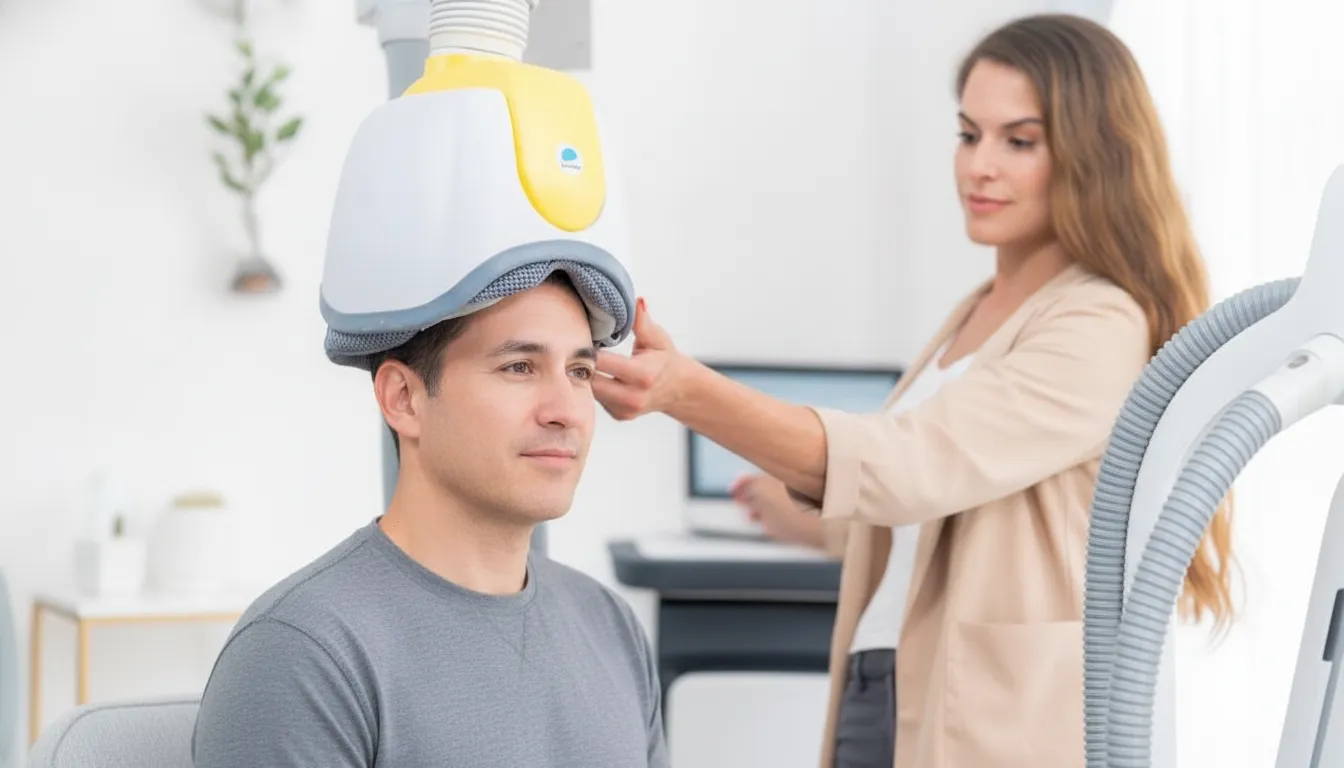
The six-to-eight-week estimate describes the overall course, not the length of an individual visit. Each appointment is one part of that larger plan. During visits, the TMS device delivers magnetic stimulation while you remain awake and seated. TMS is noninvasive and uses magnetic fields to stimulate nerve cells in the brain involved in mood regulation and depression. It may be considered when other treatments have not provided enough relief.
Because the course involves frequent visits, it helps to think about logistics before starting. Consider transportation, work or school responsibilities, and the appointment times you can maintain consistently. Discuss these practical details with your provider so the schedule reflects your needs and remains realistic.
It can also help to view the initial course as a period of ongoing assessment rather than a single appointment that determines the outcome. At each visit, share meaningful changes in mood, sleep, energy, concentration, or daily activities with your care team. Those observations give your provider useful context when discussing the next steps in your treatment plan.
Session length can vary by the TMS approach
The time spent in the office is not identical for every TMS approach. Newer theta-burst stimulation protocols use quick bursts of magnetic pulses and can shorten the stimulation portion of an appointment. Cleveland Clinic notes that theta-burst sessions can take about three to ten minutes. Your complete visit may include preparation, positioning, device setup, and a brief check-in, so ask your treatment team how long to reserve for the appointment itself.
For a plain-language overview of the technology and what happens during treatment, read how TMS therapy works. Understanding the distinction between the course and the individual session can help you make informed plans without assuming that every patient follows exactly the same schedule.
How Long Can TMS Results Last After Treatment?
For many patients, the benefits of TMS can last several months to a year or more after the initial treatment course. The exact timeline is different for each person. TMS is not a guaranteed permanent cure, and a return of symptoms does not mean treatment has failed. Instead, your provider can monitor your progress and help you decide whether additional support is appropriate.
Durability depends on the individual response to treatment, the diagnosis being treated, symptom history, and the care plan that follows the initial course. Some people continue to feel well without additional TMS for an extended period. Others notice early changes in sleep, motivation, mood, or daily functioning and may benefit from a follow-up discussion before symptoms become more difficult to manage.
What is a realistic timeline for TMS benefits?
There is no single expiration date for TMS results. A general patient-facing estimate is that relief may continue for several months, and for some patients, a year or longer. Those timeframes are useful for setting expectations, but they should not be treated as a promise. Your clinician will consider how you responded during treatment and how your symptoms develop afterward.
Research has also examined whether TMS can be used intermittently when early signs of relapse appear. One academic follow-up study described TMS as a possible rescue strategy for some people with major depressive disorder, rather than as a treatment that must be repeated on a fixed schedule. Read the PubMed study on TMS durability and relapse prevention for additional context.
Q: How long do the benefits of TMS therapy last?
A: TMS benefits may last several months to a year or more for many patients, but the duration varies. TMS is not a guaranteed permanent cure. A provider can help you track changes, discuss maintenance or booster treatment when appropriate, and adjust the plan if symptoms return.
It can help to think of TMS as one part of an ongoing mental health plan. Follow-up appointments give you an opportunity to review your mood and functioning, identify warning signs, and decide whether continued observation is enough or whether another intervention should be considered. Some patients may need booster treatment, while others may not.
If symptoms return suddenly or you feel unable to stay safe, seek immediate support. Call or text 988 to reach the 988 Suicide & Crisis Lifeline, or text HOME to 741741 for the Crisis Text Line. For non-emergency concerns, contact your treatment provider promptly so you can discuss the next appropriate step.
What Can Affect the Durability of TMS Results?
How long the benefits of TMS continue can differ from one person to another. A provider considers the full clinical picture rather than assigning a fixed expiration date to treatment. That picture may include a person’s diagnosis, symptom history, previous treatment experience, and response during the TMS course.
Diagnosis and symptom history
The diagnosis being treated and the way symptoms have developed over time can help shape follow-up planning. A person with a long history of depression, recurring episodes, or symptoms that have been difficult to manage may need a more detailed plan for monitoring after the initial course. This does not mean that a particular diagnosis or symptom history determines how long TMS results will last. It means those details provide important context for an individualized discussion.
Other aspects of a patient’s mental health history may also matter. A provider may review prior medications, earlier therapies, past periods of improvement, and any symptoms that occur alongside depression. Sharing this history openly can help the treatment team understand the patient’s needs and identify appropriate next steps.
Response during and after treatment
The degree and timing of a person’s response can influence how follow-up is approached. Some patients notice changes gradually during the treatment course. Others may need continued observation after treatment to understand how their symptoms are responding over time. TMS is not a guaranteed permanent cure, and an early response does not establish exactly how long benefits will continue.
Follow-up appointments give patients and providers an opportunity to review mood, daily functioning, sleep, medication changes, and any return of symptoms. This information can help determine whether continued observation is appropriate or whether the care plan should be revisited. Maintenance treatment or a booster course may be considered for some patients, while others may not need additional TMS.
Ongoing support and early awareness
Continuity of psychiatric care and therapy can be part of a longer-term plan after TMS. Staying connected with a qualified provider allows changes to be discussed before they become harder to manage. Sleep disruption, increased stress, medication concerns, or a noticeable shift in mood may be useful signals to bring to the care team. These factors should not be treated as proof that symptoms will return, but they can make early communication more useful.
Patients do not need to wait for symptoms to become severe before requesting guidance. Keeping track of meaningful changes and maintaining recommended psychiatric or therapy support can help providers make timely, personalized decisions about care.
Can TMS Be Repeated If Depression Returns?
If depressive symptoms begin to return after TMS, contact your treating provider early rather than waiting for symptoms to become severe. A change in sleep, motivation, concentration, energy, or interest in usual activities may be worth discussing, especially when it resembles the symptoms that led to treatment in the first place. Early communication gives your provider time to review what has changed and consider appropriate next steps.
Repeat TMS is not automatically the same for everyone. A provider may first review your current symptoms, mental health history, previous response to TMS, medications, medical history, and any recent stressors or changes in daily life. This assessment helps determine whether returning symptoms reflect a recurrence of depression, another diagnosis, medication-related changes, or a different concern that needs attention. It also helps the care team decide whether TMS remains a suitable option.
Booster sessions and a new course are not the same
Some people may be considered for a limited booster approach when early warning signs appear after a meaningful response to an initial course. In this setting, treatment is used intermittently, with the goal of responding to a change before symptoms progress. Academic follow-up data has described TMS as a potentially useful intermittent rescue strategy for people with major depressive disorder who show signs of impending relapse. Read the PubMed follow-up research for the study context.
A new course may involve a broader reassessment and a different treatment plan. The decision can depend on how much time has passed, how fully symptoms returned, how the earlier treatment worked, and whether the treatment approach should be adjusted. A provider may also discuss other parts of a comprehensive plan, such as medication management, psychotherapy, sleep, and support systems. There is no universal schedule that determines when repeat TMS is appropriate.
Individual assessment guides the next step
Do not restart treatment based only on a previous schedule or on a general timeline found online. TMS uses magnetic fields to stimulate nerve cells involved in mood regulation, and the right approach depends on the individual receiving care. A qualified provider can explain whether a booster strategy, a new course, another treatment, or additional evaluation makes sense for your current needs.
People exploring additional options can also review Relief Mental Health’s treatment-resistant depression options. If symptoms include an immediate safety concern or thoughts of suicide, call or text 988 for the 988 Suicide & Crisis Lifeline, or text HOME to 741741 to reach the Crisis Text Line.
Maintenance TMS: What It Is and Who May Need It
Maintenance TMS is follow-up care considered after the initial acute course has ended. The goal is to help support continued symptom control, but it is not a routine requirement for every patient. Some people maintain improvement without additional TMS, while others may benefit from booster treatment when symptoms begin to reappear. A clinician can help determine which approach fits your diagnosis, treatment response, and longer-term needs.
There is no universal maintenance TMS schedule. Follow-up may depend on how you responded to the initial course, whether symptoms have remained stable, and what early changes you notice over time. Rather than automatically scheduling the same treatment for everyone, your provider may monitor your progress and adjust the plan as needed. In some cases, TMS may be considered as an intermittent rescue strategy when early relapse signs appear. Research has described this approach as a way to help prevent a developing relapse, but it should be planned with a qualified clinician rather than started independently (academic follow-up data on TMS durability).
What long-term follow-up can include
Maintenance care is broader than the question of whether to schedule another TMS session. Clinical follow-up gives you and your provider a chance to review mood changes, daily functioning, side effects, and warning signs. If symptoms shift, the care plan may be revisited before they become more disruptive. You can also review possible TMS side effects and discuss any new or persistent concerns with your treatment team.
Therapy can provide additional support as you practice coping skills, process stressors, and recognize patterns that affect your mental health. Medication management may also remain part of long-term care when clinically appropriate. These services are not substitutes for one another. Your provider can help coordinate them based on your goals, diagnosis, response to treatment, and overall care plan.
Daily habits and early reporting matter
Sleep, stress, routines, and support from trusted people can all be useful topics during follow-up. They do not create a guaranteed schedule or promise that symptoms will not return. However, noticing changes early and reporting them promptly gives your provider more information when deciding whether additional evaluation or treatment may be helpful. Contact your care team when you notice a meaningful change in mood, functioning, sleep, or safety. If you may be in immediate danger or are thinking about suicide, call or text 988. You can also text HOME to 741741 to reach the Crisis Text Line.
Ready to discuss whether TMS may fit your long-term care plan? Request a consultation today.
Frequently Asked Questions
How long does a standard TMS therapy course last?
A full course commonly takes about 6 to 8 weeks, with treatment visits scheduled 5 days per week. Your provider may recommend a different timeline based on your response, treatment plan, and the protocol used. A consultation can clarify how the course may fit your schedule.
How long do the benefits of TMS therapy last?
Benefits may continue for several months, a year or more, or for a shorter or longer period, depending on the individual. Follow-up care and maintenance planning may help address changing symptoms, but no provider can promise a fixed duration of relief.
Does TMS therapy provide permanent results?
TMS is not considered a guaranteed permanent cure. Some people maintain meaningful improvement after their initial course, while others may notice symptoms returning and need additional evaluation or support. Your clinician can help define realistic goals and monitor your progress over time.
Can TMS be repeated if symptoms return?
In some cases, a provider may consider repeat or booster treatment when early signs of relapse appear. The decision depends on your current symptoms, treatment history, prior response, and overall care plan. An evaluation is important before restarting treatment, rather than assuming the original schedule should be repeated. Read academic follow-up research on repeat TMS.
How long is a single TMS therapy session?
Individual visit length depends on the protocol and equipment. Traditional sessions often take about 20 to 40 minutes, while newer theta-burst approaches may be shorter. Your treatment team can explain the expected appointment length, including setup and positioning time. See clinical information about TMS session formats.
Ready to Discuss Your TMS Treatment Plan?
The right follow-up plan depends on your symptoms, response to treatment, and goals. A consultation can help you understand whether TMS fits your situation and what ongoing care may look like, including options if symptoms return. Request a consultation with Relief Mental Health to discuss your next step with the care team.
Ready to Find Relief?
We’re Here to Help.
Our team offers personalized, evidence-based care for depression, anxiety, OCD, PTSD, and more — including Deep TMS™, SPRAVATO®, and IV ketamine. Reach out today and we’ll help you find the right path forward.