You’ve probably heard about antidepressants, but what happens when they aren’t enough? For many, the next step involves exploring treatments that work more directly with the brain. TMS therapy for depression is a clinically proven, non-invasive procedure that does just that. It uses focused magnetic fields, similar to an MRI, to gently awaken the parts of your brain that have become underactive due to depression. Think of it as physical therapy for your brain’s mood-regulating circuits. This approach avoids the systemic side effects of medication and offers a powerful alternative for achieving lasting relief. Here, we’ll break down the science behind TMS and what it feels like.
Key Takeaways
- TMS offers a different approach to healing: Unlike medication that affects your whole body, TMS is a non-invasive therapy that uses magnetic fields to stimulate the specific parts of your brain that regulate mood, making it a powerful option for treatment-resistant depression.
- Treatment sessions are simple and fit into your life: A typical session is short, often under 30 minutes, and you remain awake and comfortable the entire time, so you can drive yourself home or return to your day immediately after.
- It’s a proven and widely covered treatment: Clinical studies show high success rates for reducing depression symptoms, and most major insurance plans cover TMS once it is deemed medically necessary.
What Is TMS Therapy for Depression?
When you’re dealing with depression that hasn’t responded to other treatments, it’s easy to feel stuck. Transcranial Magnetic Stimulation, or TMS, is an innovative, non-invasive option that offers hope by working directly with your brain’s natural processes. It’s a clinically proven approach for conditions like depression, OCD, and anxious depression that uses magnetic fields to gently stimulate specific areas of the brain.
Unlike medication that circulates through your entire body, TMS is a targeted treatment. It focuses on the regions of the brain involved in mood regulation that may be underactive in people with depression. Think of it as a way to restart and strengthen the connections that help you feel better. At Relief, we see TMS therapy as a powerful tool for those seeking a different path toward healing.
How Does TMS Work?
During a TMS session, a small, specialized coil is placed gently against your head. This coil generates magnetic pulses, similar in strength to those used in an MRI machine. These pulses pass through the scalp and skull without any discomfort to reach the targeted nerve cells in your brain.
The magnetic energy creates a gentle electrical current that excites these cells, encouraging them to become more active. This process focuses on the prefrontal cortex, the part of your brain that plays a key role in managing your mood. By stimulating this area, TMS helps restore normal brain function and communication between brain cells, which can significantly reduce symptoms of depression.
How TMS Helps Your Brain Heal
The consistent stimulation from TMS therapy helps your brain build and reinforce healthier neural pathways. This process is known as synaptic plasticity, which is your brain’s natural ability to change and adapt. Essentially, TMS acts like a physical therapist for your brain, helping it strengthen the connections that may have weakened due to depression.
Clinical studies show that this approach is effective. About 50% to 55% of people with treatment-resistant depression experience a positive response to TMS. Even more encouraging, roughly one-third of individuals achieve full remission, meaning their symptoms go away completely. It’s a way to help your brain heal itself from the inside out.
How Is TMS Different from ECT?
Many people hear about brain stimulation and immediately think of Electroconvulsive Therapy (ECT), but TMS is very different. The most important distinction is that TMS is non-invasive. It does not require any surgery, needles, or anesthesia. You are fully awake and alert throughout the entire session and can drive yourself home or return to your daily activities right after.
While ECT is a safe and effective treatment for certain severe conditions, it involves a controlled seizure under general anesthesia. In contrast, TMS uses magnetic pulses to stimulate brain cells without causing a seizure. Most people report only a light tapping sensation on their scalp during treatment, making it a much more comfortable and less disruptive experience.
Types of TMS Therapy
TMS isn’t a one-size-fits-all solution. Just as therapy and medication come in different forms, TMS technology has evolved to offer several approaches tailored to different needs. While all types of TMS share the same goal of using magnetic fields to stimulate specific areas of the brain, the method of delivery can vary. Understanding these differences can help you and your provider decide which path is the best fit for your journey toward healing. At Relief, we specialize in offering these advanced, evidence-based treatments to ensure you receive the most effective care possible. Let’s walk through the main types you’ll encounter.
Repetitive TMS (rTMS)
Think of Repetitive TMS, or rTMS, as the foundational and most widely studied form of this therapy. During an rTMS session, a targeted magnetic coil sends out repeated pulses to a specific spot on the brain. This technique is designed to gently stimulate the nerve cells involved in regulating your mood, which often become underactive in people with depression. A typical session lasts between 20 and 40 minutes. Because the goal is to create lasting change in brain activity, treatments are usually scheduled daily over several weeks. It’s a steady, consistent approach that has helped countless people find relief.
Deep TMS (dTMS)
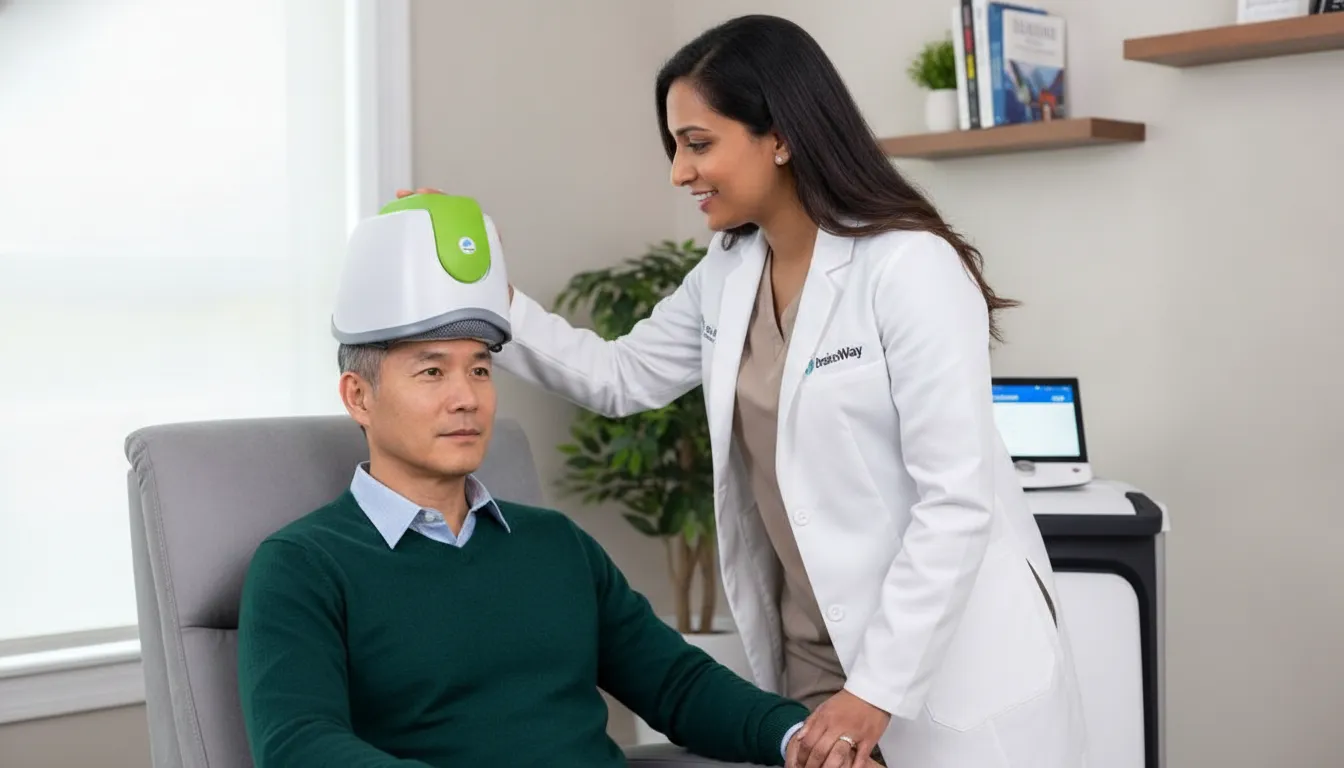
Deep TMS, or dTMS, is an evolution of the original technology. This method uses a specially designed, cushioned helmet that contains an H-coil. This unique coil allows the magnetic pulses to reach broader and deeper areas of the brain than rTMS can. This is particularly helpful for targeting brain structures that play a key role in depression but are harder to access. For some individuals, this wider and deeper reach can make a significant difference in their treatment outcome. The sessions are similar in length to rTMS, offering a powerful alternative for those who may not have responded to other therapies.
Theta Burst Stimulation (TBS)
Theta Burst Stimulation (TBS) is a newer, more efficient form of TMS that is quickly gaining popularity, and for good reason. Instead of the steady, repeated pulses of rTMS, TBS uses very quick, targeted bursts of stimulation. This pattern mimics the brain’s natural theta waves, which are associated with learning and memory. The biggest advantage of TBS is speed. A complete session can take as little as three to ten minutes, making it much easier to fit into a busy schedule. Research has shown that this rapid approach can achieve similar, and sometimes even better, therapeutic effects in a fraction of the time.
What Does a TMS Treatment Session Look Like?
If you’re considering TMS, you might be picturing a complicated, intense procedure. The reality is much simpler and more comfortable. During a TMS session, you’ll be awake and resting in a comfortable chair. It’s a non-invasive treatment, meaning nothing enters your body or bloodstream. A small electromagnetic coil is gently placed against your scalp near your forehead. This coil delivers focused magnetic pulses, similar in strength to an MRI machine, to stimulate nerve cells in the area of your brain that regulates mood.
You might feel a light tapping sensation on your head where the coil is placed. The machine also makes a clicking sound with each pulse, so we’ll provide earplugs for your comfort. A typical session lasts between 20 and 40 minutes, and you can go right back to your daily activities afterward, including driving yourself home or to work. There’s no sedation or recovery time needed. Our team is with you the entire time to make sure you feel safe and at ease throughout all of our mental health treatments.
Your TMS Session Schedule
Consistency is key for TMS to be effective. A typical treatment plan involves coming in for sessions five days a week, usually Monday through Friday. This steady schedule allows the magnetic pulses to create a cumulative effect, gradually retraining your brain’s neural pathways. Think of it like physical therapy for your brain; each session builds on the last one to help you achieve lasting results. Most people complete their full course of treatment over several weeks, making it a regular part of their routine for a short period.
What to Expect During Your First Appointment
Your first appointment is a little different from the rest because it’s all about personalizing the treatment for you. During this initial session, your clinician will take careful measurements to find the precise location on your head to place the coil. They will also determine the right energy level needed to stimulate your brain’s nerve cells effectively. We’ll ask you to remove any magnetic-sensitive items like jewelry or credit cards from your pockets. This first step ensures that every subsequent session is tailored specifically to you and your treatment for depression or another condition.
How Long Does a Full TMS Treatment Course Last?
While a single session is short, the entire treatment course is a commitment to your mental health. A full course of TMS therapy typically involves sessions five days a week for about four to six weeks. This adds up to roughly 30 to 36 appointments in total. This structured plan is designed to produce significant and lasting changes in brain activity. By consistently stimulating the targeted brain region over several weeks, TMS helps create new, healthier neural patterns, which is essential for finding long-term relief from your symptoms.
Who Is a Good Candidate for TMS Therapy?
It can feel incredibly discouraging when you’ve tried therapy and multiple medications for depression, but nothing seems to bring lasting relief. If you find yourself in this situation, you are not alone, and it’s not a sign of failure. It simply means you may need a different kind of treatment. This is where Transcranial Magnetic Stimulation (TMS) often comes in. TMS is a non-invasive therapy designed specifically for people who have what’s known as treatment-resistant depression (TRD). This term applies to individuals who haven’t found significant improvement after trying other standard treatments.
Instead of being a first-line approach, TMS is a powerful and effective next step. It offers a new path forward by working directly with the brain’s neural circuits involved in mood regulation. The ideal candidate is someone who is committed to finding relief and is open to an innovative, evidence-based approach. It’s for those who have diligently followed treatment plans but are still struggling with the persistent weight of depressive symptoms. If this sounds like your experience, exploring TMS could be a pivotal moment in your mental health journey.
What Conditions Does TMS Treat?
TMS therapy is FDA-approved for treating specific and often persistent mental health conditions. Its most common and well-researched application is for Major Depressive Disorder (MDD), particularly for individuals who have not responded to antidepressant medications. It’s a proven alternative when other methods fall short.
Beyond depression, TMS is also an FDA-approved treatment for Obsessive-Compulsive Disorder (OCD). By targeting the specific brain circuits involved in OCD symptoms, TMS can help reduce the intrusive thoughts and compulsive behaviors that define the condition. As research continues, the potential applications for TMS are expanding, but its established success in treating depression and OCD makes it a critical tool for modern mental healthcare.
Who Should Avoid TMS?
While TMS is a safe procedure for most people, it’s not suitable for everyone. Your safety is the top priority, so a thorough screening process is essential. The main reason a person would not be able to receive TMS is the presence of metal in or near their head. Because TMS uses powerful magnetic pulses, any magnetic-sensitive metal can be dangerous.
This includes items like:
- Aneurysm clips or coils
- Stents in the neck or brain
- Cochlear implants or other ear implants
- Shrapnel or bullet fragments in the head
- Metal plates or other implants from facial surgery
Additionally, individuals with a history of seizures or epilepsy are generally not candidates for TMS. Although rare, TMS carries a small risk of inducing a seizure.
How We Determine if TMS Is Right for You
Figuring out if TMS is the right fit for you is a collaborative and thoughtful process. It all starts with a comprehensive consultation with our clinical team at Relief Mental Health. This isn’t just a screening; it’s a conversation. We’ll review your medical history, discuss the treatments you’ve tried in the past, and, most importantly, listen to your story and what you hope to achieve.
This initial meeting is your opportunity to ask every question you have and for us to get a clear picture of your unique situation. Based on this thorough evaluation, we can determine if you are a good candidate for one of our advanced treatments like TMS. Our goal is to ensure you feel informed, comfortable, and confident in the path forward.
How Effective Is TMS for Depression?
When you’re exploring new options for your mental health, one of the biggest questions is simple: does it actually work? For many people living with depression, especially when other treatments haven’t provided the relief they need, Transcranial Magnetic Stimulation (TMS) has been a life-changing therapy. The evidence shows that TMS is a highly effective and durable treatment for depression, offering a new path forward for many. Let’s look at what the research says about its success rates and long-term benefits.
What Do the Success Rates Say?
The numbers behind TMS are very encouraging. It’s helpful to understand two key terms: “response” and “remission.” A response means you experience a significant improvement in your depression symptoms. Remission means your symptoms have gone away almost completely. Clinical studies show that about 50% to 60% of people with treatment-resistant depression experience a meaningful response to TMS. Even better, about one-third of individuals achieve full remission. Some reports show even higher success, with response rates over 80%. These results show just how powerful TMS can be for those who haven’t found success with other methods.
How Does TMS Compare to Antidepressants?
TMS isn’t meant to replace antidepressants entirely, but it offers a powerful alternative, especially for individuals with treatment-resistant depression. While antidepressants work systemically (affecting your whole body), TMS is a non-invasive, targeted treatment. It uses magnetic pulses to gently stimulate the specific areas of the brain that regulate mood. Because it’s so precise, it doesn’t cause the widespread side effects often associated with medication. The FDA has approved TMS since 2008, confirming it as a safe and scientifically validated therapy for depression when other approaches haven’t been enough.
Do the Effects of TMS Last?
This is a question we hear a lot, and the answer is yes, the positive effects of TMS are often lasting. Many people who complete a full course of TMS report sustained improvement in their mood and overall well-being long after their final session. To help maintain these results, your provider may recommend a follow-up plan, which could include ongoing therapy or medication. Think of the initial TMS course as the intensive work that gets your brain back on track, and the follow-up care as the support that keeps it there. This comprehensive approach is key to achieving long-term wellness with our mental health treatments.
Is TMS Safe? Understanding the Side Effects
When you’re considering a new treatment, one of your first questions is probably about safety. It’s a great question to ask, and the straightforward answer is yes, Transcranial Magnetic Stimulation (TMS) is widely considered a safe and well-tolerated procedure. It’s a non-invasive, FDA-approved therapy that has helped thousands of people find relief from persistent mental health conditions.
Like any effective medical treatment, TMS does have potential side effects. The good news is that for most people, these are mild and temporary. Understanding the full picture helps you make an informed decision with your care team. Let’s walk through what you can expect, from the most common experiences to the rarest risks.
Common Side Effects
Most people handle TMS therapy very well. When side effects do occur, they are typically mild and often lessen as your treatment course continues. The most common experience is a temporary headache, which about half of patients report. These are usually manageable with over-the-counter pain relievers and tend to fade as you get used to the treatment.
Some people also feel a tingling sensation on their scalp or minor facial twitching during the session. This happens because the magnetic pulses can stimulate the surface nerves in your skin. This feeling is also temporary and tends to improve or disappear over the first couple of weeks. Your technician will work with you to ensure you are as comfortable as possible during every session.
Rare but Serious Risks
It’s important to also be aware of the more serious, though very rare, risks associated with TMS. The most significant risk is a seizure. However, the likelihood of this happening is extremely low, estimated to occur in less than 0.1% of patients. To put your mind at ease, our clinical team conducts a thorough screening before starting treatment to identify any factors that could increase this risk.
Medical professionals follow strict safety protocols during every session to minimize any potential dangers. Your health and safety are our top priority, and our team is fully trained to handle any unlikely complications. We are always here to discuss any concerns you might have before, during, or after your treatment.
Is TMS Safe Long-Term?
TMS is not a new or experimental procedure; it is a well-studied and FDA-approved treatment that has been in use for over a decade. Extensive research has shown no negative long-term effects from undergoing a course of TMS. In fact, the long-term outlook is overwhelmingly positive, with many people experiencing a significant reduction or complete remission of their depression symptoms.
The lasting benefit of TMS is its ability to create durable changes in brain function, helping you achieve long-term wellness. At Relief Mental Health, we see TMS therapy as a powerful tool for healing, offering a safe and effective path forward when other treatments haven’t provided the relief you deserve.
Is TMS Covered by Insurance?
Let’s talk about one of the biggest questions people have when considering a new treatment: what does it cost, and will insurance help pay for it? The good news is that since Transcranial Magnetic Stimulation (TMS) is an FDA-approved and evidence-based treatment, most major insurance plans now offer coverage for it, especially for treatment-resistant depression. The process of getting approval can feel complicated, but you don’t have to figure it out alone.
Understanding your insurance benefits and any potential out-of-pocket costs is a critical step in your care journey. At Relief Mental Health, our team is here to handle the administrative side of things for you. We work directly with your insurance provider to verify your coverage and complete any necessary prior authorizations before you begin treatment. Our goal is to give you a clear and complete picture of your financial responsibility so you can focus on what truly matters: feeling better.
What Most Insurance Plans Cover
Most major insurance providers cover TMS therapy when it’s deemed medically necessary. To meet their criteria, you typically need a formal diagnosis of a condition like Major Depressive Disorder and a documented history showing that other treatments haven’t worked for you. This usually means you’ve tried at least two different antidepressant medications without getting the relief you need. Some plans may also require you to have completed a course of psychotherapy. Our team at Relief will help you gather the necessary documentation and submit it to your insurance provider to confirm your coverage for depression treatment. We take care of the paperwork so you don’t have to.
Out-of-Pocket Costs and Financial Assistance
If your insurance plan doesn’t cover TMS or if you have a high deductible, you might be concerned about out-of-pocket costs. The final price of a full TMS course depends on the specific number of sessions in your personalized treatment plan. While paying entirely out-of-pocket can be a significant investment, we are committed to making our services accessible. The best way to understand your specific costs is to schedule a consultation with our team. We will provide a transparent breakdown of all expenses and discuss any available payment options with you. We want to ensure you have all the information you need to make a confident decision about our innovative treatments.
Is TMS Therapy the Right Treatment for You?
Deciding on a mental health treatment is a deeply personal choice, and it’s completely normal to feel a mix of hope and uncertainty. If you’ve tried other options for depression without getting the relief you deserve, you might be wondering if TMS is the right next step. It’s a powerful, non-invasive tool, but it’s one of several advanced treatments available for conditions that haven’t responded to traditional methods. Understanding how it compares to other therapies, separating fact from fiction, and knowing what the first steps look like can help you make an informed decision with your care team.
TMS is most often used for people with treatment-resistant depression, which means they’ve already tried approaches like talk therapy and antidepressant medications without success. The good news is that TMS offers a different path forward. It’s a safe, FDA-cleared procedure that directly stimulates the parts of your brain involved in mood regulation. Think of it as a way to gently restart the circuits that have become underactive. Our goal at Relief is to give you all the information you need to feel confident and clear about your options, so let’s walk through some key considerations together.
Comparing TMS to Ketamine and Spravato
When you’re exploring options for treatment-resistant depression, you’ll likely come across TMS, IV Ketamine, and Spravato. All three are innovative and effective, but they work in different ways. TMS uses targeted magnetic fields to stimulate nerve cells in your brain. It’s a non-invasive procedure, meaning nothing enters your body.
In contrast, IV Ketamine infusions and the esketamine nasal spray, Spravato, are medications that work on a different neurotransmitter system in the brain to create rapid antidepressant effects. The best choice for you depends on your specific diagnosis, treatment history, and medical background. Our team can help you understand the pros and cons of each option based on your unique situation.
Debunking Common TMS Myths
It’s easy to find misinformation online, so let’s clear up a few things about TMS. One common myth is that it’s painful or similar to electroconvulsive therapy (ECT). This isn’t true. TMS is generally well-tolerated, with most people feeling just a light tapping sensation on their scalp during the session. Unlike ECT, it doesn’t require anesthesia or cause a seizure.
Another misconception is that TMS is experimental. While it’s an advanced therapy, it’s far from new. The technology was developed in 1985 and has been FDA-cleared since 2008 for treating major depressive disorder. It’s a well-established, evidence-based treatment that has helped thousands of people find relief when other methods have failed.
How to Get Started at Relief Mental Health
Taking the first step toward a new treatment can feel like the hardest part, but we’re here to make it as simple as possible. Your journey begins with a consultation with our team. During this meeting, we’ll review your mental health history, discuss your symptoms, and answer all of your questions. This conversation helps us determine if you are a good candidate for TMS or if another one of our treatments might be a better fit.
If TMS is right for you, we’ll handle the insurance authorization process and schedule your first session. Remember, treatment is a collaborative process, and having a strong support system is key. When you’re ready to explore your options, contact us to schedule your initial evaluation.
Frequently Asked Questions
Does TMS therapy hurt? This is one of the most common questions we hear, and it’s a great one. The short answer is no, TMS is not a painful procedure. During a session, you will feel a tapping sensation on your scalp where the coil is placed. Some people describe it as light and repetitive, while others find it a bit strange at first. The intensity is customized for you, and our technicians are with you the entire time to make sure you are comfortable. Any mild discomfort usually fades within the first week as you get used to the feeling.
How soon will I start to feel better with TMS? The timeline for feeling improvement varies from person to person. Some individuals report subtle positive changes, like having more energy or sleeping better, within the first couple of weeks. For others, a noticeable shift in mood happens more gradually toward the end of the treatment course. The key is consistency. Completing the full course of treatment gives your brain the time it needs to build stronger, healthier neural connections for lasting results.
Can I continue my regular activities during the treatment course? Absolutely. One of the biggest advantages of TMS is that it requires no downtime. Since the treatment is non-invasive and doesn’t involve any sedation, you can drive yourself to and from your appointment and immediately return to your daily routine. Many of our patients schedule their sessions during a lunch break or on their way to or from work. It’s designed to fit into your life, not disrupt it.
Do I need to stop taking my antidepressant medication to do TMS? No, you generally do not need to stop taking your medication. TMS is often recommended for people who haven’t had a complete response to antidepressants, and it can be used alongside your current medication regimen. It works through a different mechanism, so the two treatments can complement each other. You should never make any changes to your medication without first discussing it with your doctor, who will help you create the best overall treatment plan.
What happens if my depression symptoms come back after treatment? The goal of TMS is to provide long-term relief, and for many people, the results are lasting. However, depression can be a recurring condition. If you find your symptoms returning months or years later, you are not back at square one. Your doctor may recommend a shorter course of maintenance TMS sessions to help you get back on track. This is often very effective at restoring the positive results you achieved during your initial treatment.
Ready to Find Relief?
We’re Here to Help.
Our team offers personalized, evidence-based care for depression, anxiety, OCD, PTSD, and more — including Deep TMS™, SPRAVATO®, and IV ketamine. Reach out today and we’ll help you find the right path forward.