When depression symptoms continue despite careful medication trials, comparing another medication strategy with a different treatment approach can feel both important and exhausting. Antidepressants remain a standard and valuable part of depression care. But they are not the only option when relief has been limited or side effects have become difficult to manage.
The key difference in tms vs antidepressants is how treatment reaches the brain: antidepressants work throughout the body through medication, while TMS uses targeted magnetic pulses to stimulate specific brain regions. The right choice depends on your diagnosis, treatment history, symptoms, side-effect concerns, and clinical evaluation.
TMS is non-invasive and does not require anesthesia or medication to circulate throughout the body. Understanding how each approach works can make the next conversation with your psychiatric care team more focused, especially when standard treatment has not provided enough improvement. Start by looking at the mechanisms behind antidepressants and TMS, then consider how those differences may affect treatment planning. For additional background, read how TMS therapy works.
Ready to explore whether TMS may fit your care plan? Request a consultation today.
How Do Antidepressants Work vs. TMS Therapy?
Antidepressants and transcranial magnetic stimulation (TMS) address depression through different treatment pathways. The right approach depends on your diagnosis, treatment history, symptoms, medical considerations, and goals. A psychiatrist can help determine whether medication, TMS, or a combination makes sense for you.
How SSRIs and SNRIs Work
Selective serotonin reuptake inhibitors (SSRIs) and serotonin-norepinephrine reuptake inhibitors (SNRIs) are oral medications that act throughout the body. They reduce the reuptake of certain neurotransmitters, including serotonin and, with SNRIs, norepinephrine. This changes how those chemical signals remain available between nerve cells.
Because the medication has to build toward a therapeutic effect, antidepressants commonly require several weeks before a meaningful response can be assessed. Your prescriber may adjust the dose or medication during that period based on symptom improvement and side effects.
How TMS Uses Targeted Magnetic Stimulation
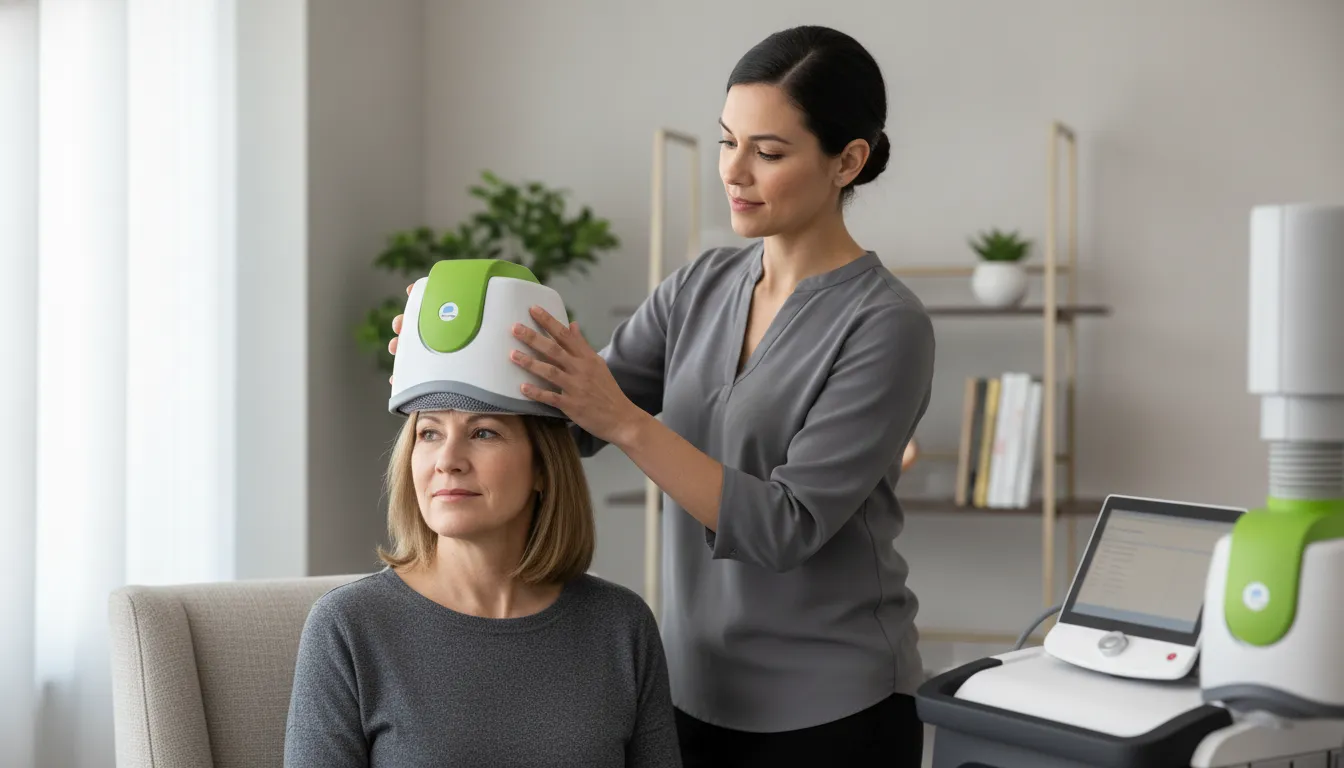
TMS uses focused magnetic pulses to stimulate a specific area involved in mood regulation, commonly the dorsolateral prefrontal cortex. It is non-invasive and does not circulate a drug throughout the body. TMS therefore offers a localized neuromodulation approach rather than a systemic medication effect. For a more detailed explanation, read how TMS therapy works.
TMS is delivered on a regular schedule across a course of office sessions, allowing the effects of repeated stimulation to build over time. You remain awake during treatment and can generally return to your normal activities afterward. Your clinical team can explain the visit schedule after evaluating your diagnosis and treatment history.
Key Differences at a Glance
- Delivery: SSRIs and SNRIs are taken by mouth as prescribed; TMS is administered in scheduled sessions.
- Target: Antidepressants have a systemic effect; TMS focuses magnetic stimulation on a targeted brain region.
- Planning: Medication response is evaluated over time, while TMS is delivered through an evaluated course of office sessions.
- Medication exposure: TMS does not require systemic medication or anesthesia.
These treatments are not always mutually exclusive. Some patients continue medication while receiving TMS, under the direction of their psychiatric provider.
When Antidepressants Do Not Provide Enough Relief
When a standard antidepressant does not provide enough relief, the next step is not necessarily to keep repeating the same approach. Treatment-resistant depression (TRD) generally describes depression that has not responded adequately to standard medication treatment. A psychiatric provider can review your diagnosis, treatment history, symptoms, side effects, and goals to help determine what to discuss next.
That does not mean medication has failed permanently, or that everyone should stop taking it. A psychiatrist may recommend adjusting the dose, changing medications, adding psychotherapy, combining treatments, or considering a non-medication option such as transcranial magnetic stimulation (TMS). The right choice depends on your diagnosis, treatment history, symptoms, side effects, and overall health.
A useful treatment discussion also considers what has been practical and sustainable for you. Tell your provider about changes in sleep, appetite, concentration, motivation, and daily functioning. It is also important to share any medication concerns, including side effects that make it harder to follow the plan. This information helps your provider consider the full picture rather than focusing on one symptom or one treatment name.
How do TMS and medication changes compare?
For people with treatment-resistant depression, TMS may be considered when medication changes have not produced sufficient improvement. A provider can explain how TMS compares with other options and discuss what factors matter for your care. Available research can provide general context, but study findings do not predict what will happen for any individual.
Can improvement last after TMS?
Follow-up is an important part of any treatment decision. Your clinical team can discuss how symptoms are monitored after TMS and whether ongoing follow-up or a maintenance plan may be recommended. To discuss whether TMS fits your treatment history, learn more about TMS treatment at Relief Mental Health.
Side Effects: Antidepressants vs. TMS
Side effects are an important part of the decision when comparing treatment options. Antidepressants circulate throughout the body, so their effects can extend beyond mood symptoms. TMS uses targeted magnetic stimulation instead of medication, which creates a different side effect profile.
- Antidepressants: Depending on the medication and the individual, systemic effects may include weight gain, nausea, insomnia, sexual dysfunction, or emotional blunting. These effects can influence daily routines, relationships, appetite, sleep, and a person’s sense of emotional connection.
- TMS: Some people experience mild scalp tenderness or discomfort during stimulation. Some people experience a headache, particularly during early sessions. Your treatment team can explain potential effects and what to report.
A Localized Treatment Without Systemic Medication
Because TMS is non-systemic, it does not carry the same medication-related effects on weight, sexual function, or digestion. It is also designed to stimulate a targeted brain region rather than alter neurotransmitter levels throughout the body. This distinction may matter to people who have experienced difficult medication side effects or want to discuss a non-medication treatment option.
TMS is not automatically free of discomfort, and every treatment decision should account for a person’s diagnosis, medical history, current medications, and treatment goals. A clinician can also discuss whether medication should continue during TMS. For someone who has experienced difficult medication side effects, this localized approach may offer another path to consider without adding another systemic medication burden.
Before beginning any treatment, ask what the first visit includes, how the care team will review your symptoms, and which changes should prompt a call. You can also ask how the team coordinates care when more than one treatment is part of the plan. These details may help you understand the process and decide which questions are most important for your consultation.
Can You Use TMS and Antidepressants at the Same Time?
Yes. TMS and antidepressants can often be used together as part of a coordinated treatment plan. Rather than viewing the decision as TMS vs antidepressants, a psychiatrist may recommend TMS to augment a partial response to medication, especially when symptoms remain despite an appropriate medication plan.
Combining approaches may allow each treatment to contribute its strengths while your clinical team monitors symptom changes, side effects, sleep, energy, and day-to-day functioning. Whether using both approaches is appropriate depends on your diagnosis, treatment history, current medications, and overall health.
Medication and TMS may play different roles at different points in a person’s care. A provider may recommend continuing a medication while evaluating TMS, or may revisit the medication plan as symptoms and treatment goals change. Any adjustment should be guided by the prescribing clinician and coordinated with the rest of the care team.
What if your treatment plan needs to change?
Your care does not have to stop at one modality. Relief Mental Health offers TMS along with traditional psychiatry and other mental health services across one network. The right sequence depends on your diagnosis, treatment history, current medications, and overall health.
A comprehensive evaluation can clarify whether adding TMS, continuing medication, or considering another evidence-based option makes sense for you. A psychiatric provider can help you compare the options using your diagnosis, treatment history, symptoms, and goals.
Bring questions that are specific to your experience. You might ask how the provider will evaluate progress, how side effects will be addressed, and how the plan can change if your symptoms or priorities change. You can also ask which members of the care team will be involved and how follow-up communication works. A clear discussion helps you make an informed decision without assuming that one approach fits every person.
Schedule a consultation to discuss TMS and antidepressant options with a psychiatric provider.
Frequently Asked Questions
Is TMS better than antidepressants?
Neither treatment is universally better for every person, but TMS may be a useful next step when medication has not provided enough relief. Your psychiatrist can help interpret clinical evidence alongside your diagnosis, treatment history, and preferences.
Can I receive TMS if I am still taking an antidepressant?
Often, yes. TMS may be used alongside an antidepressant when the medication provides partial benefit or is considered appropriate to continue. Do not stop, reduce, or change medication without guidance from the prescribing clinician. A treatment team can coordinate both approaches and monitor symptoms, side effects, and progress over time.
How does the timing of TMS compare with medication?
Antidepressants commonly require several weeks before a response can be evaluated. TMS is delivered through a planned series of office sessions, and improvement may build during the course. The timeline varies by person, medication history, symptom severity, and treatment plan. Ask the clinical team what milestones they will use to assess whether the approach is helping.
How do side effects differ between TMS and antidepressants?
Because antidepressants circulate throughout the body, they can cause effects such as nausea, insomnia, sexual dysfunction, weight changes, or emotional blunting. TMS is non-systemic, so common effects are usually localized, such as temporary scalp discomfort or a headache during early sessions. Tell your clinician about any side effect so the treatment plan can be adjusted safely.