If you are researching therapy alongside TMS treatment for depression, you may wonder whether psychotherapy still has a place when an interventional treatment is added to your care plan. In many plans, therapy remains important because it helps you understand changes, practice new skills, and make treatment decisions with a coordinated team. For broader context about persistent depression and next-step care, read this guide to treatment-resistant depression.
Request a consultation to discuss an integrated depression treatment plan.
Why Therapy Is Still Important During TMS or Ketamine-Based Treatment
Therapy can complement TMS or ketamine-based treatment by supporting emotional processing, coping skills, communication, and day-to-day behavior change. TMS and other interventional treatments address a different part of care, while psychotherapy gives patients a structured place to understand symptoms, apply strategies, and discuss what they notice with their treatment team.
It is easy to think of treatment as an either-or decision: therapy or TMS, medication or psychotherapy, an interventional treatment or ongoing counseling. Mental health care is often more useful when the parts of the plan work together. Each modality has a different role, and the best combination depends on your diagnosis, symptoms, history, preferences, safety needs, and goals. Relief Mental Health’s therapy services can be discussed alongside the clinic’s broader treatment options.
Therapy may be helpful before TMS begins, during the treatment period, after a course is complete, or at several of these points. The timing is individualized. A therapist may help you prepare for a new treatment, identify changes in mood or sleep, and develop a plan for responding to difficult days without treating a single symptom shift as the final measure of progress.
During ketamine-based care, therapy can also provide a grounded setting for reflection and follow-up. Patients should not assume that a medication or procedure will do all the work of recovery. A qualified clinician can explain which services may be combined safely, how the providers will communicate, and what to do if symptoms change.
How Do Therapy and TMS Work Together for Depression?
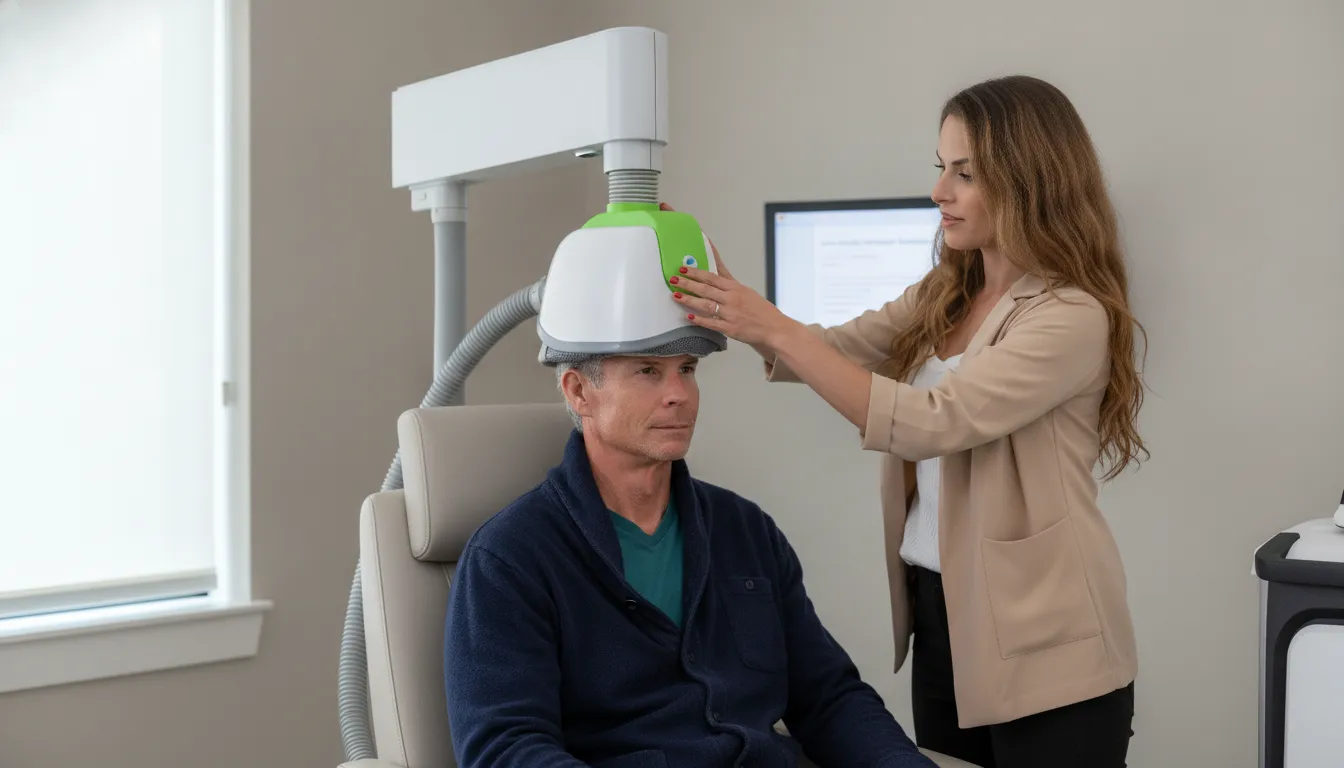
Therapy and TMS work together when the medical and psychotherapy parts of care share goals and communicate about progress. TMS is an interventional treatment that uses magnetic stimulation, while therapy helps patients work through thoughts, emotions, habits, relationships, and practical barriers connected to depression.
TMS and psychotherapy do not need to compete for attention. TMS may be one part of an individualized plan for depression, while therapy helps you translate changes in mood or motivation into daily choices. For example, a patient may use sessions to identify a pattern of withdrawal, then work with a therapist on a gradual communication or activity plan that feels realistic.
The clinical team may coordinate around a small set of shared goals, such as:
- Improving the ability to participate in work, school, family, or social activities
- Recognizing mood changes early and communicating them clearly
- Building routines that support sleep, nutrition, movement, and appointments
- Practicing strategies for rumination, avoidance, hopeless thoughts, or low motivation
- Reviewing whether the plan is helping and what should be adjusted
Coordination does not mean that a therapist directs TMS settings or that a TMS provider directs psychotherapy exercises. Each clinician works within their role. With appropriate communication and patient consent, the team can avoid treating the same concern in isolation and can create a clearer picture of what is changing.
Research on combining TMS with other mental health treatments continues to develop. A review in PubMed Central’s overview of TMS for depression describes TMS as an option that may be used with psychotherapy. A separate review of TMS and ketamine in depression discusses possible mechanisms and the need for more research on how combined approaches should be sequenced. These sources support a careful, individualized conversation, not a promise that combining treatments will work for everyone.
What Does Each Part of Integrated Care Contribute?
Integrated care assigns each treatment a clear purpose. Psychotherapy supports insight, coping, relationships, and behavior change. TMS provides a medical intervention that targets brain activity. Ketamine-based treatment, when clinically appropriate, is evaluated and monitored by a qualified medical provider. Together, these parts can be coordinated without treating them as interchangeable.
| Part of care | Primary focus | What patients may discuss with the team |
|---|---|---|
| Psychotherapy | Thoughts, emotions, behavior, relationships, and coping | Skills to practice, barriers to participation, and changes in daily functioning |
| TMS | Interventional treatment using targeted magnetic stimulation | How sessions fit the medical plan and what symptoms or side effects to report |
| Ketamine-based treatment | Medical evaluation and monitored treatment when appropriate | Safety questions, preparation, follow-up, and how it fits with other care |
| Psychiatric care | Diagnosis, medication review, and overall treatment planning | How the full plan is progressing and whether any part needs to change |
The table is a framework, not a prescription. Some patients may use therapy with TMS. Others may continue psychotherapy while exploring a different medical treatment. Some may need psychiatric evaluation or medication management before a clinician recommends an interventional option. The purpose of an integrated plan is to connect these decisions, not to add every available service.
Patients can also benefit from knowing who is responsible for which question. A therapist is often the right person to discuss emotional patterns, coping skills, and relationship stress. A psychiatrist or other qualified medical provider can answer questions about diagnosis, medication, TMS, or ketamine-based treatment. When the team has a clear communication process, you do not have to repeat the same history at every visit. Relief’s TMS treatment overview provides separate background on the modality itself.
What Types of Therapy Can Complement Interventional Treatment?
The therapy that complements TMS or ketamine-based treatment should match the patient’s diagnosis, symptoms, goals, and readiness. Cognitive behavioral therapy may address unhelpful thought and behavior patterns, while trauma-informed, exposure-based, or skills-focused approaches may be considered for specific concerns after a qualified therapist evaluates the individual.
There is no single therapy that is right for every person receiving TMS or another interventional treatment. A clinician may discuss approaches such as:
- Cognitive behavioral therapy: Helps patients examine the relationship between thoughts, feelings, and actions, then practice more workable responses.
- Behavioral activation: Focuses on gradually reconnecting with meaningful activities when depression has led to withdrawal or loss of routine.
- Trauma-informed therapy: Uses a safety-conscious approach that respects how trauma may affect trust, emotion regulation, and treatment participation.
- Exposure and response prevention: May be considered for obsessive-compulsive symptoms when a trained clinician determines it is appropriate.
- Supportive psychotherapy: Provides space to process stress, strengthen coping, and stay engaged with a broader care plan.
- Skills-based therapy: Can help with emotional regulation, distress tolerance, communication, and problem-solving.
These labels are not substitutes for an evaluation. A patient may use one approach, a combination of approaches, or a different therapy altogether. The therapist should explain the purpose of the approach, what participation involves, and how it will fit with other treatment appointments.
Therapy can also help identify practical barriers that are easy to miss in a procedure-focused plan. Transportation, work schedules, caregiving, sleep disruption, medication changes, and fear about trying something new can all affect participation. Discussing those barriers openly gives the team a better chance to build a plan the patient can realistically follow.
How Is Therapy Coordinated With TMS or Ketamine-Based Care?
Coordination begins with a shared treatment picture: the patient’s diagnosis, goals, current symptoms, medical history, medications, therapy priorities, and preferred communication process. Providers can coordinate through patient-authorized information sharing, while the patient remains an active participant in deciding what is shared and how the plan is adjusted.
A practical integrated plan may include the following steps:
- Define the main goals. Instead of tracking only whether you feel better, identify meaningful changes such as returning to an activity, improving concentration, sleeping more consistently, or responding to stress differently.
- Clarify each provider’s role. Ask which clinician handles medical questions, therapy goals, medication decisions, urgent concerns, and follow-up after an appointment.
- Choose a communication process. Your providers may coordinate through shared records, written updates, or patient-authorized communication. Ask how information will be exchanged and how quickly concerns should be reported.
- Track patterns without overinterpreting one day. Notes about mood, sleep, energy, anxiety, functioning, and treatment experiences can help the team see trends. A clinician should interpret those observations in context.
- Review the plan regularly. Treatment is not static. The team may adjust timing, frequency, therapy focus, medication management, or follow-up based on your response and preferences.
Privacy matters in coordinated mental health care. Patients can ask what information will be shared, with whom, and for what purpose. Consent and communication expectations should be clear before a therapist and medical provider exchange details. If you receive care from separate organizations, tell each provider what you are comfortable sharing and ask how they can collaborate appropriately.
Relief Mental Health offers therapy, psychiatry, TMS, and SPRAVATO® services within its broader mental health care network. A consultation can help determine which services are relevant to your needs and how a clinician might coordinate them. For additional background, review the treatment-resistant depression resource before discussing next steps. The fact that multiple services exist does not mean that every service belongs in one patient’s plan.
Schedule a consultation to explore coordinated therapy and interventional care.
When Is Therapy Alone Not Enough?
Therapy alone may not provide enough support when symptoms remain persistent, severe, or disruptive despite an appropriate course of care, or when a patient needs a broader psychiatric evaluation. That does not make therapy a failure. It may mean the treatment plan needs another component, a different approach, more time, or closer clinical review.
People often ask this question as though therapy has either worked or failed. In practice, several explanations are possible. The approach may not match the patient’s diagnosis or goals. The pace may not be workable. A medical issue, medication effect, sleep problem, substance use concern, or untreated diagnosis may be affecting progress. The patient may also need a different level or type of support.
A psychiatric evaluation can help clarify what is happening and whether an interventional treatment such as TMS should be discussed. It can also identify when therapy should remain the central treatment while another part of care is adjusted. Decisions should be based on a complete clinical picture, not on a general statement that one treatment is better than another.
If symptoms worsen suddenly or your daily functioning changes sharply, contact your mental health provider and explain what has changed. For an urgent medical or psychiatric concern, seek immediate help through local emergency services.
What Should Patients Ask Before Combining Treatments?
Before combining therapy with TMS or ketamine-based treatment, ask how the services fit together, who will oversee the plan, what changes should be reported, how providers will communicate, and how progress will be evaluated. These questions help you understand the plan without assuming that combined care is automatically appropriate.
- What is the purpose of each treatment in my plan?
- How will we decide whether the plan is helping?
- Which symptoms, side effects, or changes should I report promptly?
- Who should I contact with a medical question, a therapy question, or an urgent concern?
- How will my providers communicate, and what information will be shared with my consent?
- Could the timing of appointments affect my ability to participate in therapy, work, or daily responsibilities?
- What should I do if I miss an appointment or feel overwhelmed by the schedule?
- How often will we review the plan and discuss next steps?
Bring a current medication list and a short description of your treatment history to the evaluation. It can also help to note what you want to be different in daily life, not only which symptoms you want to reduce. These details help a clinician understand what meaningful progress would look like for you.
Request a consultation to find the right next step for your mental health care.
Frequently Asked Questions
Can I continue therapy while receiving TMS?
Many patients continue therapy while receiving TMS, but the right schedule and approach depend on the individual’s diagnosis, symptoms, treatment goals, and clinical plan. Ask the TMS provider and therapist how they can coordinate care and what changes should be reported.
Does therapy make TMS more effective?
Therapy and TMS serve different roles, and combining them may help some patients address both medical and behavioral aspects of depression. Research on combined approaches is still developing, so a qualified clinician should determine whether the combination is appropriate rather than promising a specific result.
Can therapy be used with ketamine-based treatment?
Therapy may be part of a broader plan that includes ketamine-based treatment when a qualified medical provider determines that the approach is appropriate. Ask about preparation, follow-up, safety communication, and how the medical and psychotherapy providers will coordinate.
What if I do not want therapy during TMS?
You can discuss your preferences with the clinical team. Treatment planning should account for your goals, concerns, readiness, and available support. A provider can explain the role therapy might play and discuss other ways to monitor progress and support daily functioning.
How do I start an integrated mental health treatment plan?
Start with a consultation that includes your diagnosis history, current symptoms, medications, previous treatment experiences, and goals. The provider can explain available services and whether therapy, TMS, SPRAVATO®, psychiatry, or another approach belongs in your individualized plan.