Article Summary:
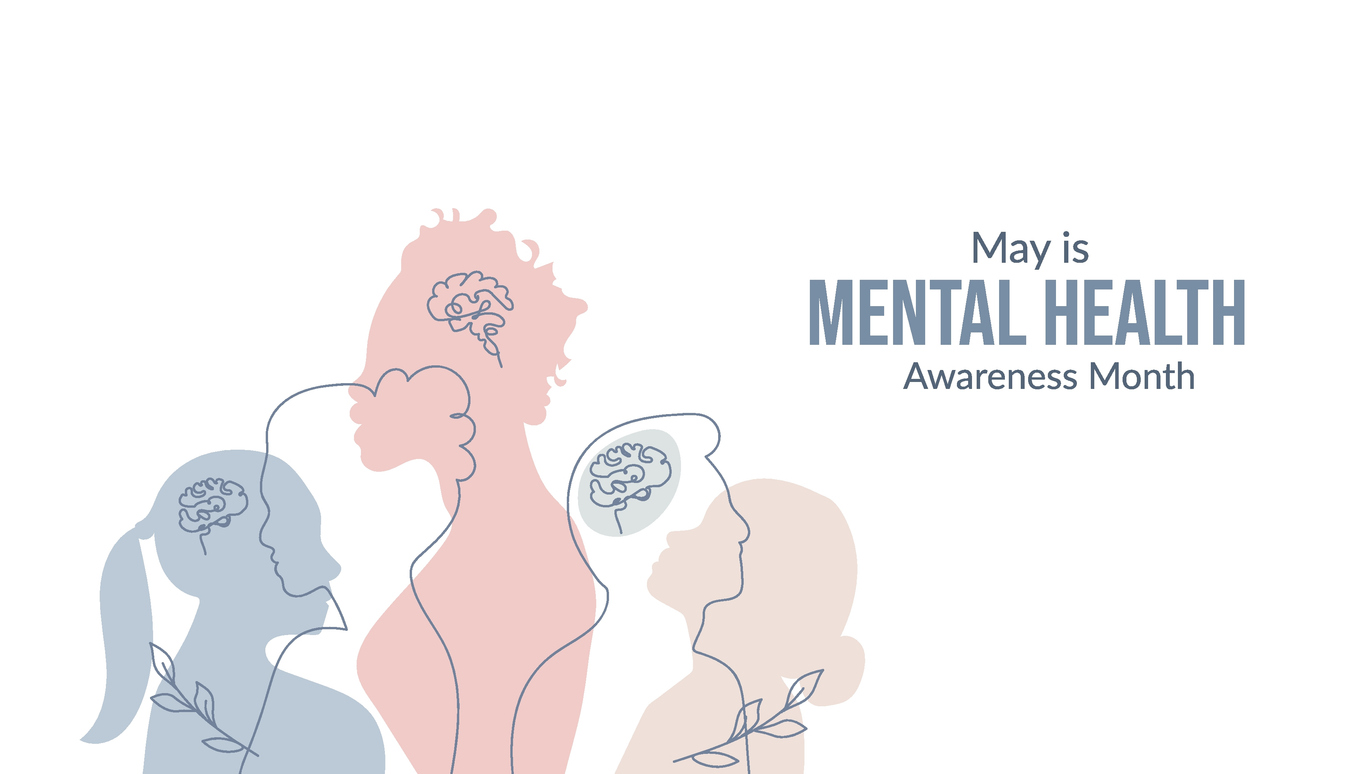
May is Mental Health Awareness Month, a time recognized nationally to shine a light on something that touches every single one of us. Since 1949, communities, organizations, and advocates across the country have used this month to reduce stigma, share resources, and remind people that they are not alone.This article is a conversation from a therapist about what mental health really means and why getting help is a sign of strength.
What Mental Health Really Means
Mental health isn’t about a diagnosis. It’s the foundation beneath everything, including how you think, feel, make decisions, manage relationships, handle stress, and show up in the world each day. It’s what allows you to feel joy, sit with discomfort, grieve, connect with others, and bounce back when life gets hard.
And just like physical health, mental health exists on a spectrum. You don’t need to be in a crisis to deserve care. You don’t need to have “hit rock bottom.” You can be mostly okay and still benefit enormously from support, because most of us are walking around quietly overwhelmed, pretending like we’re fine.
Mental health touches every corner of your life: your sleep, your relationships, your work performance, your physical health, your sense of self-worth. When it suffers, everything suffers with it. When it’s nurtured, everything else becomes more manageable.
The Things People Actually Show Up To Therapy For
If you’ve ever told yourself “but other people have it worse,” you’re not alone in that way of thinking. As a therapist, I hear that a lot during my sessions. But that thought is one of the most common reasons people wait too long to seek help. I always say, change that thought to maybe some others do have it worse, but I want to have it better, and I deserve better. The truth is, these are the struggles that fill therapists’ offices every single day. Your pain does not need to meet a certain threshold to be worth addressing. If something is affecting your quality of life, that is reason enough to seek support.
Anxiety: A racing mind at 1am. Dreading conversations before they happen. Replaying what you said at dinner three years ago. Anxiety looks like a lot of different things, and it’s one of the most common mental health conditions in the world, yet many people spend years thinking it’s just “who and how they are.”
Depression: Not always crying in bed. Sometimes it’s the flatness. The going-through-the-motions feeling. “Surviving not thriving.” The inability to feel excited about things you used to love. Depression often gets mistaken for disengagement, a lack of motivation, or simply not caring anymore.
Burnout & Chronic Stress: Modern life has made this nearly universal. When stress becomes your baseline and rest feels impossible, the body and mind will eventually ask you to slow down in ways that are hard to ignore. Burnout isn’t a character flaw, it’s a warning signal that so many people miss.
Relationship Difficulties: Patterns that repeat. Communication that breaks down. Feeling unseen or misunderstood in your closest relationships. These are deeply human struggles, and they’re incredibly workable in therapy.
Grief & Life Transitions: Loss of a loved one, a job, an identity, a relationship, a version of yourself. Grief is not linear, and transition is hard. Even the “good” kind like a new baby, a promotion, or moving cities requires support.
Trauma: Trauma isn’t always a single catastrophic event. It can be years of feeling unheard, growing up in chaos, or experiencing things you’ve never quite been able to name. It lives in the body and shapes behavior in ways we don’t always recognize.
ADHD, OCD & Other Conditions: Millions of adults are living with undiagnosed or undertreated ADHD, OCD, and other conditions. Often having spent decades believing they were just “too much” or “not enough.” Proper assessment and treatment can be life-changing for many.
The Numbers Don’t Lie
Mental health challenges are far more common than most people realize, which means you are far less alone than you feel.
- 1 in 5 U.S. adults experience a mental illness each year
- 50% of all lifetime mental illness begins by age 14; 75% by age 24
- 57.8 million Americans lived with a mental health condition in 2021
- 55% of adults with mental illness received no treatment in the past year
- 11 years is the average delay between symptom onset and receiving treatment
Sources: NAMI, SAMHSA, National Institute of Mental Health, American Psychological Association
The Tide Is Turning
Here’s the good news: attitudes toward mental health treatment have shifted dramatically over the past decade. People are seeking help in greater numbers, and the stigma, while still present, is losing its grip.
Percentage of U.S. adults who say they would seek professional help if needed:
- 2012 – 47%
- 2016 – 58%
- 2020 – 68%
- 2023 – 79%
Sources: NAMI, SAMHSA, National Institute of Mental Health, American Psychological Association
Therapy use among adults increased by over 38% between 2018 and 2021 alone, with the biggest growth seen among younger adults, men (a historically underserved group), and communities of color. The COVID-19 pandemic, while devastating in many ways, accelerated a collective conversation about mental health that has meaningfully reduced shame around seeking care.
Busting the Myths That Keep People Stuck
Stigma is often built on outdated, inaccurate beliefs. Let’s name some common ones I hear regularly, and replace them with the truth.
MYTH: “Therapy is only for people with serious problems.”
FACT: Therapy is for anyone navigating life. Stress, transitions, relationship patterns, personal growth, or simply wanting to understand yourself better. You don’t need a crisis to benefit from a skilled, objective listener in your corner.
MYTH: “Needing medication means you’re weak or broken.”
FACT: Mental illness involves real biological changes in brain chemistry and function. Medication can restore balance, just as insulin helps a diabetic or blood pressure medication helps someone with hypertension. Asking for medical support is not a weakness.
MYTH: “If I start therapy, I’ll be in it forever.”
FACT: Treatment duration is flexible and personalized. Some people find significant relief in a few months. Others choose ongoing support because they find value in it, much like regular exercise. There’s no one-size-fits-all timeline.
MYTH: “Talking about problems just makes them worse.”
FACT: Decades of research show that naming and processing emotions actually reduces their intensity. Suppressing feelings doesn’t make them disappear, it drives them underground, where they shape behavior in ways we can’t always see.
How We Can Help
If anything in this piece felt familiar, if you saw yourself in any of these struggles, we want you to know that Relief Mental Health was built for exactly this moment. We offer a full spectrum of evidence-based treatments because every person’s path to wellness is different.
Individual Therapy: One-on-one sessions with a licensed therapist using approaches tailored to your specific needs, goals, and pace.
Medication Management: Comprehensive psychiatric evaluation and ongoing medication management, always paired with monitoring and support.
TMS Therapy: An FDA-cleared, non-invasive treatment for treatment-resistant depression that uses magnetic pulses to stimulate areas of the brain. No sedation. No systemic side effects.
SPRAVATO® (Esketamine): An FDA-approved intranasal treatment for treatment-resistant depression that works differently from traditional antidepressants and can provide rapid relief for those who haven’t responded to other treatments.
Whether you are just starting your mental health journey or looking for a next step after other treatments haven’t worked, we are here to meet you where you are, without judgment and without pressure.
You Don’t Have to Keep Carrying This Alone
Asking for help is not giving up. It is refusing to give up. On yourself, on the life you deserve, on the relationships that matter most to you. Mental Health Awareness Month is a reminder that asking for help is one of the bravest, most important things you can do. Our team is here for all of it.