Ketamine vs Spravato vs TMS for depression is a comparison of three treatment pathways. It is not a contest with one universal winner. TMS uses magnetic stimulation. Spravato is a monitored esketamine nasal spray. Ketamine is a separate medication-based approach. Its details depend on the clinical plan.
Ready to explore your options? Request a consultation with Relief Mental Health.
Ketamine, Spravato, and TMS differ in delivery, visit monitoring, and follow-up. TMS is noninvasive and device-based. Spravato is administered as a nasal spray in a healthcare setting. Ketamine treatment details vary. A provider reviews your diagnosis, treatment history, safety needs, preferences, and coverage questions. The provider then discusses fit.
When depression has not improved enough with usual care, it is reasonable to want a clearer explanation of what comes next. This guide focuses on practical distinctions for an evaluation. For additional background, read Relief Mental Health’s guide to Spravato and ketamine therapy options.
How Do You Compare Ketamine vs Spravato vs TMS for Depression?
TMS is a noninvasive brain stimulation treatment. Spravato is esketamine nasal spray administered under healthcare-provider supervision. Observation follows administration. Ketamine is a separate medication-based approach. Its route and setting depend on the care plan. Compare delivery, monitoring, scheduling, safety, and follow-up.
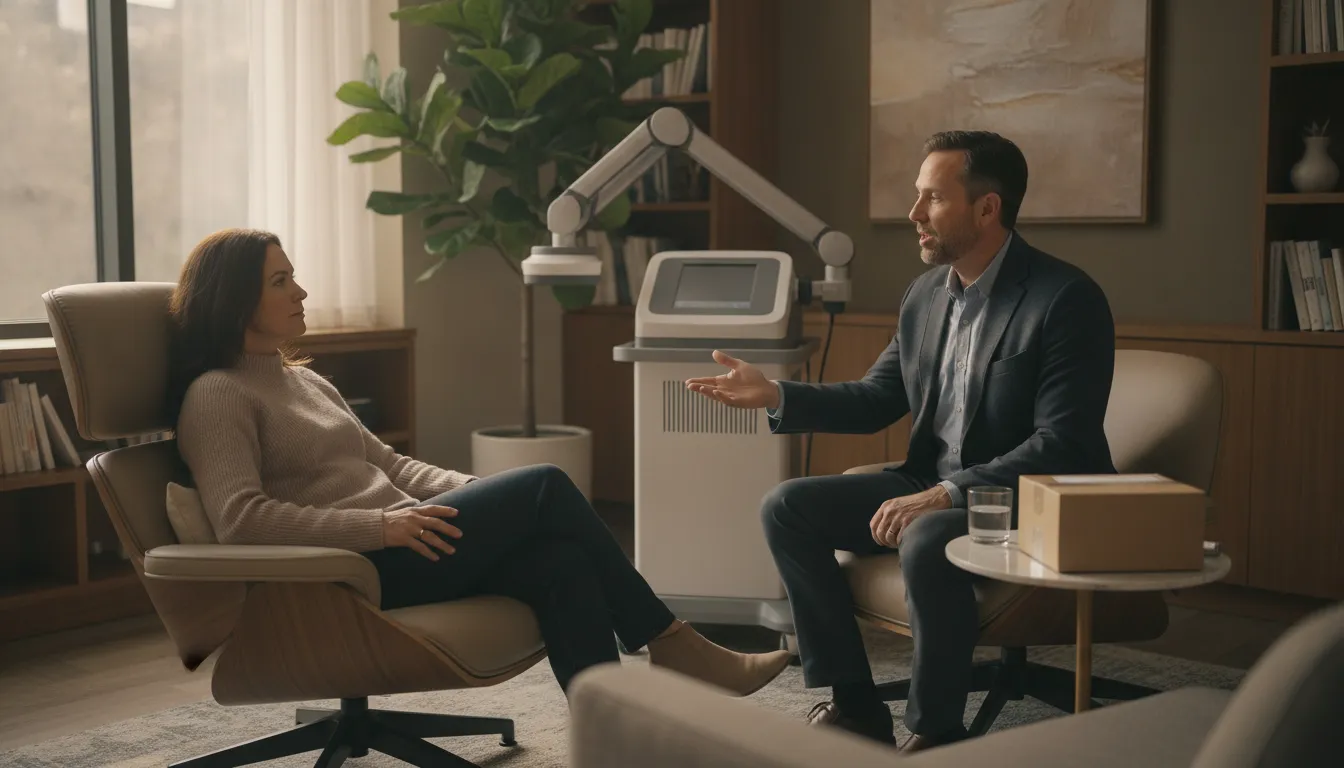
Transcranial magnetic stimulation, commonly called TMS, uses a treatment device to deliver magnetic pulses near the scalp. It does not introduce a medication into the body. Patients remain awake, and the care plan is organized around supervised outpatient visits. The experience and schedule can vary by protocol and individual treatment plan.
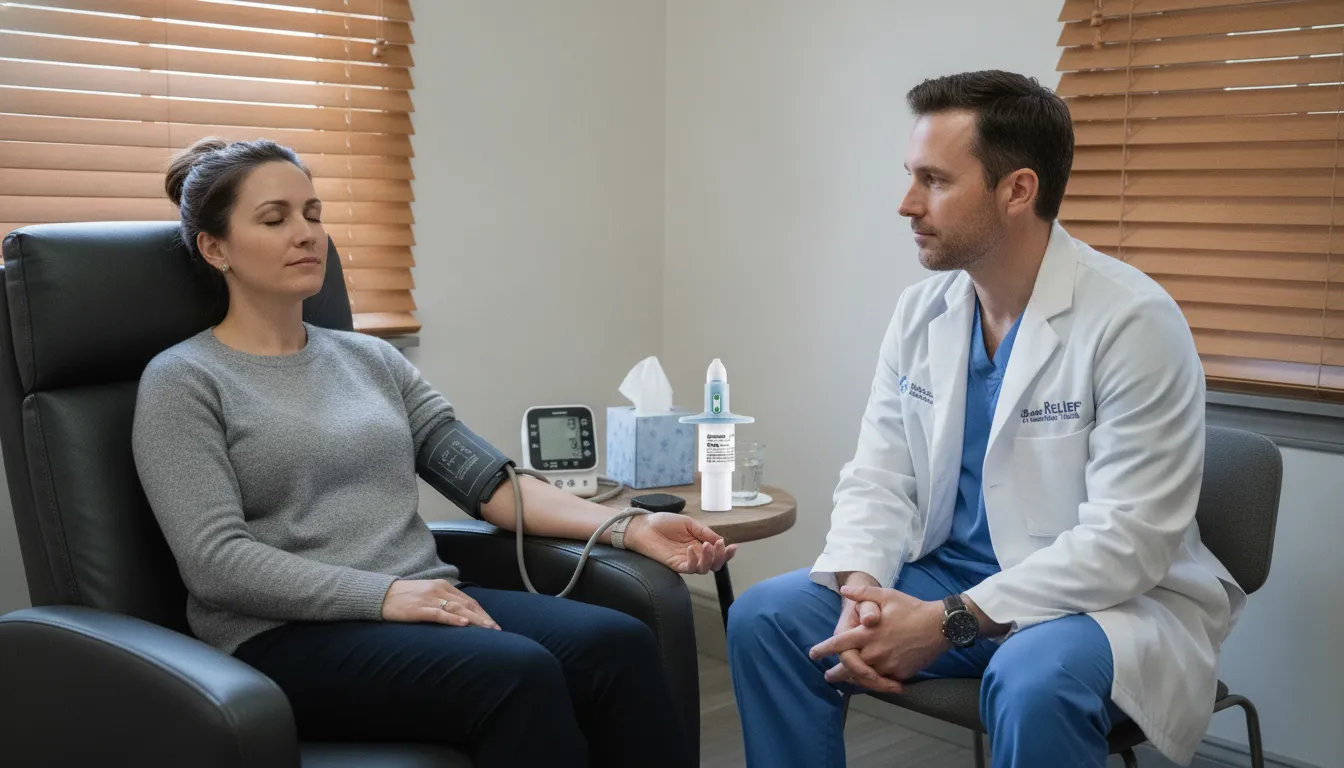
Spravato is the brand name for esketamine nasal spray. It is related to ketamine, but the two terms do not describe the same treatment. Spravato is administered in a healthcare setting, where the care team observes the patient after administration. The DailyMed Spravato Medication Guide explains safety information for patients and caregivers.
Ketamine describes a medication-based approach that may be discussed in different clinical contexts. Route, setting, supervision, and follow-up can differ, so a description of another practice’s plan should not be treated as a prediction of your own care. A provider should explain the specific approach under consideration and why it may or may not be appropriate.
| Pathway | Approach | Visit plan |
|---|---|---|
| TMS | Magnetic pulses | Supervised outpatient visits |
| Spravato | Esketamine nasal spray | Healthcare setting with observation |
| Ketamine | Medication-based care | Varies by route and setting |
This table is a starting point, not a recommendation. Treatment names can sound similar while the actual visit experience differs. The appropriate next step is a provider-led evaluation. It connects general information with your diagnosis, history, health information, and goals.
How Do TMS, Spravato, and Ketamine Work Differently?
TMS uses magnetic stimulation to influence activity in targeted brain regions. Spravato delivers esketamine through a nasal spray. It requires supervised administration. Ketamine works through a medication-based pathway. Mechanism explains the distinction. It does not determine which option fits a particular patient.
How TMS uses magnetic stimulation
TMS uses magnetic pulses to stimulate nerve cells in brain areas involved in mood regulation. The pulses pass through the skull and create small electrical signals in underlying nerve cells. Stimulation may influence areas involved in depression. The Mayo Clinic overview of TMS provides general patient education about the procedure.
During a TMS visit, the clinician positions the device and adjusts the plan based on the selected protocol and your response. You remain awake. The device can make tapping or clicking sounds. Your scalp may feel a sensation as pulses are delivered. Relief Mental Health’s explanation of how TMS therapy works offers additional plain-language background.
How medication-based approaches differ
Spravato and ketamine are medication-based, but they are distinct approaches. Spravato is delivered as a nasal spray in a monitored clinical setting. Ketamine details depend on the treatment plan and setting. Ask who administers the treatment and what monitoring is provided. Also ask how recovery is handled and how follow-up will work.
Mechanism is useful for learning, but it is only one part of treatment selection. The broader discussion includes what you have already tried, which symptoms interfere most with daily life, what safety issues need review, and what type of schedule is realistic. No research summary can promise an individual result.
Why the route of treatment matters
The route of treatment can shape the questions you ask before starting care. A device-based visit may focus on positioning, sound, scalp sensations, and appointment consistency. A medication-based visit may require more discussion about observation, transportation, activities afterward, and how the care team will respond to side effects.
These differences do not make one approach automatically better. They help you understand what participation may involve. Consider your work schedule, transportation, available support, comfort with medication-based care, and ability to attend follow-up visits. Share those details honestly. They give the clinician useful context when reviewing options.
A thoughtful comparison also separates short-term logistics from the larger care plan. Ask how progress will be assessed, what happens if the first plan is not helpful enough, and when the team will revisit the diagnosis or treatment goals. This keeps the conversation focused on safe, ongoing care rather than a single feature such as speed or convenience.
What Should You Expect From Sessions and Safety Monitoring?
TMS visits center on supervised magnetic stimulation, while Spravato visits include nasal administration and observation. Ketamine logistics vary by setting and plan. Safety planning should cover screening, monitoring, transportation, possible side effects, emergency instructions, and follow-up instead of focusing only on treatment speed.
TMS is structured as a course of outpatient visits. You remain awake while the device delivers magnetic pulses. The care team explains positioning, sensations, timing, and what to report. TMS generally does not require surgery or sedation, and patient experiences vary. Consistent scheduling may be an important part of deciding whether the plan is practical.
Spravato appointments have a different rhythm. The medication is administered in a healthcare setting, and the patient is observed afterward. The DailyMed guide identifies safety considerations that may include sedation, dizziness, and dissociation. It also provides instructions about driving and operating machinery after treatment. Your clinical team should explain how those instructions apply to your visit.
Ketamine treatment experiences are not interchangeable across settings. Ask the treating professional how the medication is delivered, who monitors the visit, what recovery time is expected, what support is available, and how concerns are handled. Do not rely on a description of another practice’s protocol when deciding what your own care may involve.
Questions to ask about safety
- What should I expect during the appointment and afterward?
- What symptoms or side effects should I report right away?
- Will I need someone to drive me or stay with me afterward?
- Which medications, supplements, and diagnoses should the care team review?
- How will progress and concerns be assessed during follow-up?
These questions support informed care without assuming that every patient will have the same experience. If a safety concern feels urgent or life-threatening, seek immediate emergency help or call or text 988. This article is educational and does not replace medical advice.
How Does Insurance Coverage Affect Treatment Planning?
Coverage for TMS or Spravato depends on the health plan, clinical documentation, authorization process, and practice details. Coverage information does not determine clinical fit. Review benefits and treatment history with the care team before planning a treatment course, because requirements vary and can change.
Coverage review and clinical evaluation are related but separate steps. A health plan may request records or authorization before a service can be scheduled. The clinical team still needs to understand your diagnosis, prior treatment, current medications, health history, and goals before discussing an appropriate care path.
What to prepare for a coverage review
- Bring the health plan name and current member information.
- List current and previous medications, including what helped or caused problems.
- Note previous therapy and other mental health treatment experiences.
- Ask whether authorization or supporting records may be needed.
- Confirm which services the practice can verify and what information you must provide.
- Request a clear explanation of scheduling and follow-up expectations.
Do not treat a general cost or coverage statement found online as a personal benefits determination. Relief Mental Health can discuss available care pathways and the information needed for the next step. For broader context, read the interventional psychiatry guide.
Which Treatment May Fit Your Depression Care Needs?
The treatment that may fit depends on a clinician’s review of diagnosis, treatment history, safety considerations, preferences, schedule, support, and goals. TMS may appeal to patients seeking a nonmedication approach. Spravato or ketamine discussions involve medication safety and monitoring. An evaluation keeps the decision individualized.
- Start with your diagnosis and goals. Describe the symptoms affecting daily life and what meaningful progress would look like. A clear goal helps the care team discuss options in a way that is relevant to your situation.
- Review your treatment history. Bring information about medications, therapy, previous diagnoses, and earlier treatment experiences. What you tried, how long you tried it, and what happened can help the provider understand the next decision.
- Compare the practical experience. Ask about visit structure, monitoring, transportation, appointment frequency, recovery time, and follow-up. A treatment plan should be medically appropriate and realistic to follow.
- Discuss safety openly. Share relevant medical history, current medications, supplements, and concerns about side effects. These details are essential to a responsible clinical conversation.
- Make room for reassessment. Treatment selection is not a one-time contest. The care team should explain how progress will be reviewed and when the plan may need to be adjusted.
Relief Mental Health provides patient-centered evaluations and services for TMS and Spravato. The team can review your diagnosis and treatment history, explain available care pathways, and discuss practical next steps. Read the guide to treatment-resistant depression for additional background.
Schedule a consultation to discuss which depression treatment options may fit your needs.
Frequently Asked Questions
What is the difference between TMS and Spravato?
TMS is a noninvasive, device-based treatment that uses magnetic pulses. Spravato is esketamine nasal spray administered in a healthcare setting with observation afterward. They differ in delivery, visit structure, safety planning, and follow-up. A provider can explain which details matter most for your diagnosis and treatment history.
Is ketamine or TMS more effective for depression?
There is no universal answer that applies to every patient. TMS and medication-based approaches differ in mechanism, delivery, monitoring, and follow-up. A clinician considers diagnosis, treatment history, health information, safety needs, preferences, and goals rather than choosing based on a general online ranking.
Does insurance cover TMS, Spravato, and ketamine?
Coverage depends on the specific plan, clinical documentation, authorization requirements, and the service being considered. Coverage can affect access and planning, but it does not replace a clinical evaluation. Ask the care team what information is needed to review benefits for your situation.
What are common side effects of TMS versus Spravato?
TMS may involve sensations at the treatment site or a headache for some patients. Spravato may involve effects such as sedation, dizziness, or dissociation, which is why observation and transportation planning matter. The care team should review your medical history and explain what to monitor and report.
Which treatment for depression is right for me?
The appropriate option depends on an individualized evaluation. Bring your diagnosis and treatment history, current medication list, health plan information, practical scheduling needs, and questions about monitoring.
The provider can explain available services and help you understand the next step. No approach should be treated as right for everyone.