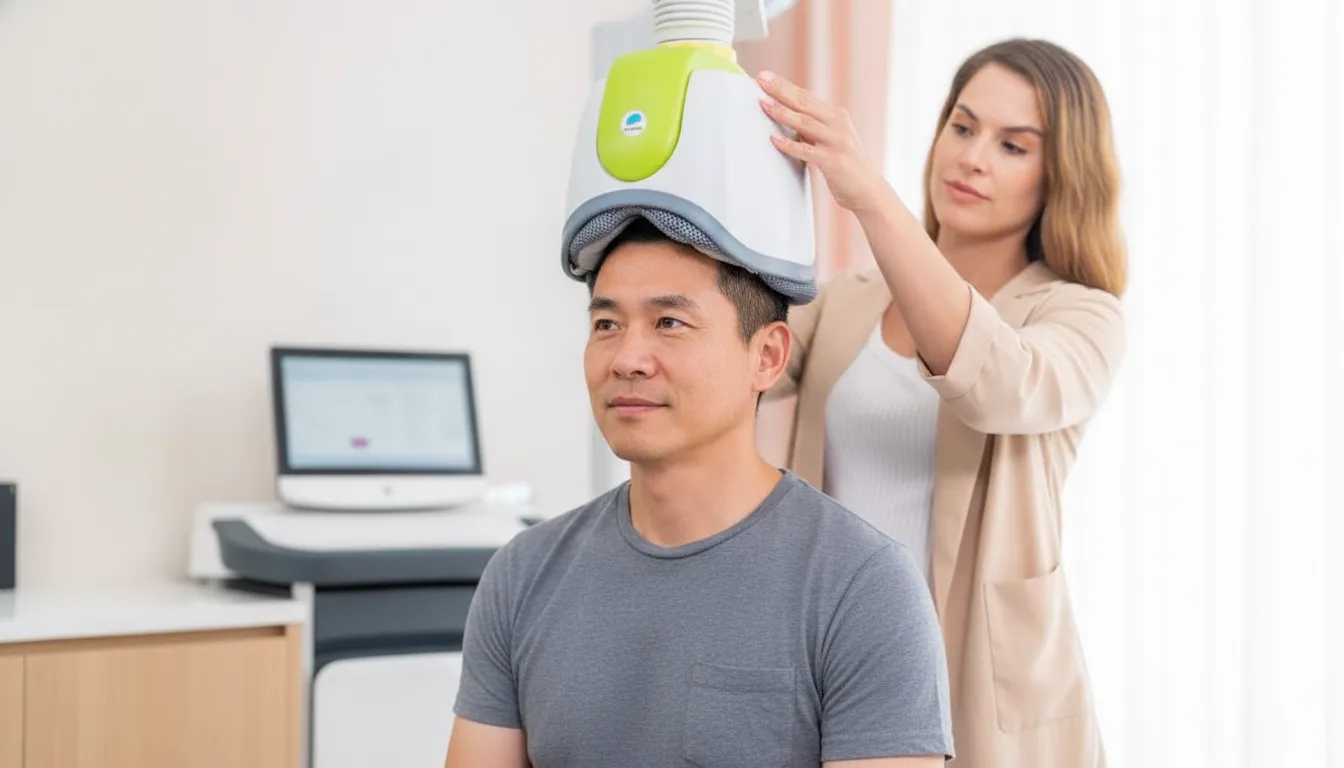
A consultation about Deep TMS™ is easier to navigate when you arrive ready to describe your mental health history, current goals, and questions about care. You do not need to decide in advance whether TMS is right for you.
Request a TMS consultation with Relief Mental Health
Knowing how to prepare for a TMS consultation can help you make better use of the visit: write down your concerns. Gather relevant treatment information, bring an updated medication list, and note any safety details your clinician should review. The consultation is an opportunity for an individualized assessment, not a promise that TMS will be recommended or produce a particular result.
Thoughtful preparation also gives you space to discuss what you hope will improve and what you want to understand before considering next steps. The conversation begins with what happens during the consultation and how the clinician evaluates your needs.
What Happens During a TMS Consultation?
A TMS consultation is a clinical conversation designed to understand your diagnosis, treatment history, current needs, and goals. It is not a promise that TMS will be recommended or that treatment will begin immediately. The clinician uses the visit to determine what care may be appropriate for you and what information may be needed before making that decision.
A pre-TMS evaluation may include a full psychiatric assessment. That can involve discussing your symptoms, how they affect daily life, previous mental health care, and your experience with earlier treatments. A specialist consultation may also help clarify your diagnosis and develop treatment recommendations, as described by Johns Hopkins Medicine.
Patients who want broader background before their appointment can review this guide to TMS therapy for depression. The consultation itself remains individualized. Your clinician may explain how TMS could fit into your overall care, or discuss other options if TMS does not appear to be the best next step.
The discussion should include the potential benefits and risks of TMS before a treatment course is recommended. Guidance published in the peer-reviewed clinical recommendations for rTMS also emphasizes giving patients enough information and time to consider their choices before consent is requested. You should have an opportunity to ask questions, describe concerns, and make an informed decision. A consultation is therefore an evaluation and shared decision-making step, not treatment approval or a guarantee of results.
How to Prepare for a TMS Consultation
A little preparation can help you describe your experience clearly and use the appointment time well. You do not need to arrive with a diagnosis, a complete medical file, or a decision about treatment. The consultation is an opportunity to share relevant information and learn what a clinician recommends for your situation.
- Write down your goals. Note what you hope to understand or address, such as persistent mood symptoms, changes in daily functioning, or questions about whether TMS belongs in your broader care plan. Keeping your goals specific can make it easier to explain what brought you to the consultation.
- Describe your symptom patterns. Before the visit, consider when your symptoms began, how they have changed, and how they affect sleep, work, relationships, concentration, or other parts of daily life. You can bring brief notes rather than trying to recall every detail during the appointment.
- List previous treatment experiences. Include psychiatric care, therapy, and other treatments you have tried, along with what seemed helpful, unhelpful, or difficult to tolerate. Add approximate dates if you remember them. This history gives the clinician context, but it does not determine the outcome of the consultation by itself.
- Gather records that may add context. Some consultation clinics request a treatment summary from a current psychiatrist or referring clinician. A summary from a psychiatrist, nurse practitioner, or therapist may provide context that is not obvious in individual progress notes. These records can be potentially useful, but they are not universal requirements. Ask the clinic what it would like before requesting documents.
- Prepare an up-to-date medication list. Write down prescription medicines, over-the-counter products, and supplements, including doses when available. Do not stop, start, or change medication on your own. Bring questions about medication to the clinician directing your care.
- Plan your questions and logistics. Ask how the appointment will work, what information you should bring, and what happens after the evaluation. Confirm the appointment time, location or video instructions, identification requirements, and any forms you need to complete. For broader first-visit context, review what to expect at your first visit.
- Invite a support person if you want one. A trusted family member, caregiver, or friend may help you remember questions or details. Their participation should reflect your preference and comfort. You can also attend independently and bring written notes instead.
Use this checklist as a starting point, not a universal intake protocol. The clinic can tell you which records or forms are actually needed for your appointment.
What Should You Bring to a TMS Consultation?
Bring information that helps the clinician understand your mental health history and current care. You do not need to assemble a perfect medical file before the appointment. A clear medication list, a short treatment history, and the records you already have can make the conversation more focused. If you are unsure whether a document is relevant, bring it or ask the clinic what to send in advance.
The examples below are not universal clinic requirements. Every practice may organize its consultation differently, and some records may not apply to you. The clinic can clarify what to send, whether records should be delivered before the visit, and whether a release is needed to request information from another clinician.
Information that may help with a TMS consultation
| What to bring | Examples and purpose |
|---|---|
| Medication list | Include current psychiatric and other medications, along with doses if known. Note recent changes and any questions you want to discuss. Do not stop or change medication on your own. |
| Treatment history | Write down prior medication trials, psychotherapy, other mental health care, and what you remember about the response or difficulties with each approach. |
| Relevant records | If available, these may include recent lab results, psychotherapy treatment summaries, hospital admission or discharge summaries, neuropsychological testing reports, and head or brain imaging studies. |
| Safety information | Bring notes about medical history and current care that you think the clinician should know. Be ready to discuss safety questions openly and accurately during the evaluation. |
| Questions | List questions about the consultation, the evaluation process, possible next steps, and information the clinic needs from you. Writing them down can help you remember them. |
Recent lab results and the other records listed above may be useful when available, but having every item is not a prerequisite for starting the conversation. A treatment summary from a psychiatrist, nurse practitioner, or therapist can also provide context, though the clinic can explain what is most helpful for your situation. Keep copies of anything you submit, and ask how the information will be used in the consultation.
Most importantly, bring an accurate picture of your current concerns and care. The consultation is a chance to fill in gaps, correct misunderstandings, and ask what should happen next. If a document is difficult to obtain, tell the clinic rather than delaying the appointment or guessing about what is needed.
Which Safety Questions May Come Up Before TMS?
A structured safety screen is a routine part of a thoughtful TMS evaluation. It gives the clinician a clearer picture of your medical history and helps identify details that may need follow-up before treatment is considered. The goal is not to make the consultation intimidating. It is to support a careful, individualized discussion about whether TMS is appropriate for you.
Questions may include whether you have ever had a seizure and whether anyone in your family has had one. The clinician may also ask about a previous head injury, including an injury related to surgery. These topics are specifically included in the National Institute of Mental Health discussion of TMS safety. Share what you know, even if the event happened years ago or you are unsure whether it is relevant.
Head injuries, metal, and other medical details
Your evaluation may also cover metal in the head outside the mouth, such as surgical clips, shrapnel, or fragments from welding or metalwork. Bring details about past procedures or injuries when available. If you do not know the exact material or location, say so. The clinical team can determine what information is needed next rather than expecting you to interpret your records on your own.
Medication review
Medication review is another important part of the conversation. The clinician may review your current medicines and consider whether any could influence seizure threshold. Bring an up-to-date list, including prescription medicines, over-the-counter products, and supplements if applicable. Do not stop, taper, or change a medication independently because of something you read about TMS. Any medication adjustment should be considered and directed by your treating clinician.
For more detail on the broader topic, read TMS safety and treatment considerations. Answering these questions openly helps your care team decide what should be discussed, clarified, or reviewed before any next step.
What Questions Should You Ask About TMS?
A consultation is a chance to understand whether TMS fits your needs and what the process may involve. Consider asking:
- How will you evaluate whether TMS is appropriate for me? Ask how the clinician will review your diagnosis, treatment history, current symptoms, and goals before making a recommendation.
- What will the treatment process involve? Ask what happens before, during, and after a session, how appointments are coordinated, and what information you should receive before deciding. Informed discussions should cover the method, process, expectations, and possible adverse events.1
- What might I feel or hear during treatment? TMS may involve physical sensations and auditory sensations. Ask what is typical, what may be uncomfortable, and how the clinical team responds if you need an adjustment.
- What side effects or rare serious events should I know about? Ask how common effects will be monitored, which symptoms should be reported, and whom to contact between visits. The National Institute of Mental Health discusses both common side effects and rare serious risks in its overview of TMS safety.2
- What alternatives should I consider? Ask how TMS compares with other clinically appropriate approaches for your situation. You can also review interventional psychiatry treatment options to prepare for a broader discussion.
- How will we follow up and assess my response? Ask what information the team will use to evaluate your experience and when you will revisit the plan. No clinician can guarantee a therapeutic outcome, so a clear follow-up plan matters.1
- What happens if TMS is not recommended for me? Ask what the next discussion would involve and whether the clinician can explain other appropriate paths. A consultation should leave you with a clearer understanding, even when TMS is not the recommended option.
What Happens After the Consultation?
After the consultation, the next step depends on what you and the clinician learn together. A specialist consultation may help clarify your diagnosis and inform treatment recommendations, but it does not create an automatic treatment plan. The clinician may recommend TMS, discuss another approach, suggest additional evaluation, or explain why more information is needed before making a decision.
Your clinician may request additional information
If your records do not provide enough context, the care team may ask for a treatment summary or other documentation from a current psychiatrist, therapist, or referring clinician. You may also be asked to clarify your medication history, previous treatment experiences, or relevant medical details. These requests are meant to support a more complete, individualized review, not to imply that a particular outcome has already been decided.
Scheduling comes after the clinical discussion
If TMS is recommended and you choose to move forward, the team can explain the scheduling process and answer practical questions about what comes next. It is appropriate to ask when decisions will be finalized, what information the team still needs, and whom to contact if your symptoms or medications change. Do not change medication or treatment plans on your own while waiting for follow-up. Contact the clinician managing your care if you have concerns.
Preparing for a consultation is different from preparing for an individual treatment session. Clinical guidance notes that no specific preparation is required before an rTMS treatment session, while the consultation is where your history, goals, questions, and safety information are reviewed. The final decision should remain clinician-led and specific to your needs, which is why the next section focuses on who makes that decision and how.
Source: specialist consultation and treatment recommendations; rTMS clinical guidance.
Who Decides Whether TMS Is Appropriate for You?
The decision about whether TMS is appropriate should come from a qualified clinician after reviewing your individual history, symptoms, diagnosis, previous treatment experience, and current needs. It is not something that can be determined from a symptom checklist or a general online description.
A consultation gives you time to explain what you have been experiencing and to discuss what you hope treatment might address. A clinician may complete a psychiatric assessment, ask about previous care, and consider whether TMS fits within a broader treatment plan. Clinical guidance describes a pre-treatment evaluation as including a full psychiatric assessment, with risks and benefits discussed before a recommendation is made. Learn more about the clinical evaluation process.
The consultation is also a chance to clarify your diagnosis and understand the available treatment options. A specialist may help organize information from prior providers and explain which approaches may be reasonable to consider. That discussion can be useful even when TMS is not recommended, because the goal is to identify care that makes sense for your circumstances. Specialist consultation can help clarify diagnosis and treatment recommendations.
Keep your expectations open. A consultation does not promise that TMS will be recommended, that you will begin treatment, or that a particular outcome will occur. Therapeutic outcomes cannot be guaranteed, and an honest evaluation should include appropriate limits as well as potential benefits. Coming prepared to describe your history, priorities, and questions can help make the conversation more focused and useful.
When you are ready, requesting a consultation is a practical next step toward discussing your options with a clinician.
Schedule a TMS consultation to discuss your care options
Frequently Asked Questions
What should you avoid doing before TMS therapy?
Do not independently stop, taper, or change your medications while preparing for TMS. Bring an accurate medication list and discuss any possible changes with the clinician directing your care. Before a treatment session, no specific preparation is generally required, but your consultation may identify individualized instructions. Clinical guidance
How long does TMS therapy take per session?
Session length depends on the TMS approach, treatment settings, and the clinic’s process, so there is no single duration that applies to everyone. Ask how long a typical visit may take, whether setup is included, and how the schedule will fit your routine before making plans.
Is there a downside to TMS?
Like any medical treatment, TMS has possible risks and side effects. A consultation should cover expected physical and auditory sensations, common effects such as headache or scalp discomfort, and rare serious events. NIMH identifies seizure as a rare but serious known side effect. NIMH safety information
What are the signs that TMS is working?
Improvement may involve changes in symptoms, daily functioning, sleep, or your ability to participate in treatment, but the pattern differs by person. Track meaningful changes with your clinician rather than judging progress from one day. Treatment outcomes cannot be guaranteed, so regular follow-up helps determine next steps. Clinical guidance
Request a TMS Consultation
A consultation can help you organize your questions, review your treatment history, and understand whether TMS may fit your individual care plan. The discussion is an opportunity to learn about the process and possible next steps with guidance from a qualified clinical team.