The journey to finding effective mental health treatment can be long and frustrating, especially when standard therapies don’t provide the relief you need. This is where Transcranial Magnetic Stimulation (TMS) comes in. As a leading-edge, non-invasive therapy, it represents a significant advancement in care for conditions like treatment-resistant depression and OCD. This form of magnetic brain stimulation works by using focused pulses to gently re-regulate brain activity. For many, it’s a source of hope that offers a new, evidence-based path toward feeling better when other methods have fallen short of their promise.
Key Takeaways
- TMS offers a different path to relief: This non-invasive therapy uses magnetic pulses, not medication, to stimulate specific brain areas, making it a strong option for people with treatment-resistant depression or OCD.
- The treatment process is manageable: Sessions are quick, typically lasting 20 to 30 minutes, and require no downtime, so you can easily fit them into your daily schedule and return to your activities immediately after.
- It is a safe and well-researched option: TMS is FDA-approved and generally well-tolerated, with most side effects being mild and temporary, like a light headache. A thorough screening ensures it is a suitable choice for you.
What Is Magnetic Brain Stimulation (TMS)?
If you’re exploring effective ways to manage a mental health condition, you may have come across Transcranial Magnetic Stimulation (TMS). Transcranial Magnetic Stimulation is a noninvasive, FDA-approved procedure that uses gentle magnetic pulses to stimulate specific areas of the brain. Think of it as a way to retrain parts of your brain that may have become underactive or overactive due to conditions like depression or obsessive-compulsive disorder (OCD).
Unlike medication that circulates throughout your entire body, TMS is a targeted treatment. It focuses directly on the neural circuits involved in mood regulation. This makes it a powerful option, especially for individuals with treatment-resistant conditions who haven’t found relief with other therapies. The treatment is performed while you are awake and alert, and it doesn’t require any anesthesia or downtime, so you can get back to your day right after a session. It’s a modern approach that offers hope by working with your brain’s natural pathways to restore balance and improve your well-being.
How Does TMS Work?
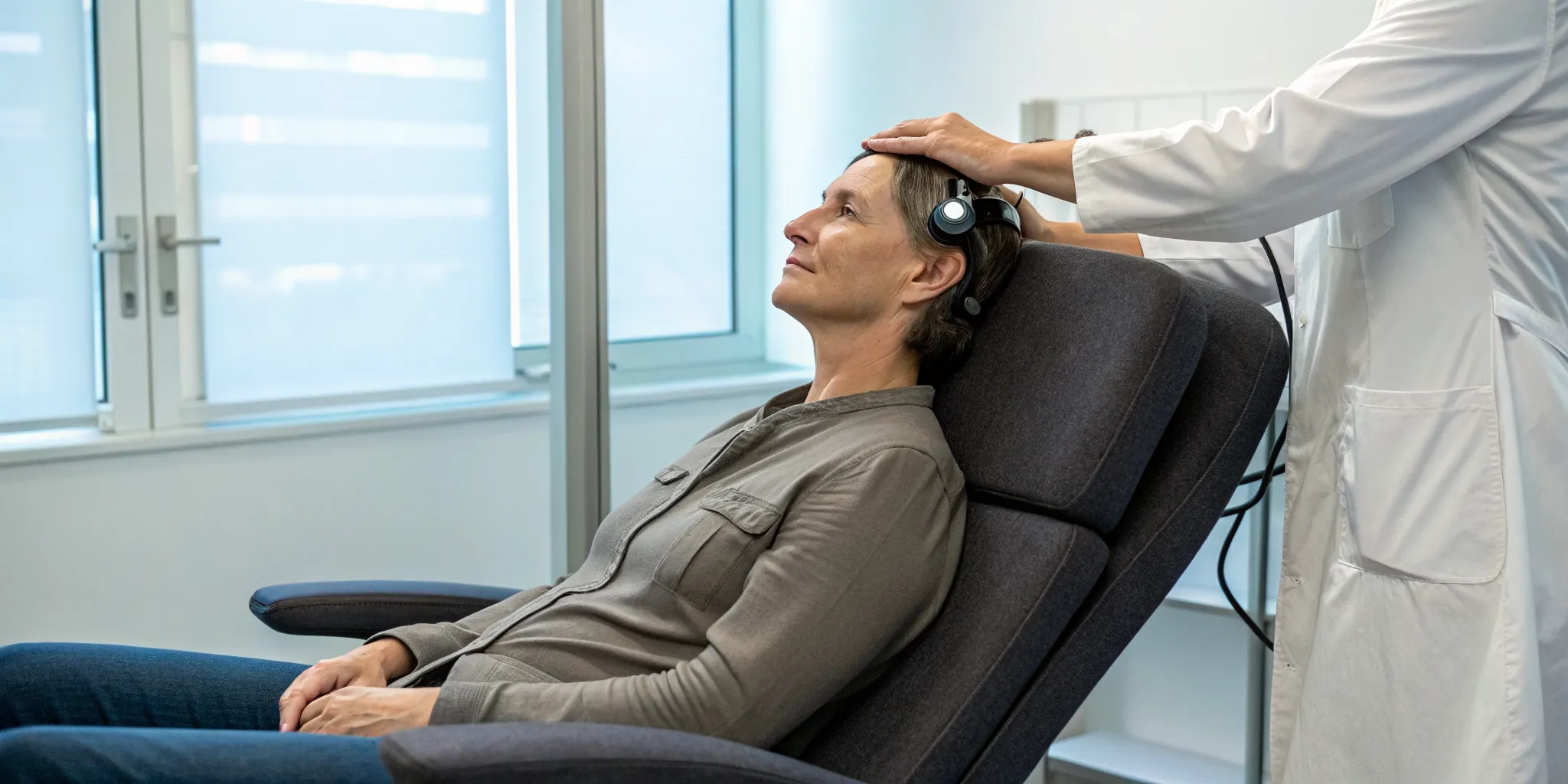
The science behind TMS is fascinating and surprisingly straightforward. During a treatment session, a small electromagnetic coil is placed gently against your scalp near your forehead. This coil delivers short, painless magnetic pulses that pass through the skull and induce tiny electrical currents in the targeted brain region. These currents are very mild but strong enough to activate nerve cells.
The goal is to either stimulate underactive brain cells or calm overactive ones, depending on the condition being treated. Over time, these sessions can create lasting changes in how your brain cells communicate. This process is similar to how our brains form new pathways when we learn a skill or create a memory. By repeatedly stimulating these circuits, TMS helps your brain build healthier patterns of activity.
TMS vs. ECT: What’s the Difference?
It’s easy to confuse TMS with other brain stimulation therapies, particularly electroconvulsive therapy (ECT). However, the two are fundamentally different. ECT works by passing small electric currents through the brain to intentionally trigger a brief, controlled seizure while the patient is under general anesthesia.
TMS, on the other hand, is non-convulsive and noninvasive. It uses magnetic fields, not direct electrical currents, to stimulate nerve cells in a much more focused area of the brain. Because it’s so targeted, TMS doesn’t require anesthesia, and you remain awake and comfortable throughout the entire procedure. This distinction makes TMS a significantly less intensive treatment with fewer side effects, offering a different path for those seeking relief.
Exploring the Different Types of TMS
When you hear about TMS, it’s helpful to know that it’s not a single, one-size-fits-all approach. Over the years, researchers and clinicians have developed several types of TMS to better suit different needs, conditions, and lifestyles. Think of them as different tools in a toolkit, each designed for a specific purpose. The type of TMS your provider recommends will depend on your unique situation, including the condition being treated and your personal treatment goals. Understanding these options can help you feel more prepared and confident as you discuss your care plan.
Repetitive TMS (rTMS)
Repetitive TMS, or rTMS, is the most established and widely used form of the therapy. It’s the method that most people think of when they hear about TMS. As the Cleveland Clinic explains, “Repetitive TMS (rTMS) involves the application of repeated magnetic pulses to the same location on the scalp.” A typical session is straightforward and non-invasive. You’ll relax in a chair while a small coil is placed against your head to deliver the pulses. The sessions usually last between 20 to 40 minutes, which makes it a very practical option to fit into your daily routine without major disruption.
Theta-Burst Stimulation (TBS)
If rTMS is the original, Theta-Burst Stimulation is the high-efficiency update. TBS is a newer form of TMS that works much faster. According to the Cleveland Clinic, “Theta-Burst Stimulation (TBS) is a more advanced form of TMS that utilizes rapid, short bursts of magnetic pulses designed to mimic natural brain rhythms.” This innovative technique means that a full treatment session can be completed in as little as three to ten minutes. For many people, the shorter session time is a significant advantage, making it easier to schedule treatment around work, family, and other commitments. The ability to get effective brain stimulation in such a short window is a game-changer.
Deep TMS (dTMS)
Deep TMS, or dTMS, uses a different kind of technology to reach more of the brain. While traditional rTMS is excellent for targeting surface areas, dTMS is designed to go deeper. It “employs a specialized helmet that enables the stimulation of deeper brain circuits compared to traditional rTMS.” This approach is especially useful for conditions where the key brain regions are located further from the surface. For example, dTMS is an FDA-approved treatment for Obsessive-Compulsive Disorder (OCD), a condition that Relief Mental Health specializes in treating. This ability to target deeper structures opens up new possibilities for people with specific and complex mental health conditions.
Accelerated TMS (aTMS)
For those seeking faster results, Accelerated TMS offers an intensive treatment schedule. Instead of one session per day over several weeks, aTMS packs the therapy into a much shorter timeframe. As the Cleveland Clinic notes, “Accelerated TMS (aTMS) is a treatment protocol that delivers multiple short sessions of TMS per day over a compressed timeframe, such as five days.” This intensive approach is designed to achieve the therapeutic benefits of TMS more quickly. While it requires a greater time commitment over those few days, it can be an excellent option for individuals who need to see improvement sooner or who are traveling for treatment. It’s a powerful example of how TMS treatments can be personalized for rapid effect.
What Conditions Can TMS Help Treat?
While Transcranial Magnetic Stimulation (TMS) first gained attention for its success with depression, its applications have expanded significantly over the years. Researchers are continually exploring how this non-invasive therapy can help with a range of conditions tied to brain activity. This is great news, as it opens up new possibilities for people seeking alternative or complementary treatments. It’s a field that’s constantly evolving, which means more and more people may find that TMS is a good fit for them.
The core idea behind TMS is its ability to target specific areas of the brain. By using magnetic pulses to stimulate or calm nerve cells, it can help rebalance brain circuits that have become dysregulated. This is why it’s effective for mood disorders, but that same principle can be applied to other conditions where brain activity plays a key role, from obsessive-compulsive patterns to chronic pain signals. Unlike medications that affect the whole body, TMS is a precise and localized approach. This targeted action is what makes it a powerful tool with fewer side effects than many other treatments. Let’s walk through some of the primary conditions TMS can help treat, as well as where the research is headed next.
Depression and Treatment-Resistant Depression
TMS is an FDA-cleared therapy for Major Depressive Disorder (MDD), and it’s become a particularly important option for those with treatment-resistant depression. This is a term for depression that hasn’t improved enough with antidepressant medications. If you feel like you’ve tried multiple medications without getting the results you need, TMS offers a completely different approach. Instead of medication, it uses magnetic pulses to gently stimulate the areas of the brain involved in mood regulation. For many, this provides a new path toward finding relief from depression when other methods have fallen short.
OCD
Living with obsessive-compulsive disorder (OCD) can be incredibly challenging, especially when traditional therapies don’t provide complete relief. The good news is that the FDA has also approved TMS for treating OCD. This treatment often uses a specialized protocol called deep TMS (dTMS) to reach and stimulate the specific brain structures involved in obsessive-compulsive behaviors. According to the Cleveland Clinic, this provides a new avenue for patients who may not respond to other therapies. It’s a hopeful, non-invasive option for managing the symptoms of OCD and regaining control.
Anxiety and PTSD
While TMS is most known for treating depression, it’s also showing real promise for other conditions like anxiety disorders and post-traumatic stress disorder (PTSD). Research is actively exploring how TMS can help calm the overactive brain circuits associated with anxiety and trauma. As the Mayo Clinic notes, studies are underway to better understand its effectiveness for these conditions. For those struggling with persistent anxiety or the lingering effects of trauma, the growing evidence for TMS as a treatment option offers a welcome source of hope.
Chronic Pain and Migraines
The connection between the brain and physical pain is powerful, and TMS is being used to address it directly. In fact, specific TMS devices have been cleared by the FDA to help reduce the pain associated with migraines. Beyond that, research is also looking into how TMS can help with other forms of chronic pain. By targeting the brain networks that process pain signals, TMS may be able to offer relief where other treatments haven’t. It’s an exciting area of study that could change how we approach conditions that are often difficult to manage.
Other Potential Uses for TMS
The versatility of TMS is one of its most exciting aspects, and researchers are exploring its potential for a wide variety of conditions. Studies are currently underway to see if TMS can help with Alzheimer’s disease, bipolar disorder, Parkinson’s disease, and even substance use disorders. While these uses are still considered investigational, they highlight the broad potential of brain stimulation therapy. This ongoing research shows a commitment to finding new, effective ways to treat complex neurological and psychological conditions, expanding the horizon for innovative mental health care.
Is TMS Right for You?
Deciding on a mental health treatment is a deeply personal process, and it can feel overwhelming when you’ve already tried options that didn’t provide the relief you need. Transcranial Magnetic Stimulation (TMS) is an innovative, non-invasive therapy that has offered new hope to many, but it’s not a one-size-fits-all solution. The most important step is having an open conversation with a qualified provider who can review your health history and treatment goals to see if it aligns with your needs.
Understanding whether you might be a candidate for TMS is a great starting point for that conversation. This therapy is specifically designed for certain situations and health profiles, so it’s helpful to know where you might stand. Exploring the signs that TMS could be a good fit, as well as the reasons to consider other paths, can help you feel more prepared and confident as you discuss your options with a professional. At Relief, our entire focus is on finding the right approach for your unique circumstances, whether that includes TMS or other advanced therapies we offer.
Signs TMS Could Be a Good Fit
If you feel like you’ve hit a wall with traditional treatments, TMS might be the breakthrough you’re looking for. This therapy is an excellent option for adults with major depressive disorder (MDD) or obsessive-compulsive disorder (OCD) who haven’t found significant relief from antidepressant medications or talk therapy. Many people who try TMS have already been through several rounds of medication with little to no improvement in their symptoms. If you’re looking for a non-invasive, medication-free approach that is FDA-approved and has helped many people reclaim their lives from depression, it’s definitely worth exploring.
When to Consider Other Options
While TMS is a safe and effective therapy for many, it’s not suitable for everyone. Your safety is the top priority, so a thorough screening is always the first step. You cannot receive TMS if you have any metal implants in or near your head, such as aneurysm clips, stents, or cochlear implants, because the powerful magnetic pulses can interfere with them. Additionally, individuals with a history of seizures or epilepsy are generally not candidates, as TMS carries a rare risk of inducing a seizure. If any of these apply to you, don’t lose hope. It simply means TMS isn’t the right path, and your provider can help you explore other effective treatments like Spravato, IV Ketamine, or personalized medication management.
How Effective Is TMS Therapy?
When you’re exploring new treatments for a mental health condition, the most important question is simple: does it work? For many people who haven’t found relief with traditional methods, Transcranial Magnetic Stimulation (TMS) has been a breakthrough. The effectiveness of TMS isn’t just based on anecdotes; it’s supported by a growing body of scientific research and high success rates for conditions like depression, OCD, and anxiety. It offers a targeted, non-invasive approach that can create lasting change where other treatments have fallen short. Let’s look at what the science says about how well it works.
The Science and Success Rates Behind TMS
TMS has a strong track record, especially for individuals with treatment-resistant depression. Clinical studies consistently show that a significant number of people experience a substantial reduction in their symptoms. Some research reports response rates as high as 70% in these difficult-to-treat cases. A “response” means that a person’s symptoms have improved by at least half, which can be life-changing. For many, the outcome is even better, leading to remission, where symptoms are gone completely. These results show that TMS is a genuinely effective option for treating depression and other mood disorders.
TMS Compared to Medication and Therapy
While medication and therapy are cornerstones of mental health care, they don’t work for everyone. TMS offers a different path to feeling better. Unlike antidepressants that circulate throughout your body, TMS works by directly stimulating the specific brain regions involved in mood regulation. Studies have found that active TMS is significantly more effective than a placebo (or “sham”) treatment, confirming it creates a real biological change. This makes it a powerful tool, either as a standalone treatment or used alongside your current mental health treatments to improve your results. It’s a great option if you’ve had disappointing results or intolerable side effects from medication.
Understanding the Long-Term Benefits
One of the most encouraging aspects of TMS is its potential for lasting relief. The goal of a TMS treatment course isn’t just to make you feel better for a few weeks; it’s to help you achieve long-term remission. Research suggests that the positive effects of TMS can be durable, with many people remaining symptom-free for a year or longer after their initial course of treatment. Some studies highlight that these long-lasting benefits make it a cost-effective option over time. For some, occasional maintenance sessions may be recommended to sustain the results, but many people find that the initial treatment provides the reset their brain needed to maintain a healthier state.
What to Expect During a TMS Session
Thinking about trying TMS can bring up a lot of questions about what the process actually feels like. It’s natural to be curious (and maybe a little nervous) about a new treatment. The good news is that TMS is a non-invasive and straightforward procedure. Let’s walk through what you can expect from your first appointment to your final session, so you can feel confident and prepared.
Your First Appointment: Brain Mapping
Your first TMS session is a little different from the rest because it includes a process called brain mapping. Think of it as creating a personalized treatment plan for your unique brain. You’ll get settled into a comfortable chair while a trained technician takes precise measurements of your head. This helps them find the exact location and energy level needed to stimulate the part of your brain that regulates mood.
Once they’ve found the right spot, they will place a small magnetic coil on your head. You’ll feel a light tapping sensation on your scalp as the coil delivers magnetic pulses. The goal is to find the perfect intensity for your TMS therapy, ensuring it’s both effective and comfortable for you.
During a Typical Treatment
After your initial mapping session, your follow-up appointments will be much quicker, usually lasting around 20 to 30 minutes. You’ll sit in the same comfortable chair, fully awake and alert. You can even listen to music, watch TV, or just relax during the session. A technician will place the magnetic coil on the predetermined spot on your head, and the device will begin delivering gentle pulses.
You’ll hear a clicking sound and feel the same tapping sensation from your first appointment. These magnetic pulses are stimulating nerve cells in a specific area of your brain, the dorsolateral prefrontal cortex, which can help improve symptoms of depression and other mood disorders. The process is completely non-invasive, and you can get right back to your day immediately after.
Life After Your Session
One of the biggest benefits of TMS is that there’s no downtime. You can drive yourself home or to work right after your appointment. Most people experience no side effects, but if they do occur, they are typically mild and fade quickly. The most common ones include a light headache or some scalp discomfort where the coil was placed.
A standard course of TMS therapy usually involves sessions five days a week for about four to six weeks. Consistency is key to achieving the best results. Many people start to notice a gradual improvement in their mood and energy levels after a few weeks. Once you complete your initial course, your provider will discuss your progress and determine if any future maintenance sessions are needed to help you maintain your results long-term.
Are There Side Effects to TMS?
It’s completely normal to wonder about the side effects of any new treatment. The great thing about TMS is that because it’s a non-invasive and targeted therapy, it doesn’t cause the systemic side effects often associated with antidepressant medications, like weight gain or brain fog. TMS is generally very well-tolerated, and most side effects are mild and temporary.
Before you begin treatment, our team will walk you through your complete health history to make sure TMS is a safe and appropriate choice for you. We believe in total transparency, so we’ll discuss all the potential benefits and risks, answering every question you have along the way. The most common side effects tend to happen during or right after a session and usually fade within the first couple of weeks of treatment. Let’s break down what you can expect.
Common, Mild Side Effects
The most common side effects of TMS are mild and directly related to the treatment site on your head. During a session, you might experience some scalp discomfort or tingling where the magnetic coil is placed. Some people also report mild headaches or light facial muscle twitching during the pulses. Think of it like a new workout for your brain; your body is just getting accustomed to the stimulation. These sensations are typically short-lived and tend to diminish on their own after the first few appointments as you get used to the feeling. Our team is always there to make sure you’re comfortable throughout the entire process.
Understanding Rare Risks
Serious side effects are rare, but it’s important to be aware of them. The most significant risk is a seizure, though this is extremely uncommon. A thorough screening process helps us identify anyone who might have a higher risk. For individuals with bipolar disorder, there is a small chance of inducing a state of mania, which is why a correct diagnosis is so important before starting treatment. Lastly, because the machine produces a tapping sound, we always provide ear protection to prevent any hearing issues. Your safety is our top priority, and our comprehensive evaluation process is designed to make sure TMS is a secure option for you.
Will Insurance Cover TMS?
This is one of the first questions most people ask, and the answer is yes, most major insurance providers do cover TMS therapy. Typically, insurance companies require that you’ve first tried other treatments without success. For example, to get coverage for treatment-resistant depression, you may need to have tried a certain number of antidepressant medications that didn’t provide enough relief. Don’t worry, this is a standard part of the process, and our team at Relief is here to help. We will handle the insurance verification for you and clearly explain your specific coverage so you know exactly what to expect before you begin.
What’s Next for Brain Stimulation Therapy?
The world of brain stimulation is always moving forward, with researchers constantly looking for ways to make treatments like TMS even more effective and accessible. While the current technology has already changed countless lives, the future looks even brighter. The next wave of innovation is focused on creating a more precise, integrated, and convenient experience for every person. Key advancements are happening in three main areas: personalizing treatment protocols, combining TMS with other therapies, and developing new, more accessible devices. These developments promise to refine how we approach mental healthcare, making recovery a more attainable goal for more people.
Personalized TMS Protocols
Imagine a treatment designed just for you. That’s the goal of personalized TMS protocols. Instead of a one-size-fits-all approach, this new frontier in brain stimulation tailors the treatment to your unique needs. Doctors consider factors like your specific symptoms, your brain’s individual structure, and even how you’ve responded to other treatments in the past. By fine-tuning the therapy, the aim is to achieve better results with fewer side effects. This level of customization makes TMS a more precise tool, helping to target the exact areas of the brain that need support and potentially leading to more significant and lasting relief from your symptoms.
Combination Therapies
TMS can be a powerful tool on its own, but it may be even more effective when it’s part of a comprehensive care plan. Researchers are finding that combining TMS with other treatments, like psychotherapy or medication, can create a synergistic effect. This means the therapies work together to produce better results than they might on their own. For someone with treatment-resistant depression, for example, adding TMS to their existing therapy and medication plan could lead to a faster and more robust recovery. This integrated approach is central to modern mental healthcare, where different treatments are layered to support your whole well-being.
Portable and Home-Based Devices
One of the biggest hurdles in mental healthcare is access. Exciting new developments are tackling this challenge with portable and even home-based TMS devices. While still in the research phase, the goal is to create safe and effective systems that allow you to receive treatment without traveling to a clinic every day. This could be a game-changer, offering more flexibility and convenience, especially for those with busy schedules or who live far from a treatment center. Making brain stimulation more accessible could open the door for many more people to find the relief they need, right from the comfort of their own home.
Explore TMS Therapy at Relief Mental Health
Learning about TMS is one thing, but figuring out if it’s the right next step for you is another. If you’re feeling stuck after trying traditional medications and therapy for conditions like depression or OCD, it’s completely understandable to look for a different approach. At Relief Mental Health, we focus on providing these kinds of advanced, evidence-based options because we know that a one-size-fits-all model doesn’t work for mental healthcare.
TMS therapy is one of our core treatments for this very reason. It’s a noninvasive, FDA-approved procedure that uses magnetic pulses to gently stimulate specific areas of the brain involved in mood regulation. For many people, especially those with treatment-resistant depression, this can be a game-changer. The process is straightforward: you’ll relax in a chair for each session, and since there’s no anesthesia or sedation, you can get right back to your day afterward. Most side effects are mild, like a temporary headache, and usually fade quickly.
Our team is dedicated to creating a care plan that is tailored specifically to you. We use TMS to help people find meaningful relief from a range of mental health conditions, including depression, anxious depression, and OCD. Your journey with us starts with a consultation to determine if TMS is a good fit for your unique situation. If you’re ready to explore a new path toward feeling better, we’re here to guide you through every step.
Frequently Asked Questions
Is TMS therapy painful? This is a very common question, and the short answer is no, TMS is not considered painful. The procedure is non-invasive, meaning nothing breaks the skin. During a session, you will feel a tapping sensation on your scalp where the magnetic coil is placed. Some people describe it as light and repetitive tapping. While some may experience mild scalp discomfort or a slight headache, especially during the first few sessions, these feelings are typically temporary and fade as you get used to the treatment.
How long does it take to notice a difference with TMS? Feeling better is a gradual process, and the timeline is different for everyone. TMS works by helping your brain build healthier patterns of activity over time, so you likely won’t feel a dramatic shift after just one session. Many people begin to notice subtle improvements in their mood, energy, and focus after about two to three weeks of consistent treatment. The most significant benefits often become apparent toward the end of the full four to six week treatment course.
Do I have to stop taking my antidepressant medication to start TMS? Not at all. In fact, many people who undergo TMS continue with their current medication plan. TMS can be a powerful standalone treatment, but it can also work very effectively alongside medication or therapy. The goal is to create the most effective care plan for you. Your provider will review your full treatment history and work with you to decide on the best approach, whether that involves continuing, adjusting, or changing your current medications.
What happens after I finish the initial course of TMS treatment? The primary goal of TMS is to help you achieve lasting relief, not just a temporary fix. After you complete the initial series of treatments, your provider will assess your progress and discuss a long-term plan. Many people experience durable, long-lasting benefits and may not require further treatment for a year or more. For others, occasional maintenance sessions can be helpful to sustain the positive results.
How is TMS different from other advanced treatments like Spravato or IV Ketamine? While all are innovative options for treatment-resistant conditions, they work in very different ways. TMS is a non-invasive procedure that uses magnetic fields to stimulate specific brain regions from outside the body. Spravato and IV Ketamine, on the other hand, are medications that work on a chemical level within the brain, targeting different neurotransmitter systems. The best choice depends entirely on your specific diagnosis, health history, and treatment goals, which is something you and your provider will determine together during your consultation.
Ready to Find Relief?
We’re Here to Help.
Our team offers personalized, evidence-based care for depression, anxiety, OCD, PTSD, and more — including Deep TMS™, SPRAVATO®, and IV ketamine. Reach out today and we’ll help you find the right path forward.