Ketamine infusion therapy is discussed often in depression treatment because it works through a different pathway than traditional antidepressants. Understanding what happens during treatment, why IV ketamine is considered off-label for depression, and how it compares with FDA-approved options can help you approach a clinical conversation with clearer expectations.
IV ketamine infusion for depression is a medically supervised treatment in which ketamine is delivered through a vein at a sub-anesthetic dose. Ketamine is FDA-approved as an anesthetic, while its use for depression is off-label and requires an individualized clinical evaluation. Relief Mental Health also offers FDA-approved alternatives, including SPRAVATO (esketamine) nasal spray, as well as TMS.
The process begins with understanding the medication, its proposed effects on brain signaling, and the safeguards used during an infusion. That foundation makes it easier to see what IV ketamine infusion therapy involves and whether a consultation about available treatment options is appropriate.
What Is IV Ketamine Infusion Therapy?
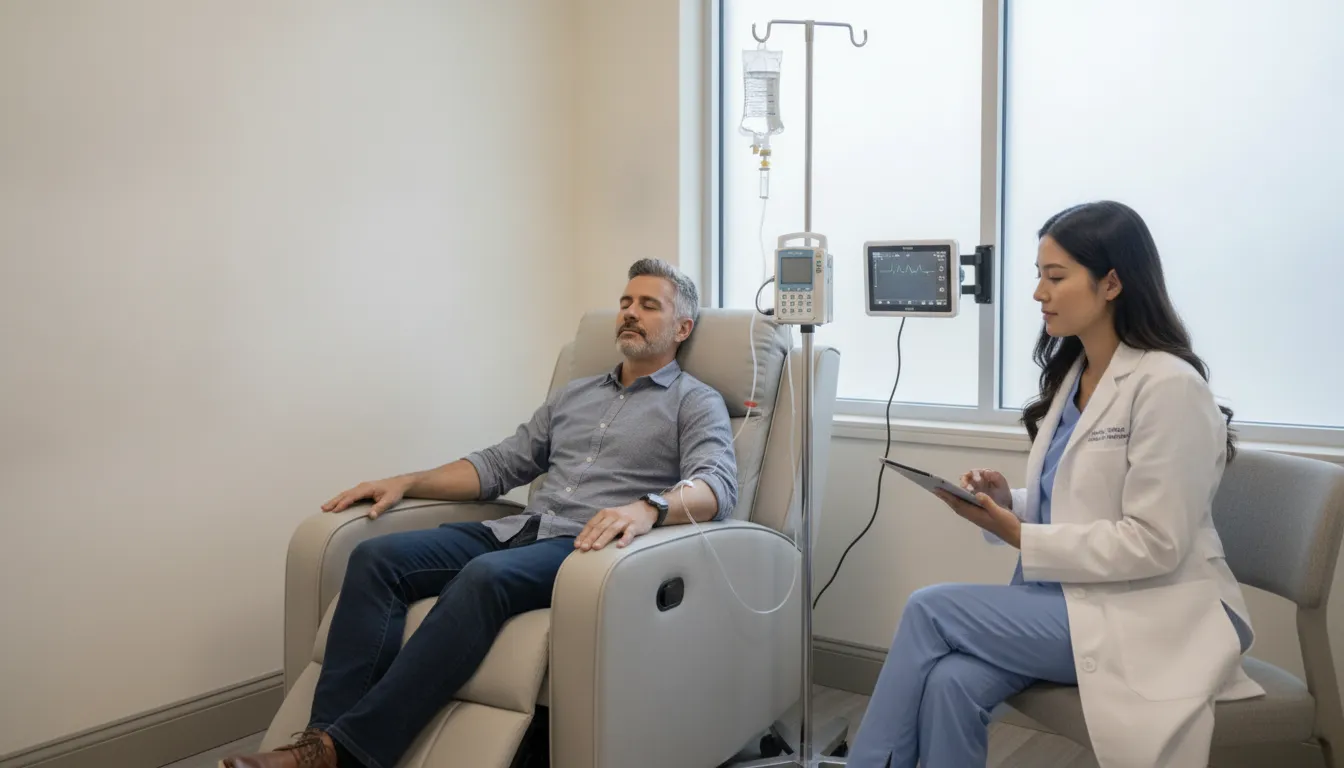
IV ketamine infusion therapy is a controlled treatment in which a sub-anesthetic dose of ketamine is delivered directly into a vein while a qualified health care professional provides continuous clinical supervision. The medication enters the bloodstream through an intravenous line, allowing the clinical team to monitor the treatment as it occurs rather than treating ketamine as a take-home medication. Cleveland Clinic describes IV ketamine therapy as an infusion administered under direct professional supervision.
For depression, ketamine is used at doses significantly lower than those used for anesthesia. This distinction matters. The purpose is not to induce surgical anesthesia, but to evaluate whether a carefully controlled dose may have a place in an individualized treatment plan. IV ketamine use for depression is also off-label, meaning the medication is being used in a way that differs from its FDA-approved anesthetic indication. A clinician must determine whether that approach is medically appropriate for a person with a specific diagnosis.
How ketamine works in the brain
Ketamine acts as an N-methyl-D-aspartate, or NMDA, receptor antagonist. NMDA receptors are involved in the brain’s glutamate system, which helps nerve cells communicate. This mechanism differs from that of many traditional antidepressants, and it is one reason ketamine has become an important subject of research into rapid-acting antidepressant treatment. The mechanism is complex, however, and a simple explanation should not be mistaken for a promise of a particular result. The pharmacologic action is documented in this PubMed review of ketamine’s NMDA receptor activity.
Why evaluation comes before treatment
A comprehensive clinical evaluation should come before an infusion is considered. This review may include medical and psychiatric history, current medications, substance use history, symptoms, prior treatment experiences, and relevant safety factors. According to Cleveland Clinic, this evaluation helps the clinical team assess risk and determine whether ketamine therapy fits the patient’s needs.
For people researching this treatment, the next step is a careful discussion of available options, not a decision based on a single treatment description. Relief Mental Health can review whether its IV ketamine infusion therapy or another evidence-based approach is appropriate for the individual.
How Is Ketamine Used Off-Label for Depression?
Ketamine has an established FDA-approved use as an anesthetic, but intravenous ketamine is also used off-label in some clinical settings for treatment-resistant depression. In this context, off-label means a qualified clinician may use an approved medication for a purpose that is not specifically listed in its FDA-approved labeling. The approach is distinct from using ketamine as an anesthetic because depression treatment generally involves sub-anesthetic dosing and careful psychiatric oversight. Research has expanded understanding of rapid-acting antidepressant treatment beyond the traditional monoamine hypothesis, although ketamine remains an individualized clinical decision rather than a guaranteed outcome.
Why Off-Label Use Requires a Clinical Evaluation
Off-label does not mean unregulated or appropriate for every person with a depression diagnosis. Before treatment is considered, a clinician should review the patient’s medical history, psychiatric history, current medications, substance use history, symptoms, prior treatment response, and treatment goals. A comprehensive evaluation helps the care team assess safety, clarify the diagnosis, and determine whether another evidence-based option may be more appropriate. Cleveland Clinic emphasizes that this evaluation is essential before ketamine therapy begins: clinical assessment and supervision are central to ketamine treatment.
Researchers continue to study how ketamine influences glutamate signaling and related changes in brain networks. This work has opened new avenues for understanding rapid antidepressant responses, but research findings do not replace an assessment of an individual patient. The potential role of ketamine in depressive states beyond treatment-resistant depression is also still under investigation, so treatment planning should be based on current clinical evidence and the person’s complete history.
The Contrast with FDA-Approved Spravato
Spravato, the brand name for esketamine, is an FDA-approved nasal spray for treatment-resistant depression. That regulatory status differs from IV ketamine’s off-label use for depression. The medications are related, but they are not administered in the same way, and their clinical protocols are not interchangeable. Cleveland Clinic describes this distinction in its overview of ketamine therapy and esketamine.
Relief Mental Health provides information about FDA-approved SPRAVATO (esketamine) nasal spray as part of its interventional psychiatry services. A clinical assessment can help determine whether Spravato, TMS, psychiatry, or another treatment path better fits a person’s diagnosis, history, and goals. The purpose of that evaluation is to identify a supported treatment plan, not to assume that a specific medication or route of administration is the right choice.
What Happens During an IV Ketamine Infusion for Depression?
A typical session follows a structured process designed to assess safety, administer the medication under supervision, monitor your response, and support a safe return home. The exact plan depends on your diagnosis, medical history, treatment goals, and response over time.
- Complete a clinical evaluation. Before treatment begins, the clinical team reviews your medical and psychiatric history, current medications, and relevant substance use history. This evaluation helps determine whether an infusion is appropriate and identifies factors that may affect monitoring or aftercare. Your clinician also discusses what you may experience during the session and how the treatment plan will be assessed.
- Prepare for the infusion. You receive instructions for the day of treatment, including how to plan transportation and any eating, drinking, or medication precautions that apply to your individual plan. The infusion is administered through a vein at a sub-anesthetic dose, meaning the dose is substantially lower than doses used for anesthesia. Cleveland Clinic describes IV ketamine as medication delivered directly into the bloodstream under the supervision of a health care professional. Learn more about ketamine therapy from Cleveland Clinic.
- Receive the medication while monitored. The infusion itself typically lasts about 40 to 60 minutes. During this time, clinicians monitor your response and watch for possible effects such as dissociation, sedation, and changes in blood pressure or heart rate. Dissociation can feel like detachment from your body or surroundings. Tell the clinical team promptly if you feel uncomfortable or notice a concerning change.
- Review the next steps in your treatment plan. Dose and treatment frequency are tailored to your individual response and treatment goals rather than applied as a single schedule for everyone. Your clinician may discuss how you are feeling, any side effects, and whether additional care or adjustments should be considered. Ongoing mental health care remains an important part of a comprehensive plan.
What to Expect After the Infusion
Arrange for someone else to drive you home after the session because sedation and dissociation can affect alertness and judgment. Fatigue or residual dissociative effects commonly resolve within a few hours, but you should follow the clinic’s instructions about rest, driving, work, and other activities. Plan a quiet recovery period and make sure your ride knows when and where to pick you up. Report persistent or worsening symptoms to your clinical team.
How Fast Does IV Ketamine Work Compared to Antidepressants?
Speed is one of the clearest distinctions between IV ketamine and traditional oral antidepressants. Research describes ketamine as a rapid-acting glutamatergic antidepressant, with relief sometimes emerging within hours rather than the weeks typically associated with conventional antidepressants. This does not mean every person responds immediately or that rapid relief guarantees lasting improvement. A qualified clinician must evaluate the person’s diagnosis, medical history, current medications, and treatment goals.
| Treatment | Typical onset pattern | Treatment course | FDA status |
|---|---|---|---|
| IV ketamine | Antidepressant effects may begin within hours, although response varies. | Session frequency and any maintenance plan are individualized by the clinical team. | Ketamine is FDA-approved as an anesthetic. Use for depression is off-label. |
| Traditional oral antidepressants | Benefits commonly develop over weeks rather than hours. | Medication is taken on an ongoing schedule, with follow-up to assess response and tolerability. | Several oral antidepressants are FDA-approved for specific depressive diagnoses. |
| SPRAVATO (esketamine) | It is a rapid-acting nasal-spray option, but timing and response still require clinical assessment. | It is administered through a supervised treatment program with ongoing evaluation. | FDA-approved nasal spray for treatment-resistant depression. |
| TMS | Improvement develops through a course of repeated brain-stimulation sessions rather than a single medication dose. | Sessions are typically provided five days per week for several weeks. | FDA-approved treatment that uses magnetic fields to stimulate nerve cells. |
The difference in onset reflects a different biological pathway. Ketamine acts on NMDA receptors and glutamate signaling, and research describes its effects as facilitating neuroplasticity, or the brain’s ability to reorganize neural connections. This represents a shift from the delayed response associated with traditional monoamine-based antidepressants. The mechanism is promising, but it is not a reason to select treatment without medical guidance.
Relief MH can help you compare depression treatment options, including whether a supervised interventional approach fits your diagnosis and care plan.
How Is IV Ketamine Different from Ketamine Clinics or Recreational Use?
Clinical IV ketamine is defined by the treatment setting, dose, monitoring, and treatment plan, not simply by the medication itself. In a medical program, a qualified team reviews your medical and psychiatric history, confirms whether the approach is appropriate for your diagnosis, and administers the infusion under direct supervision. This is fundamentally different from using ketamine outside medical care for non-therapeutic purposes.
What makes a clinical infusion different?
According to Cleveland Clinic, ketamine infusions should take place in accredited medical facilities with trained staff and protocols for managing potential emergency side effects. The clinical team uses sub-anesthetic dosing for depression, which is significantly lower than doses used for anesthesia. The medication is delivered in a controlled way, with the dose and treatment frequency adjusted according to the patient response and treatment goals.
Monitoring is another important distinction. During an infusion, clinicians watch for effects such as dissociation, sedation, and changes in heart rate or blood pressure. These effects are not treated as the goal of care. They are possible clinical effects that require observation, documentation, and appropriate response. A patient may also need transportation home after a session because sedation or dissociation can continue for a short period. Cleveland Clinic explains the supervision and safety considerations for ketamine therapy.
How should you evaluate a ketamine clinic?
The phrase “ketamine clinic” does not by itself tell you whether a program provides comprehensive mental health care. Before considering any infusion service, ask how the practice evaluates patients, who prescribes and monitors treatment, what emergency procedures are available, how follow-up is handled, and whether psychotherapy or ongoing psychiatric care can be part of the plan. Cleveland Clinic notes that combining ketamine infusion therapy with psychotherapy or other mental health care may support a more comprehensive treatment approach.
Recreational use does not provide the clinical evaluation, controlled dosing, physiological monitoring, or continuity of care that define a medical treatment program. It also does not establish that ketamine is appropriate for a particular person or diagnosis. For these reasons, a person researching iv ketamine infusion for depression should discuss the full treatment history and available alternatives with a qualified mental health professional rather than relying on marketing claims or informal use.
Relief Mental Health offers evidence-based treatment options that include TMS therapy, a non-invasive FDA-approved approach, as well as SPRAVATO and psychiatric care. A clinical consultation can help determine which option best fits your needs.
Frequently Asked Questions
Is IV ketamine FDA-approved for depression?
Ketamine is FDA-approved as an anesthetic, not specifically as a depression treatment. Its use for treatment-resistant depression is off-label, meaning a qualified clinician may use an approved medication for a different purpose when clinically appropriate. Spravato (esketamine) is an FDA-approved nasal-spray option for treatment-resistant depression. Learn more from Cleveland Clinic.
What happens during an IV ketamine infusion session?
A clinician administers ketamine through an IV while monitoring you during the session. Infusions typically last about 40 to 60 minutes, and monitoring may include checking for dissociation, sedation, and changes in blood pressure or heart rate. Arrange for someone else to drive you home because these effects can continue temporarily after treatment. Cleveland Clinic describes the session process.
How soon can IV ketamine affect depression symptoms?
Some people may notice antidepressant effects within hours, while conventional oral antidepressants often take weeks to show results. Response varies, and a rapid initial effect does not guarantee lasting improvement. A clinical team evaluates your response and adjusts the treatment plan as needed. Review the research on ketamine’s rapid antidepressant effects.
How long do the effects of an IV ketamine infusion last?
The duration varies by person and may change across a treatment course. Some patients need maintenance infusions when benefits diminish over time. The appropriate schedule depends on your diagnosis, medical history, response, and treatment goals, so a specialist should assess whether this approach is appropriate for you.
What side effects can occur after an IV ketamine infusion?
Temporary fatigue or residual dissociation may occur after a session and commonly resolve within a few hours. Because sedation and dissociation can affect driving, plan transportation home and follow the clinic’s aftercare instructions. Tell the clinical team about your symptoms so they can monitor your safety and guide next steps.
Schedule a Consultation to Explore Your Options
A clinical consultation can help connect your depression diagnosis and treatment history with appropriate, evidence-based next steps. Relief Mental Health can discuss FDA-approved options such as SPRAVATO and TMS, along with whether a psychiatric evaluation may be appropriate for your needs. To explore treatment options, schedule a consultation with Relief Mental Health.
Ready to Find Relief?
We’re Here to Help.
Our team offers personalized, evidence-based care for depression, anxiety, OCD, PTSD, and more — including Deep TMS™, SPRAVATO®, and IV ketamine. Reach out today and we’ll help you find the right path forward.