When obsessive thoughts and compulsive behaviors affect daily life, it can be difficult to know which treatment information applies to your situation. Deep TMS is a noninvasive brain stimulation treatment that uses magnetic fields to stimulate targeted nerve cells. BrainsWay Deep TMS is one technology used in this treatment category for OCD.
For people researching deep tms for ocd, the process typically begins with a clinical evaluation rather than a preset treatment plan. A qualified clinician reviews symptoms, diagnosis history, previous medications or therapy, medical factors, and goals before discussing whether Deep TMS may fit your care.
This guide explains what the treatment is, what an evaluation may cover, and how to prepare for a consultation. Understanding the technology and the clinical decision-making process can help you have a more focused conversation about your options.
Request a consultation to discuss whether Deep TMS may fit your OCD diagnosis and treatment goals.
What Is Deep TMS for OCD?
BrainsWay Deep TMS is a noninvasive form of transcranial magnetic stimulation designed to deliver magnetic stimulation to targeted areas of the brain. In plain language, the system uses magnetic fields to stimulate nerve cells rather than delivering medication through the bloodstream or requiring a surgical procedure. The U.S. Food and Drug Administration permitted marketing of the BrainsWay Deep Transcranial Magnetic Stimulation System for OCD in 2018. The FDA announcement explains the authorization and the role of TMS in OCD treatment.
The word “deep” describes the device’s intended stimulation approach. It does not mean that treatment is invasive, and it does not describe the severity of a person’s OCD diagnosis. It also does not mean that the device reaches every part of the brain or that the same treatment plan is appropriate for everyone. Deep TMS is one treatment option that a qualified clinician may consider within a broader plan of psychiatric care.
| Deep TMS | ECT |
|---|---|
| Uses magnetic pulses near the head while the patient remains conscious. | Uses a different medical process under anesthesia. |
| Does not induce a seizure as the way treatment is delivered. | Uses an induced seizure as part of its treatment process. |
What the treatment name tells you
Deep TMS for OCD refers to using this technology in the context of obsessive-compulsive disorder. Relief Mental Health identifies Deep TMS for OCD among its TMS services. The treatment name tells you the intended clinical focus. It does not by itself establish a diagnosis, determine whether treatment is appropriate, or predict how an individual may respond.
Research and regulatory information may describe groups of patients and formal symptom measures, such as the Yale-Brown Obsessive Compulsive Scale. Those descriptions help clinicians and researchers study OCD symptoms, but they are not a substitute for an individual evaluation. A clinician must review your symptoms, history, prior treatment, medical factors, and goals before deciding whether Deep TMS belongs in your treatment plan.
For a broader explanation of how TMS treatment works, start with the general treatment overview, then discuss your specific diagnosis and treatment goals with a qualified clinician.
How Deep TMS Works Without Anesthesia
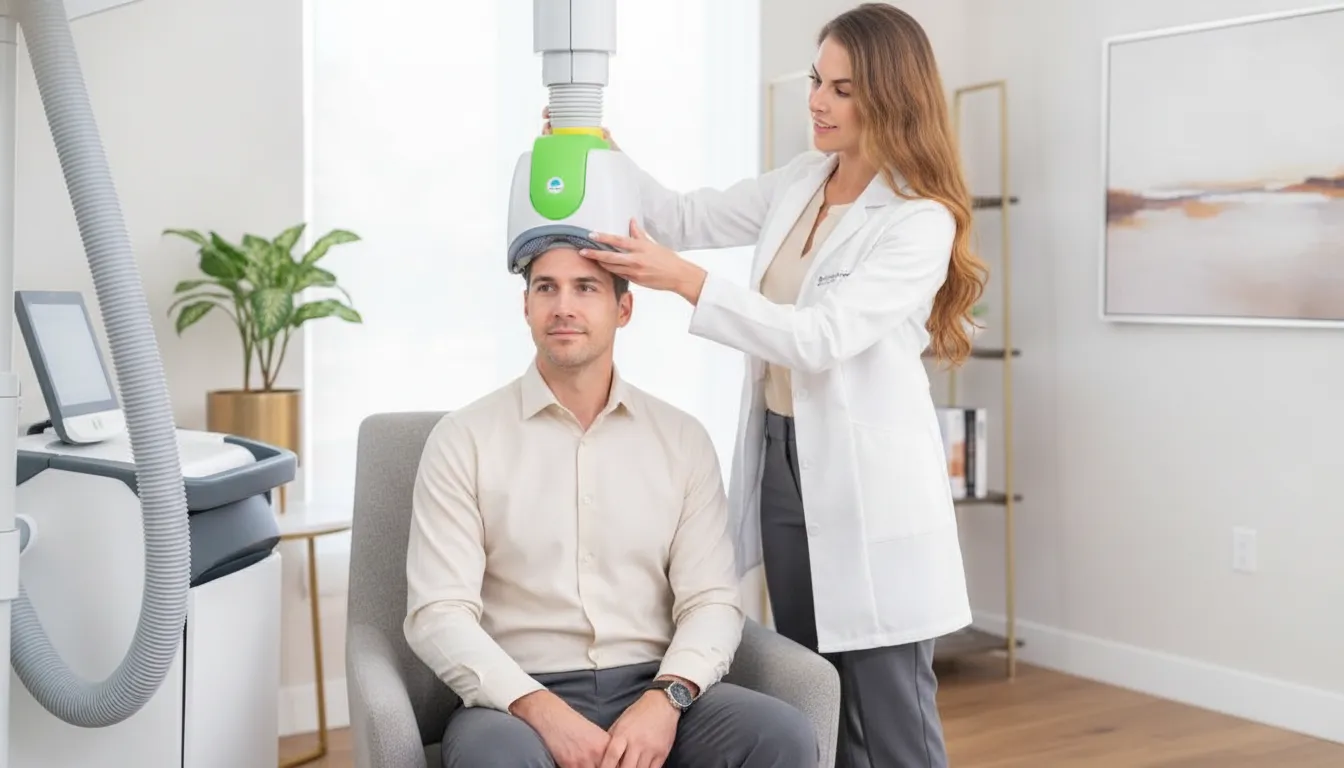
Deep TMS uses magnetic fields to stimulate nerve cells in the brain. During treatment, a clinician positions a specialized device near the head. The device delivers controlled magnetic pulses to targeted areas, rather than medication through the bloodstream or an electrical current delivered under anesthesia. The goal is to influence brain activity in a carefully planned way while you remain awake and able to communicate with the treatment team.
Relief Mental Health describes how TMS treatment works as part of its TMS services, including Deep TMS for OCD. The exact treatment plan is determined after a qualified clinician reviews your symptoms, diagnosis, history, medical factors, and goals. That review matters because the device and treatment approach should be matched to the clinical situation, not treated as a universal protocol.
What the treatment experience may involve
A treatment visit generally includes positioning the device, confirming the planned settings, and delivering magnetic stimulation while the clinician monitors your experience. You remain conscious throughout the process. You can describe sensations or concerns as they occur, which allows the team to address questions and make appropriate clinical decisions during the course of care.
People sometimes confuse Deep TMS with electroconvulsive therapy, or ECT, because both are treatments that affect brain activity. They are not the same procedure. TMS is noninvasive, does not require anesthesia, and does not induce a seizure as a way to deliver treatment, according to Yale Medicine’s explanation of TMS. ECT uses a different medical process and is performed under anesthesia. A clinician can explain how these options differ and which factors are relevant to your care.
Understanding the mechanism can make the first conversation more useful, but it does not determine whether Deep TMS is appropriate for you. Bring your questions to an evaluation so the clinician can explain the proposed plan, how progress will be monitored, and what other care may be considered alongside treatment.
What Happens During a Deep TMS Evaluation?
A Deep TMS evaluation begins with a consultation and psychiatric intake. The goal is to understand how obsessive-compulsive symptoms affect your life and to determine whether this treatment should be considered as part of an individualized plan. A qualified clinician reviews your information rather than relying on a single symptom score or a general description of OCD.
You may be asked to describe when symptoms began, how they have changed, and which obsessions, compulsions, or avoidance patterns are most disruptive. The clinician may also discuss daily functioning, including effects on work, school, relationships, sleep, routines, and other responsibilities. Describing these effects in your own words can help make the evaluation more useful.
Topics covered during the intake
A comprehensive psychiatric intake may include your current medications, previous medications, prior therapy, and your experience with those treatments. It may also cover medical history, family history, social history, mental status, and relevant screening. Bring an updated medication list and any records you have from previous clinicians so the discussion is based on the clearest available history.
The clinician may ask about your goals and what you would like to change in daily life. This is also an opportunity to discuss the treatment process, other approaches that may be relevant, and any medical factors that should be considered before planning next steps. An evaluation does not mean that every person with an OCD diagnosis is automatically a fit for Deep TMS.
How symptom measures may be used
Clinical teams may use standardized measures to organize information and track symptoms over time. For example, the Yale-Brown Obsessive Compulsive Scale, or YBOCS, was used in FDA-reviewed research as a measure of OCD symptom severity. It is a clinical research and assessment tool, not a self-test or a stand-alone eligibility rule. For more information about OCD treatment options, speak with a qualified clinician who can consider your diagnosis, history, current symptoms, medical factors, and goals together.
How Clinicians Decide Whether Deep TMS Fits
A clinician does not determine fit from an OCD diagnosis alone. The discussion starts with how symptoms appear, how often they occur, and how they affect daily functioning. Obsessions, compulsions, avoidance, distress, and difficulty completing routine activities can look different from one person to another. A careful review helps distinguish the main treatment needs and identify whether Deep TMS belongs in the conversation.
Clinicians also consider treatment history. They may ask which medications or therapy approaches you have tried, how consistently they were used, what benefits or difficulties you experienced, and whether symptoms remain disruptive. Prior treatment attempts provide context, but they do not create an automatic eligibility rule. Someone who has not responded as hoped to one approach may need a different plan, while another person may benefit from adjusting an existing treatment strategy.
Medical factors and current medications
Your current medications, medical history, and other relevant health factors are part of the safety review. The clinician may ask about past diagnoses, neurological or medical concerns, and any factors that could affect treatment planning. Share this information openly, including changes since previous appointments. A complete picture allows the care team to consider Deep TMS alongside other appropriate options rather than evaluating it in isolation.
Goals and alternatives matter
Your goals help shape the conversation. You may want to reduce the time spent on rituals, return to activities that OCD has disrupted, or make another specific functional change. Discussing those goals gives the clinician a way to consider whether the proposed treatment plan matches what you need. The review may also include alternatives, continued therapy, medication planning, or combinations of approaches. Not everyone with OCD is automatically a candidate for Deep TMS. A qualified clinician uses the assessment, prior treatment history, current symptoms, medical considerations, and goals to make an individualized recommendation.
What Should You Bring to a Consultation?
A consultation is easier when the clinician can see the full picture of your OCD diagnosis, symptoms, and treatment history. You do not need to prepare a perfect summary. A few notes and relevant records can help you describe what has been happening in your own words and identify the topics you want to discuss.
Information that can help
- Symptom timeline: Note when symptoms began, how they have changed, and how obsessions or compulsions affect work, school, relationships, sleep, or daily routines.
- Current medication list: Include medication names, doses if known, how long you have taken them, and any side effects or recent changes. Include psychiatric and non-psychiatric medications, as well as supplements.
- Prior treatment records: Bring records or a brief summary of previous medications, therapy, psychiatric care, or other treatments. Note what you tried, for how long, and what you experienced.
- Medical history: List major diagnoses, past procedures, neurological history, and other medical details your clinician should know. Include the names of current providers when relevant, along with permission to coordinate care if needed.
- Treatment goals: Consider what you would like to change. Goals may involve spending less time on rituals, reducing distress, improving concentration, or returning to activities that symptoms have disrupted.
- Questions: Write down questions about the evaluation, whether Deep TMS may fit your treatment plan, monitoring, alternatives, and what the next steps could involve.
It can also be useful to bring your insurance information as an administrative item. The care team can explain what information may be needed for benefits or authorization discussions, but plan details vary and should be confirmed with your insurer.
During the visit, share what feels important, even if it seems minor or difficult to organize. Asking questions and describing your priorities gives the clinician a clearer basis for discussing your options.
What Questions Should You Ask About Deep TMS for OCD?
A consultation should give you enough information to make an informed decision about next steps. Bring questions that help you understand how the clinician is evaluating your OCD diagnosis, treatment history, goals, and practical needs. You can also review Relief MH TMS treatment before your appointment so you have a clearer sense of the service being discussed.
- How does my diagnosis and treatment history affect whether Deep TMS may fit? Ask how the clinician will consider your symptoms, formal diagnosis, prior medications or therapy, medical history, and other factors. A qualified clinician should determine fit through an individualized review rather than applying a general rule to everyone with OCD.
- What goals will we monitor during treatment? Ask how you and the clinical team will define meaningful progress. The discussion may include symptom patterns, daily functioning, and changes you want to track. Clarify how often your response will be reviewed and how your feedback will inform the plan.
- What would the proposed treatment plan involve? Ask what the appointments are expected to look like, how the plan is tailored to your evaluation, and what you should know before starting. The clinician can explain the process in terms that apply to your circumstances instead of promising a fixed schedule or result.
- What alternatives or complementary approaches should we discuss? Ask whether other treatment approaches may be relevant to your goals and history. This keeps the conversation focused on an appropriate care plan rather than assuming one treatment is the right choice.
- What follow-up will I receive after the evaluation and during treatment? Ask who will monitor your progress, how concerns should be raised, and when the plan will be reassessed. You can also ask what information the team needs from you between visits.
Write down the answers, and ask for clarification when a term or recommendation is unfamiliar. A thorough conversation should leave you with a clear understanding of the evaluation, proposed plan, monitoring process, and available next steps.
Frequently Asked Questions
What is Deep TMS for OCD?
Deep TMS is a noninvasive treatment that uses magnetic fields to stimulate nerve cells in the brain. BrainsWay Deep TMS received FDA permission for marketing for OCD in 2018. A qualified clinician can explain how this approach may fit your diagnosis and treatment goals.
Does everyone with an OCD diagnosis qualify for Deep TMS?
No. A diagnosis alone does not determine whether Deep TMS is appropriate. The clinician considers your current symptoms, treatment history, medical factors, and goals before recommending a treatment plan.
What happens during a Deep TMS evaluation?
An evaluation may cover your symptom history, effect on daily functioning, medications, previous therapy, medical history, family and social history, and treatment goals. Your clinician may also use standardized screening measures, such as the Yale-Brown Obsessive Compulsive Scale, to understand symptom severity.
What should I bring to the consultation?
Bring an up-to-date medication list, relevant medical history, prior treatment records, and a summary of questions or goals. Intake forms and insurance information may also help with administrative planning, but coverage details should be confirmed with your insurer.
How do I begin discussing Deep TMS for OCD?
You can request a consultation through Relief Mental Health’s new-patient appointment process. The consultation gives you an opportunity to describe your symptoms, review your treatment history, and discuss whether Deep TMS belongs in your individualized care plan.
A consultation can help you discuss your OCD diagnosis, review your treatment history and goals, and learn what an individualized evaluation may involve. A qualified clinician can answer questions about whether Deep TMS may fit your needs and explain possible next steps without assuming that one approach is right for everyone.
Request a consultation to discuss whether Deep TMS may fit your OCD diagnosis and treatment goals.